How do you practice self-care?
To be honest, I do not. I allow the battle inside me to simply rage. I sometimes sleep which means I have some time to not feel the pain. But otherwise …
How do you practice self-care?
To be honest, I do not. I allow the battle inside me to simply rage. I sometimes sleep which means I have some time to not feel the pain. But otherwise …
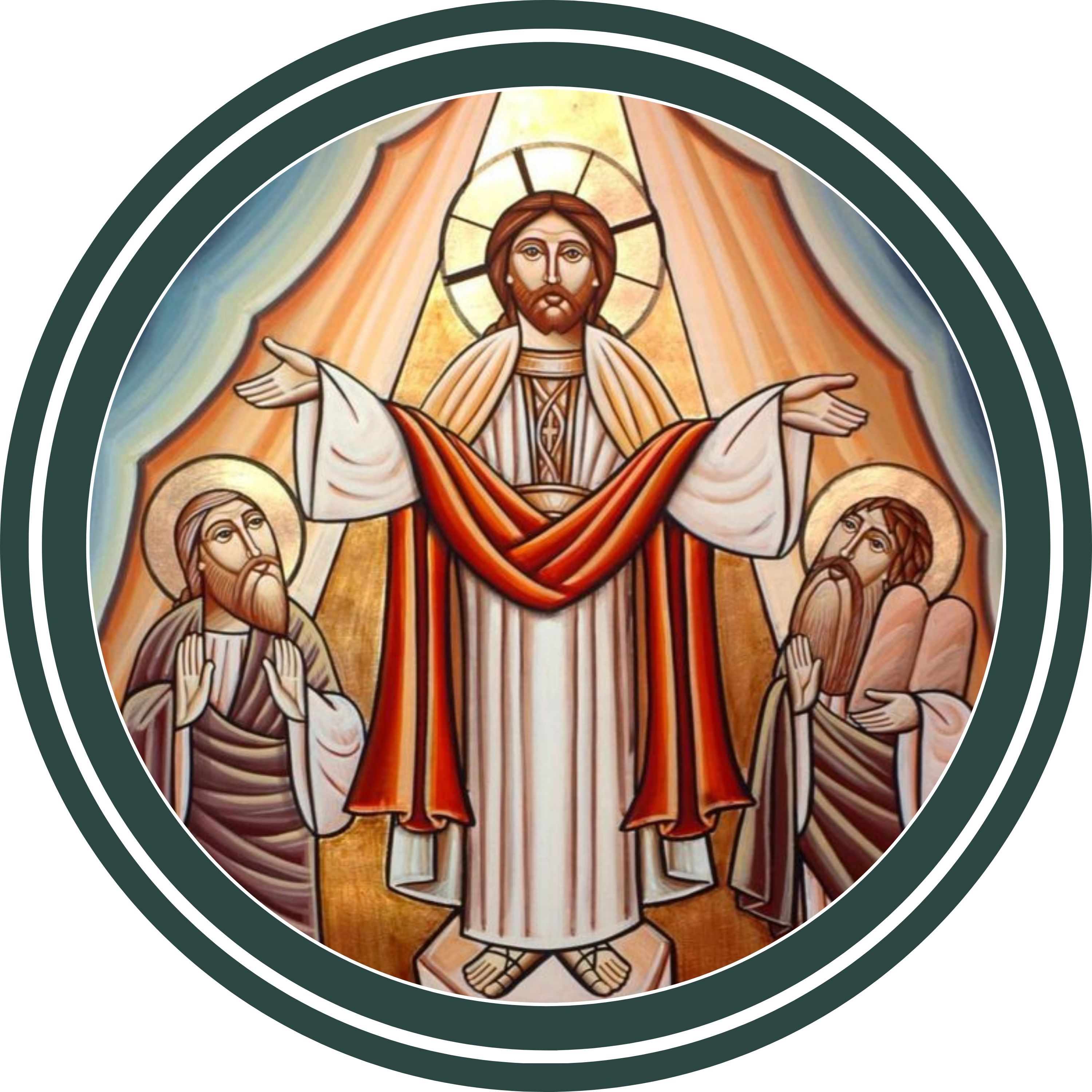
Traditionally the first “step” of union with God is purgation. One of the definitions suggested by Google is “evacuation of the bowels brought about by taking laxatives.” For the follower of Jesus, it is simply being like Jesus who …
… ἑαυτὸν ἐκένωσεν μορφὴν δούλου λαβών, ἐν ὁμοιώματι ἀνθρώπων γενόμενος· καὶ σχήματι εὑρεθεὶς ὡς ἄνθρωπος
… made himself of no reputation, and took upon him the form of a servant, and was made in the likeness of men
Philippians 2:7 (KJV)
Other English translations use “empty himself” for κενόω. Maybe philosophically it is a little like “nihilism” – to become nothing? For the follower of Jesus is a choice to be “nothing” so God can create.
How do you waste the most time every day?
I would like to say that I pray and think holy thoughts! But most of the day I am doom scrolling or falling down a rabbit hole and feeling sorry for myself.
Who is your favorite historical figure?
Only one?! I have different people for different “moods” – philosophy, theology, “weirdo”. Here are a few:
What should also become clear in this study are the ways in which Kierkegaard confronts some of the key errors that arise in overly systematic and reductive accounts of Christian conversion:
Torrance, Andrew B.. The Freedom to Become a Christian, pp. 2-3.
- The inherent weakness of approaches that assume we can dichotomise, and then quantify, the respective contributions of divine and human agency;
- The inclination to objectify human beings in ways that neglect their subjective existence as living persons who require to be conceived diachronically – persons who are called to take up a life-long vocation of becoming Christian;
- The tendency to reduce God to an amorphous concept, postulate or figment of the human imagination, thereby neglecting God’s active involvement in the process of becoming a Christian;
- The attendant impulse to allow a body of Christian teaching or dogma to displace the actuality of God’s personal agency;
- The overemphasis on conversion as a solipsistic event of individual transformation rather than a process of becoming reconciled with God;
- The tendency to prioritise epistemology over ontology (that is, over our relationship with God) in discussions of what is involved in becoming a Christian – to focus on the question of ‘What I come to know as a Christian’ rather than ‘Who I come to be as a Christian’; and
- The propensity to lose sight of God’s loving purpose to draw all human beings into the one true form of existence for which they were created.
How do you want to retire?
I would like to move to a hut – house? – completely off the grid, in a forest, miles away from anyone. Maybe solar and running water, but no other modern stuff. A wood heater would serve as a stove. Absolutely no contact!!!!
What are you passionate about?
Reading Nietzsche in the original German.
This song is on high rotation.
Be yourself
Give your free will a chance
The word fact derives from the Latin factum. It was first used in English with the same meaning: “a thing done or performed” – a meaning now obsolete outside the law. The common usage of “something that has really occurred or is the case” dates from the mid-16th century.
Wikipedia: Fact
Fact, truth, real, information, evidence are not synonyms.
What’s the one luxury you can’t live without?
Love!
 this solitary life