Jesus saith unto him, I am the way, the truth, and the life: no man cometh unto the Father, but by me.
John 14:6
I often meditate on the first half but this morning I am drawn to “no man cometh … but by me”. Jesus is the only way! (And the full revelation of God.)
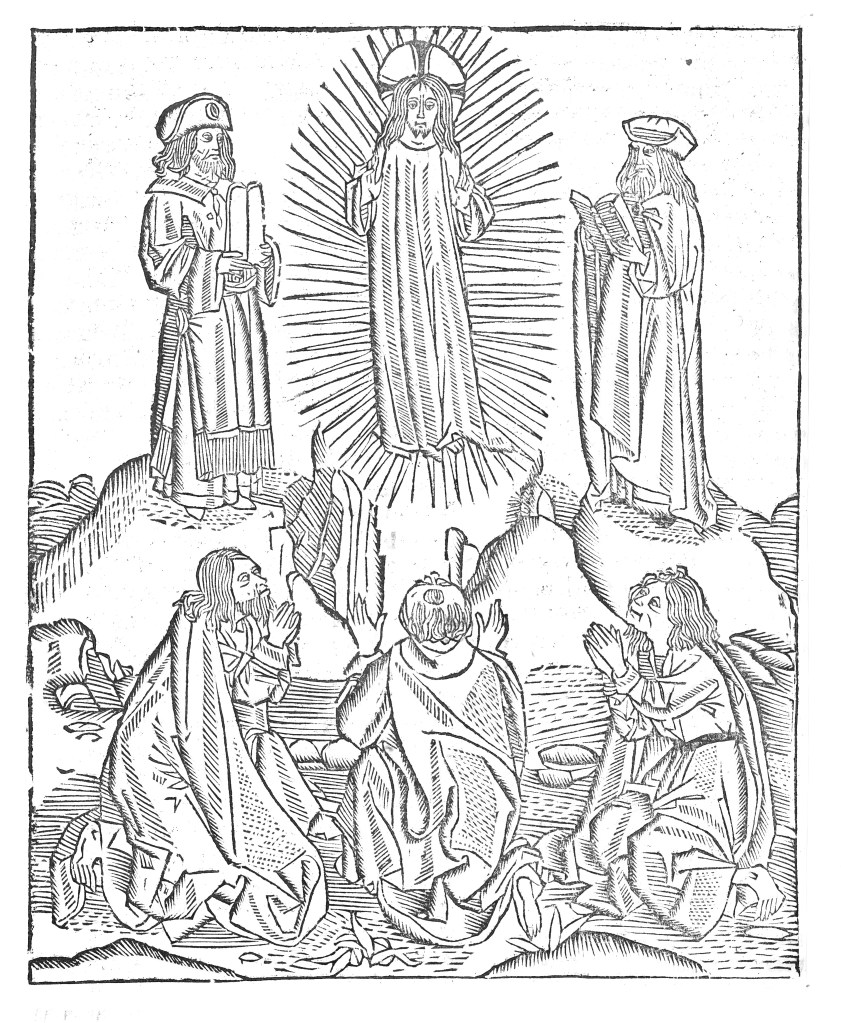
And after six days Jesus taketh Peter, James, and John his brother, and bringeth them up into an high mountain apart, and was transfigured before them: and his face did shine as the sun, and his raiment was white as the light. And, behold, there appeared unto them Moses and Elias talking with him. Then answered Peter, and said unto Jesus, Lord, it is good for us to be here: if thou wilt, let us make here three tabernacles; one for thee, and one for Moses, and one for Elias. While he yet spake, behold, a bright cloud overshadowed them: and behold a voice out of the cloud, which said, This is my beloved Son, in whom I am well pleased; hear ye him. And when the disciples heard it, they fell on their face, and were sore afraid. And Jesus came and touched them, and said, Arise, and be not afraid. And when they had lifted up their eyes, they saw no man, save Jesus only.
What’s the bravest thing you’ve ever done when no one was watching?
All the things when “no one is watching”.
To act without needing affirmation, without seeking other’s approval, is true bravery. To be true to oneself and to act upon that truth, that is bravery.
What’s something you do completely differently from how you were raised?
I speak a different language. I was raised in a household that was complete non-English. But now I only speak, write, or read English – well, Australian.
And I think only in English. I understand the other language but will always answer in English. And, tbh, I have little desire to return to non-English.
What’s the best thing you’ve ever found randomly on the street?
I cannot recall ever finding something on the street that I used or took home. Is that strange? And I do not go out onto the street too often to give me the opportunity to find something.
Maybe a person I have met? But, tbh, I have no friends and little connection with anyone. So … nothing!
LYRICS All we do is hide away All we do is, all we do is hide away All we do is chase the day All we do is, all we do is chase the day
All we do is lie and wait All we do is, all we do is lie and wait All we do is feel the fade All we do is, all we do is feel the fade
I’ve been upside down I don’t wanna be the right way round Can’t find paradise on the ground I’ve been upside down I don’t wanna be the right way round Can’t find paradise on the ground
All we do is hide away All we do is, all we do is hide away All we do is chase the day All we do is, all we do is chase the day
All we do is play it safe All we do is live inside a cage All we do is play it safe All we do, all we do
I’ve been upside down I don’t wanna be the right way round Can’t find paradise on the ground I’ve been upside down I don’t wanna be the right way round Can’t find paradise on the ground
All we do is hide away All we do is, all we do is hide away All we do is chase the day All we do is, all we do is chase the day
All I did was fail today All I wanna be is whites in waves All I did was fail today All we do, all we do
What’s the kindest thing someone has ever done for you?
Many people do many kind things in secret everyday. And many people dress up kindness as a way to hurt and belittle people. Evil intent destroys kindness. I have experienced both!
So what is the kindest thing? I cannot single out anyone or anything. People have allowed me to be me – and that is pure kindness. And people have encouraged me to be open about my failings – and that is pure kindness. Random people have smiled – and that is pure kindness. There are many things that I have experienced that people may not thought of as a kindness but were pure kindness to me.
 a fool and his prayer book