What should also become clear in this study are the ways in which Kierkegaard confronts some of the key errors that arise in overly systematic and reductive accounts of Christian conversion:
Torrance, Andrew B.. The Freedom to Become a Christian, pp. 2-3.
- The inherent weakness of approaches that assume we can dichotomise, and then quantify, the respective contributions of divine and human agency;
- The inclination to objectify human beings in ways that neglect their subjective existence as living persons who require to be conceived diachronically – persons who are called to take up a life-long vocation of becoming Christian;
- The tendency to reduce God to an amorphous concept, postulate or figment of the human imagination, thereby neglecting God’s active involvement in the process of becoming a Christian;
- The attendant impulse to allow a body of Christian teaching or dogma to displace the actuality of God’s personal agency;
- The overemphasis on conversion as a solipsistic event of individual transformation rather than a process of becoming reconciled with God;
- The tendency to prioritise epistemology over ontology (that is, over our relationship with God) in discussions of what is involved in becoming a Christian – to focus on the question of ‘What I come to know as a Christian’ rather than ‘Who I come to be as a Christian’; and
- The propensity to lose sight of God’s loving purpose to draw all human beings into the one true form of existence for which they were created.
Category: Personal
off the grid
How do you want to retire?
I would like to move to a hut – house? – completely off the grid, in a forest, miles away from anyone. Maybe solar and running water, but no other modern stuff. A wood heater would serve as a stove. Absolutely no contact!!!!
reading
What are you passionate about?
Reading Nietzsche in the original German.
Love
What’s the one luxury you can’t live without?
Love!
Tagline
If humans had taglines, what would yours be?
I have a tagline on this blog so that might be it for the moment:
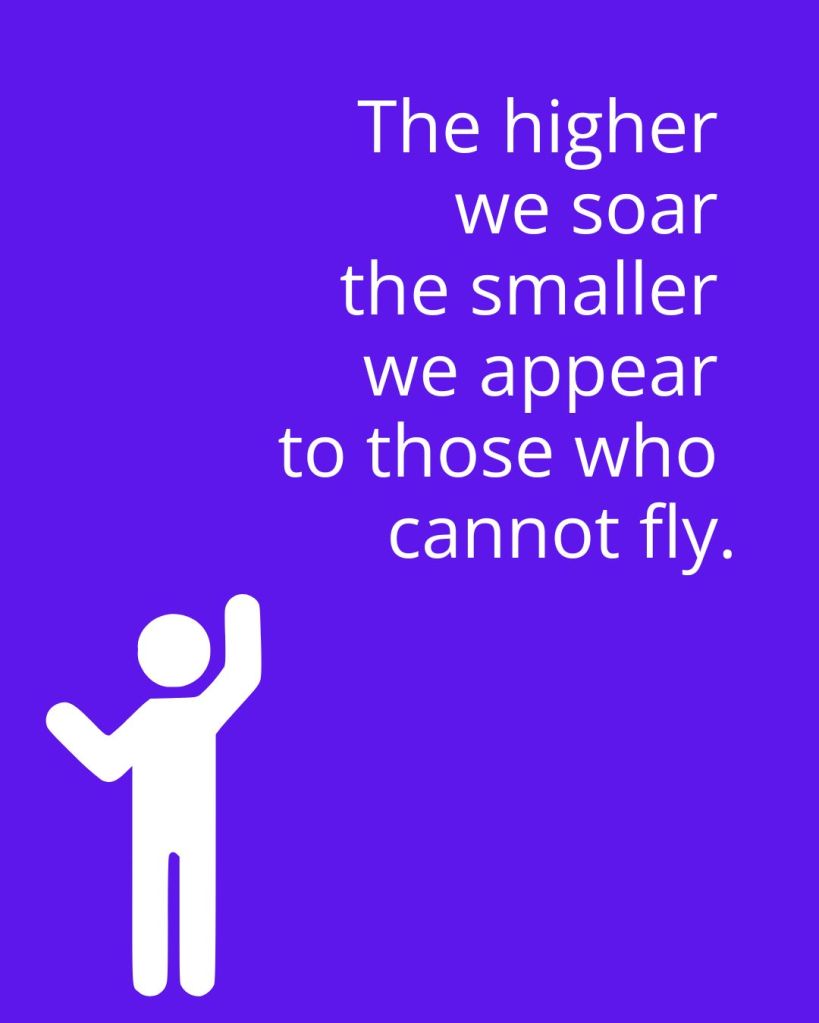
The higher we soar the smaller we appear to those who cannot fly.
my silent rebellion
madness
And those who were seen dancing were thought to be insane by those who could not hear the music
Friedrich Nietzsche
epithet?
…, the obscure.
…, the grumpy.
…, the weird (or strange).
…, the weeping solitary.
it is over …
The Anchorage experiment is over. There is no room in the modern Anglican Church of Australia for the solitary life. All about survival, so all about money.
right now
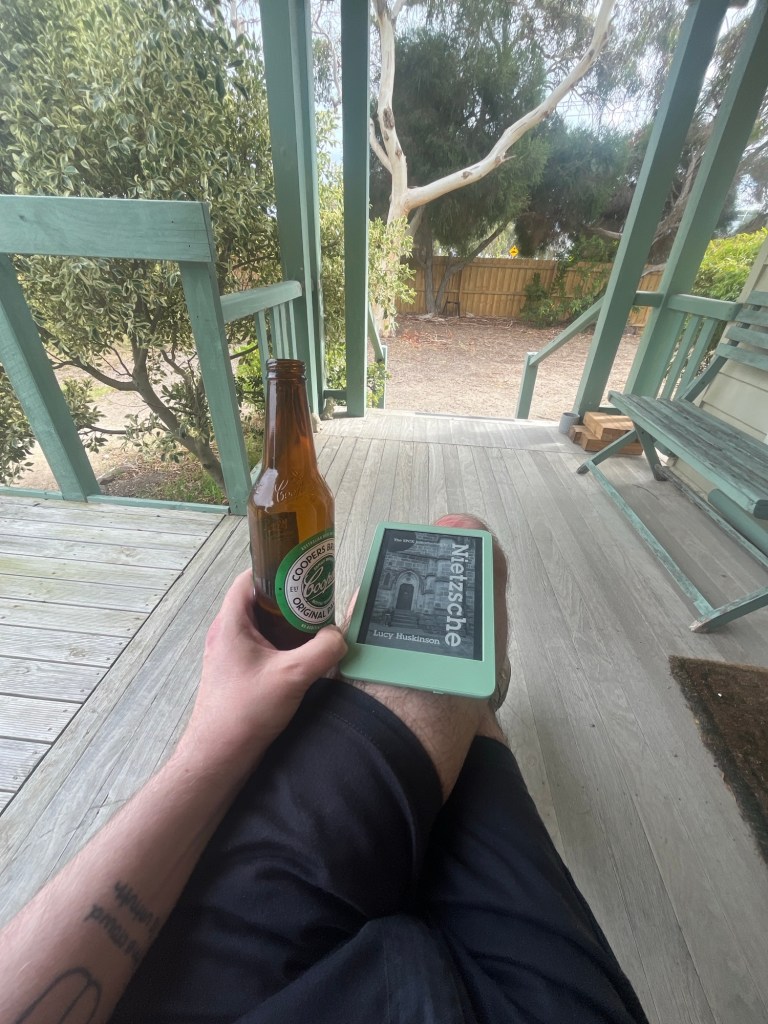
I am sitting on the porch (for the last time?!), drinking a beer before noon, reading Nietzsche, lamenting my broken toe. How is your day?
 this solitary life