I just like this song!
Category: Personal
SK and Merton – winning!
I stumbled across this in my Reader:
It is said that one of the most terrifying things that can happen to us at the final judgement, when we stand before God, is that He asks us this one question:
“Why did you not become the person I had created you to be?”
This Is How Kierkegaard, Merton, And An Obscure Book On Spinoza Helped Me Become A Writer
Now the post has SK and Merton – so we are winning right from the start. But seeing my journey reflected in other people’s journey is always an amazing experience.
I would love to be a writer but I know deep down that I will never be one. Nothing to say! Yet the post has reminded me that other’s have struggled with the same things and they have come through to the other side. So keep going!
There is another post I will check out later:
born again?
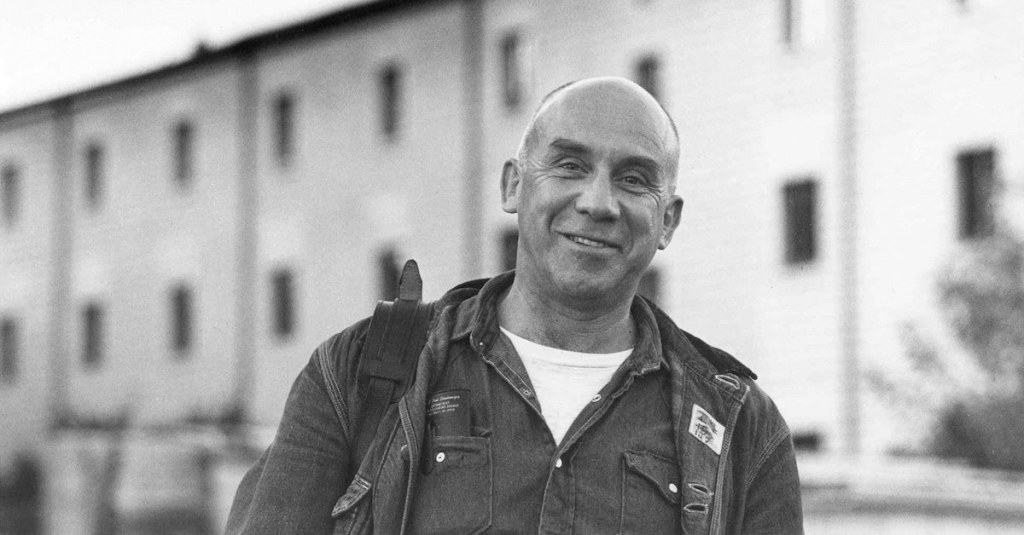
There is in us an instinct for newness, for renewal, for a liberation of creative power. We seek to awaken in ourselves a force which really changes our lives from within. And yet the same instinct tells us that this change is a recovery of that which is deepest, most original, most personal in ourselves. To be born again is not to become somebody else, but to become ourselves.
Thomas Merton (via Born Again = Imago Dei)
I appreciate in Merton that “faith” is a deepening of what I am not an abandonment. I wonder if it has something to say about our concept of sin and especially original sin. Again it is an emphases on the “Christ in us” and not the triumphalism of the “Christ for us”.
The article makes a deeper point yet: some of the rhetoric round the “born again” question is really a discussion about what it means to be in the image of God. Is every human being in the image of God? Or has the “fall” somehow smudged it only to be redrawn in the “choice of faith”?
Anyway, I would like to know the source of the above quote!
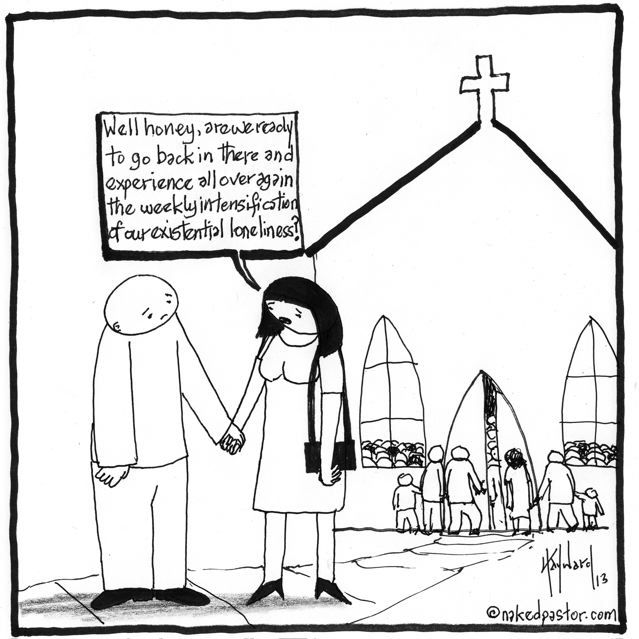
loneliness and religion
Where to?
I have been thinking about where I am intending to go with this blog (and hopefully the podcast). I really do not want to convince anyone of anything. I have no product to sell, no idea to proclaim, no party line to defend. I have absolutely no authority except my lived experience. Yet I know that life comes with many questions and many different answers to these many questions. And somehow I would like to be in that mix – helping finding answers rather than giving answers. So where to from here?
So while I was reading I came across this quote from SK about his task as an author:
“I dare not call myself a Christian; but I want honesty and to this end I will venture”
Søren Kierkegaard
THAT IS IT!! Be honest with yourself. I want to be honest with myself and I want to help people be honest with themselves. I really do not care where you stand (right, left, gay, straight, theist, atheist, Catholic, or Protestant) simply be honest in your own position. And make it that – your own position! I do not accept negative positions – “I am [X] because [Y] is wrong”. But I do accept that all positions have a sense of paradox and individuality to them. So “it is right for me” is an answer and a reason.
So there it is! A new year and a new direction. So this year I hope to post a little more regularly and a little longer posts. And, of course, I will post some new podcast episodes.
Some SK insights
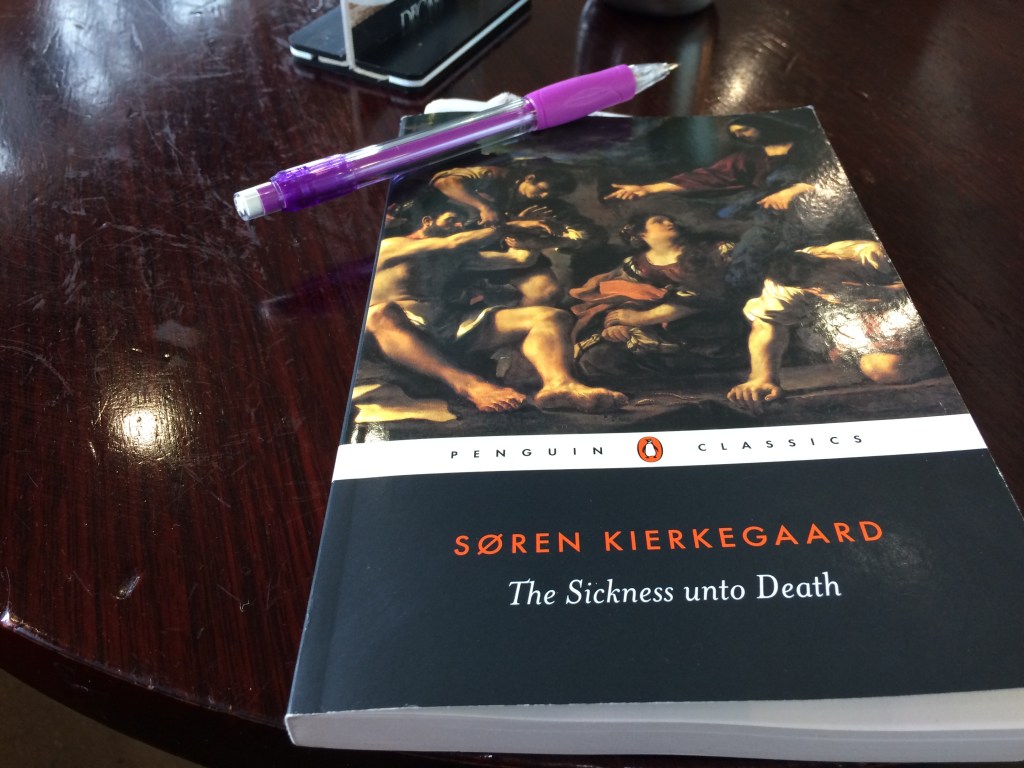
I read a great article on SK and possibility this morning. It is especially useful since I am reading Sickness unto death. Anyway, here is a quote:
The important step for Kierkegaard is the concept “before God”. This is a Christian concept. He sees this actuality, standing in prayer before God, or becoming contemporary with God, as the highest for any Christian. Here the possibility of the offense is present, and must be ever-present. But here also the possibility of being able to become a believer is present and is ever present.
SK & Possibility
The great risk in possibility is also the risk in faith.
Asking questions
One of the moral diseases we communicate to one another in society comes from huddling together in the pale light of an insufficient answer to a question we are afraid to ask.
Thomas Merton, No Man is an Island.
The pastor at the church that we attend likes to use examples from modern movies to illustrate his point. He does not actually listen to the questions being asked (by the movie) but rather is looking for validation of his point. They are not the question that the particular movie is asking but rather a “this person agrees with me” type of thing.
I think Merton is right – we are afraid to ask the difficult questions because asking it may reveal something about us. We like, rather, to gather around easy answers to difficult questions. Or, we like to escape the question by simply gathering round cliches. Or maybe we hide behind an “authority” and simply call for “blind faith”.
Anyway …
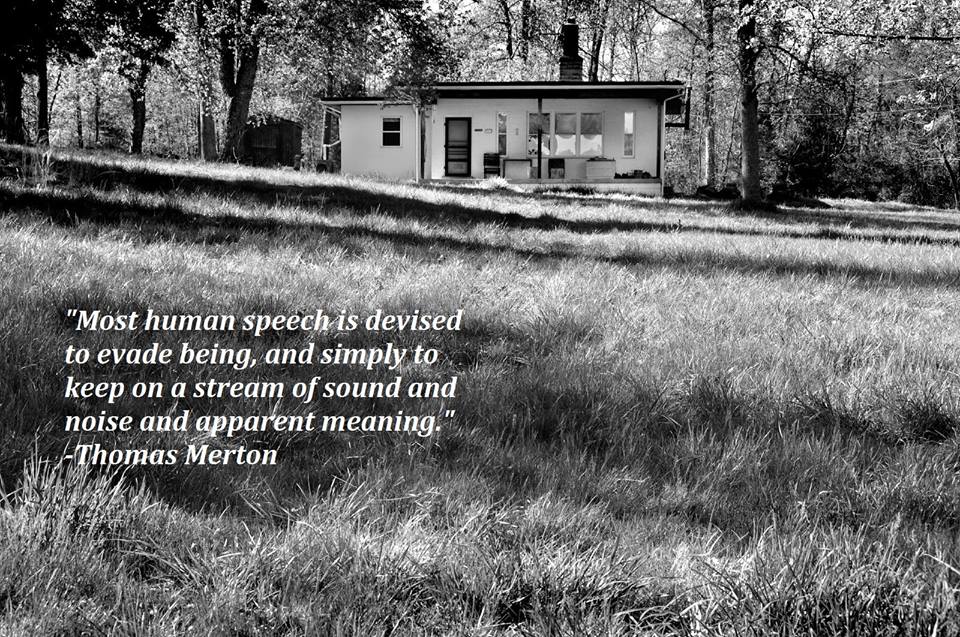
#Merton and language
Tryin’ to quote Your love With my life
Everybody’s quoting the bible
Matt Maher
Like it could be truth or lies
And I’m standing on the corner
With the saints and the sinners
Tryin’ to quote Your love
With my life
I do not believe in Christianity

Recently I have been confronted by statements that people “believe in Christianity”. I must say that upon reflection I do not believe in Christianity – I believe in Jesus.
SO here is a Kierkegaard quote:
The conflict about Christianity will no longer be doctrinal conflict (this is the conflict between orthodoxy and heterodoxy). The conflict (occasioned also by the social and communistic movements) will be about Christianity as an existence. The problem will become that of loving the ‘neighbour’; attention will be directed to Christ’s life, and Christianity will also become essentially accentuated in the direction of conformity to his life. The world has gradually consumed those masses of illusions and insulating walls with which we have protected ourselves so that the question remained simply one of Christianity as doctrine. The rebellion in the world shouts: We want to see action! (Soren Kierkegaard, Journals and Papers 4185)
To the above very-well phrased quote from Kierkegaard let me add: Christianity is not a doctrine, and not action alone, but a person! That is the paradox, the mystery, of the Single Individual – I am called to surrender myself to another person, I am called to a radical relationship to the Absolute – Jesus.
 a fool and his prayer book