Let me preface this by saying I am no philosopher, theologian, or sociologist.
I think “modern society” lives with the belief that “if I can measure it, I can create it”. The problem is that it is somewhat true. Yes, physical things can certainly be measured and then created. But what about things like beauty, community, fellowship, or love? Can I measure these and then create them?
The church is not immune. Sometimes people preach a gospel of “let’s do it”. All of that is fine without any thought to sin. God creates community and fellowship by His presence, as He does beauty, not by our agreeing with each other or being “nice”.
So what would I change: the certainty that it is within human reach to create everything.
I am reading Asceticism – a collection of papers on various topics related to … yes, you guessed it … asceticism.
The opening paper has a quote from The First Circle by Aleksandr Solzhenitsyn when the prisoner says to the Minister:
I’ve got nothing, see? Nothing! … You only have power over people so long as you don’t take everything away from them. But when you’ve robbed a man of everything he’s no longer in your power – he’s free again.
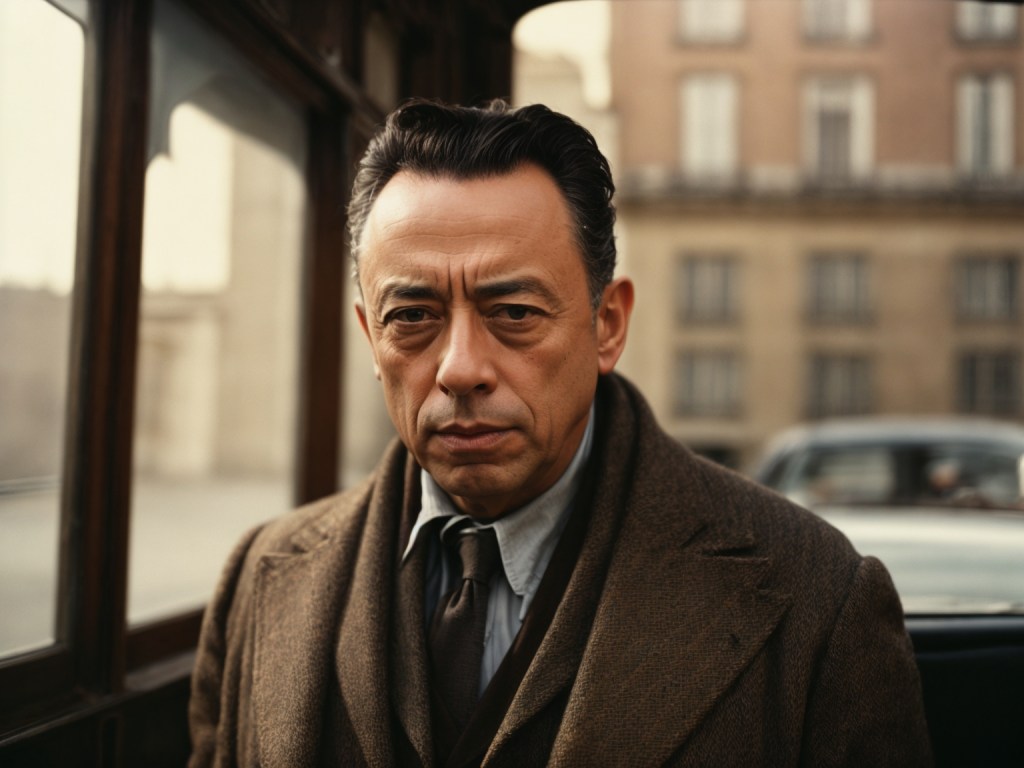
I was reflecting on that quote in the context of the oft-quoted Albert Camus:
The only way to deal with an unfree world is to become so absolutely free that your very existence is an act of rebellion.
As a community (ie the Church) we often speak of not being ruled by the world. But in reality what does that mean for the individual? There is a political aspect to the solitary life: a life not ruled (in theory!) by the standards of the world. For me, and I have thought about this a lot in the last month, the solitary life is a place and that place is a person. I refuse to be objectified! I refuse to be put in a box and then told, “see you are not acting right (ie according to the box which you have been put into)”. For many years I have looked for the “right box” – the right objective truth that defines me.
The only freedom is in Nothing (ie a NOthing, a Person!)
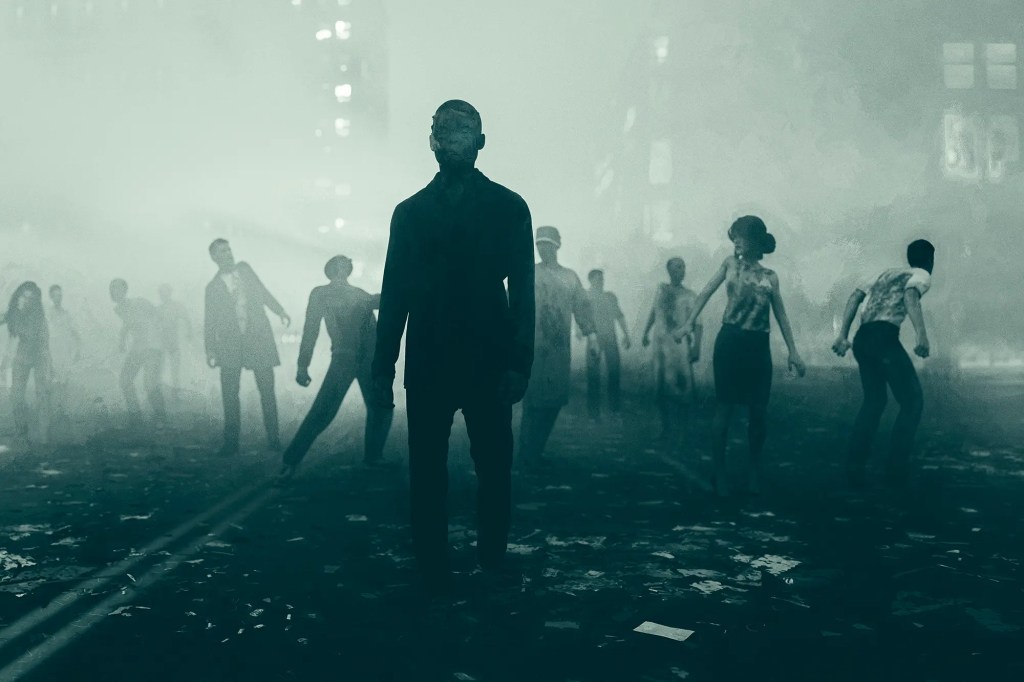
Would you survive a zombie apocalypse? (Without discussing the likelihood of such an event or the possibility of the walking dead.)
Maybe I would struggle! I have no practical skills. So I think I would be some zombie’s lunch before I could starve. Maybe I could lock the doors and just live as I do now? But I would still starve. The library would come in handy for heating. But a complete collection of Kierkegaard’s works will be of little practical help. The person who has read the complete collection even less. I would still starve. My phone would quickly become a paperweight and I would struggle without coffee. Maybe I could survive a little but not long? I would most certainly not thrive in such a context. I am not a fighter, nor a leader, nor a motivator of people. I would starve.
If this zombie apocalypse would happen, what would remain of this life? Money? Paper money may serve another purpose. Yet the numbers on a computer somewhere would be absolutely useless. No more internet so no way to pay with my phone. Time? The sun would still rise but after all the batteries have run out, would there still be an 11:00 am meeting? Would there still be a church? Would there be theological debates about the nature of the current issue?
So, with this possible scenario before me, what really matters now? What is simply for this time and place (contingent) and what would be useful in a zombie apocalypse? To what extent is my life now defined by contingent things and ideas? As a follower of Jesus, there is a time coming when “heaven and earth” will pass away and will be no more. Then what will remain? So maybe the question is not so much about zombies?
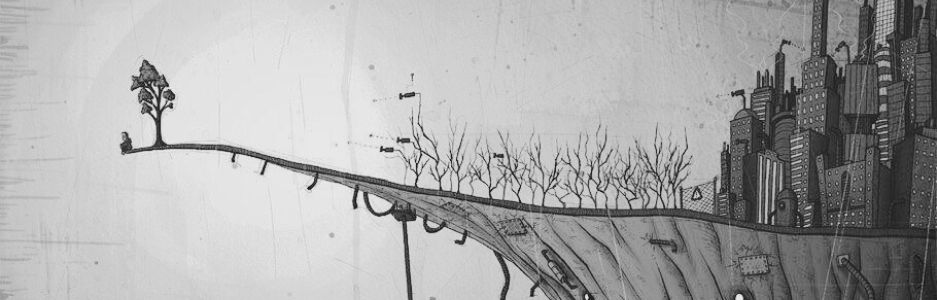
I am reading a book that considers the hermeneutic of the Desert Christians. The author muses on the movement from “text to meaning”. I wonder if this movement is not another example of the Ugly Ditch:
That, then, is the ugly, broad ditch which I cannot get across, however earnestly I have tried to make the leap. If anyone can help me over it, let him do it, I beg him, I adjure him. He will deserve a divine reward from me.
G. E. Lessing
Also, I have been thinking about the meaning that we (I?) assign to contingent “truth”?! In the end (so to say), the abstract wins over the individual and conformity is the only virtue (moral) left.
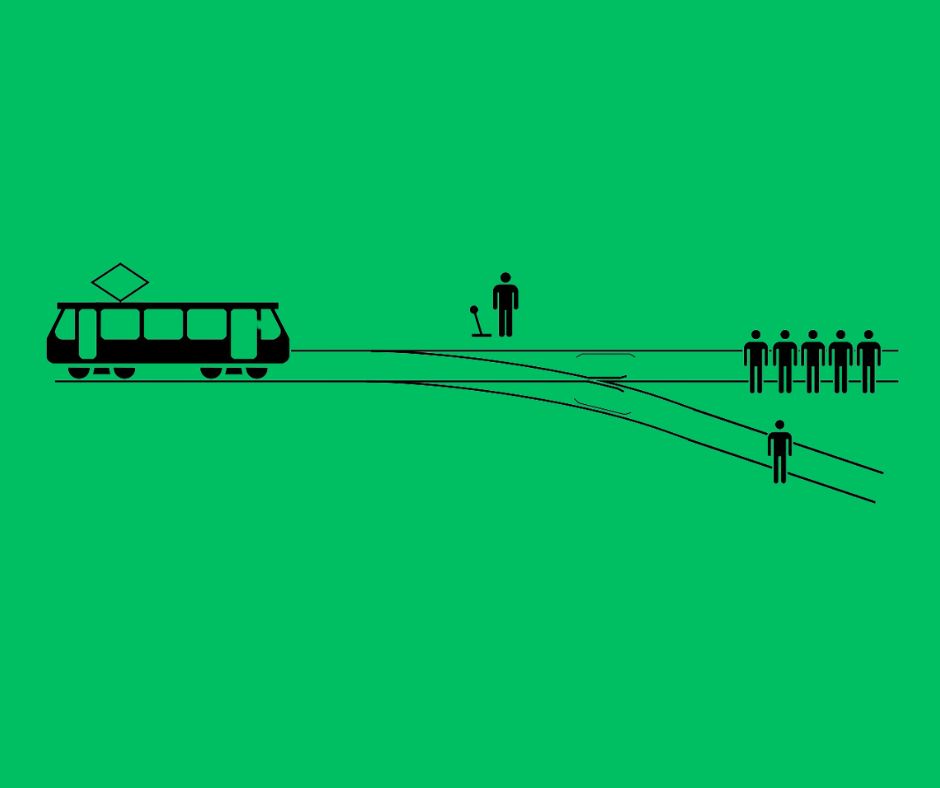
I have been thinking about the trolley problem. It was the first thought experiment I read about when I became interested in philosophy. So, in brief, your only option is to pull the lever or not. Utilitarian ethics would place the greater good at the forefront of mind – one vs five. So the active choice of pulling the lever to kill one is a “better choice” than the passive non-action. For me, the first question is what type of person can make that choice?. Who am I to pull the lever to kill one person over five?
So how would the choice change when the “one person” is more defined? Let’s say the one person can heal more than five? Would that change the choice? Yet my real question is, how would my choice change if I have an emotional relationship with the one? Either positive or negative. Would my relationship change my actions?
To return to the original utilitarian point: is the good defined by my relationship? Is there any objective (external to me) way of defining the good?
For most of my life, I have heard people say, “Feelings cannot be trusted”. And I must have said it a few times myself. I assume that feelings are subjective and therefore not trustworthy. But “reason” (whatever that may be) can be trusted because it is objective.
Why? Why can I not trust my feelings? Why can I not trust the subjective? In fact, why would I trust the objective? And is there such a thing as objective? Is reason always objective?
Why is only that trustworthy which is outside of me?
So Intentions are decisions and choices within an individual to act – a resolution! By their very nature, these resolutions are not perceivable to the senses – they cannot be measured. So individual’s intention can only be assumed and never known, especially if the person has not communicated their intention.
Simple yet a good start. Life does not owe me meaning. Why does life need meaning? Why does my life need a purpose? Do I need to know the outcome before I start?
Kierkegaard speaks about it in Fear and Trembling. The single individual’s job is not to conform to the universal or the moral.
Skepticism arises from our desire to know without the self being transformed. Ironically skepticism is but the result of our anxious desire to secure certainty by being “at home in the world.”
Harvey. Skepticism, Relativism, and Religious Knowledge


 this solitary life