In Hegelian philosophy the outer (the externalization) is higher than the inner.
Kierkegaard: Fear and Trembling (Cambridge Texts in the History of Philosophy), 60.
Category: Kierkegaard Quote
… through a choice
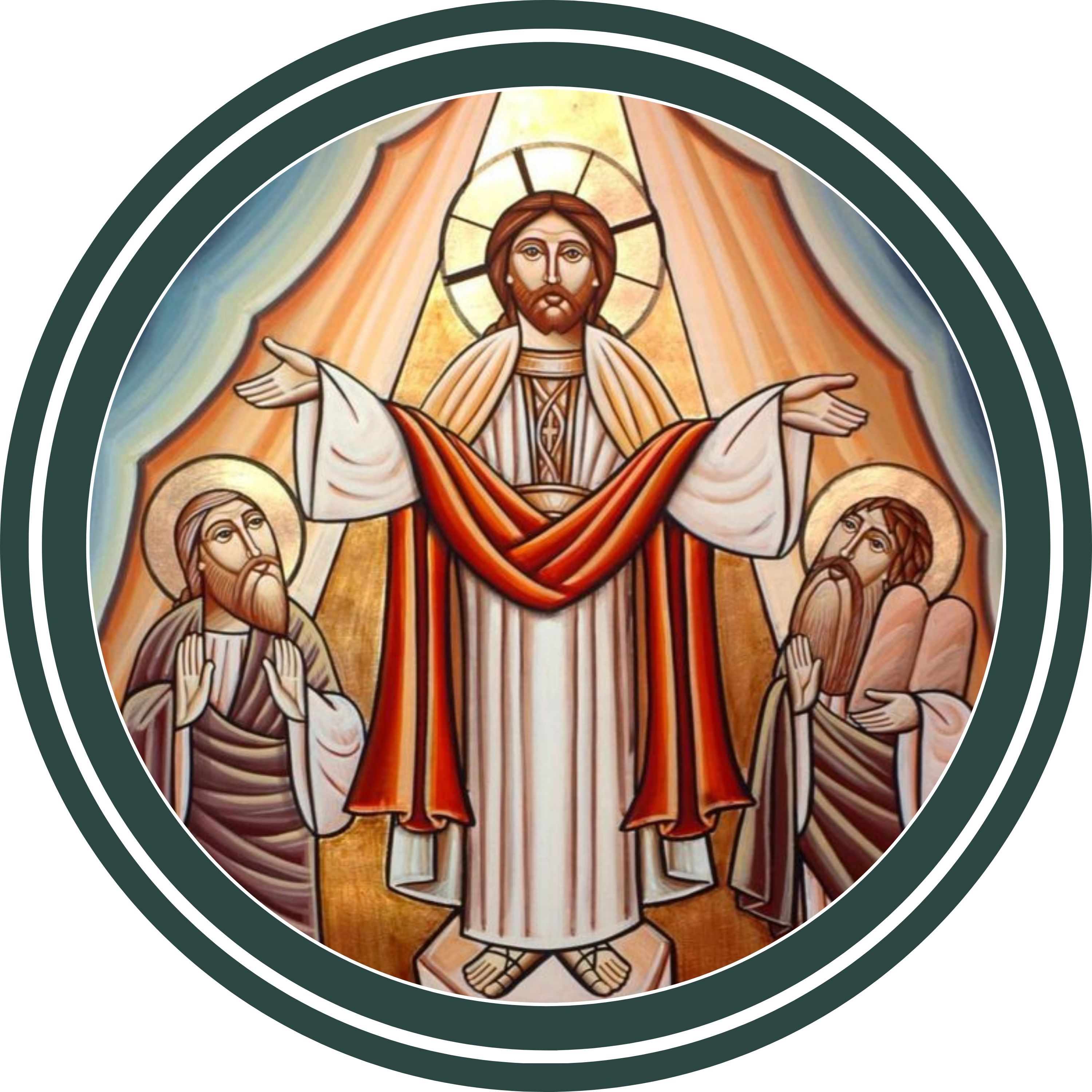
So, then, what truly can be said to draw to itself must be something in itself or something that is in itself. So it is when truth draws to itself, for truth is in itself, is in and for itself—and Christ is the truth. It must be the higher that draws the lower to itself—just as when Christ, the infinitely highest one, true God and true man, from on high will draw all to himself. But the human being of whom this discourse speaks is in himself a self. Therefore Christ also first and foremost wants to help every human being to become a self, requires this of him [XII 150] first and foremost, requires that he, by repenting, become a self, in order then to draw him to himself. He wants to draw the human being to himself, but in order truly to draw him to himself he wants to draw him only as a free being to himself, that is, through a choice.
Practice in Christianity
SK on solitude
In antiquity as well as in the Middle Ages there was an awareness of this longing for solitude and a respect for what it means; whereas in the constant sociality of our day we shrink from solitude to the point (what a capital epigram!) that no use for it is known other than as a punishment for criminals. But since it is a crime in our day to have spirit, it is indeed quite in order to classify such people, lovers of solitude, with criminals.
Sickness unto Death
It is a frightful satire and an epigram on the temporality of modern times that nowadays the only way people can think of using solitude is as a punishment, as prison. What a difference from the times when—regardless of how worldly temporality has always been—people nonetheless believed in the solitude of the monastery, when people thus revered solitude as the highest thing, as the category of eternity—and now people avoid it like a curse, so that it is only employed as a punishment for criminals. Alas, what a change.
Jounral Volume 6
… tears
As Jewish women saw it as a dishonour to be without children, so should the Xn see it as a dishonour to be without tears (which, like children, are gifts from God), and should pray, like Rachel, that God will open the womb and viscera of the heavenly man, and in the heart’s inward motions give testimony of conception.
KIERKEGAARD’S JOURNALS AND NOTEBOOKS, 2
… the passionate
There is only one proof for the truth of Xnty and it is quite rightly the passionate proof that results when the anxiety of sin and the troubled conscience compel a person to cross the thin line that sep[arates] despairing madness―and Xnty. There lies Xnty.
Kierkegaard’s Journals and Notebooks
How do I feel about Jesus? The first question in Baptism (and the renewal) is, Do you turn to Jesus?. Do I? What does that mean in my context?
SK on monasticism
The monastic movement itself was a colossal abstraction, monastic life itself a continued abstraction, a life spent in prayer and hymn-singing – instead of playing cards at the club – if there is nothing against caricaturing the one, one must surely be allowed to present the other as it has caricatured itself.
Concluding Unscientific Postscript
SK had lots of positive things to say about monasticism! Just saying.
solitary

The hole was a trip. They threw me in a six-foot-by-nine-foot room with just a mattress on the floor and a toilet. During the day they would remove the mattress and make me sleep on the concrete floor because they didn’t want me to be comfortable. It was pretty inhumane to be in a room twenty-three hours a day with the light always on, but you get used to it. You become your own best company. In a weird way, you get your freedom in the hole.
Mike Tyson
In antiquity as well as in the Middle Ages there was an awareness of this longing for solitude and a respect for what it means; whereas in the constant sociality of our day we shrink from solitude to the point (what a capital epigram!) that no use for it is known other than as a punishment for criminals. But since it is a crime in our day to have spirit, it is indeed quite in order to classify such people, lovers of solitude, with criminals.
Kierkegaard
witness
The true knight of faith is a witness, never a teacher, and therein lies the deep humanity that is worth more than this frivolous concern for the welfare of other people that is extolled under the name of sympathy but is really nothing more than vanity.
Fear and Trembling
A believer was bestowed the title of red martyr due to either torture or violent death by religious persecution. The term “white martyrdom” was used by the Church Father Jerome, “for those such as desert hermits who aspired to the condition of martyrdom through strict asceticism”. Blue (or green) martyrdom “involves the denial of desires, as through fasting and penitent labors without necessarily implying a journey or complete withdrawal from life”.
Christian martyr
silence
As my prayer become more attentive and inward
Kierkegaard
I had less and less to say.
I finally became completely silent.
I started to listen
– which is even further removed from speaking.
I first thought that praying entailed speaking.
I then learnt that praying is hearing,
not merely being silent.
This is how it is.
To pray does not mean to listen to oneself speaking,
Prayer involves becoming silent,
And being silent,
And waiting until God is heard.
being me?

Today, in Australia, is a public holiday for the Queen’s Birthday. So in honour of Her Royal Majesty, I have been watching the UK version of Humans. It is based on Swedish series called Real Humans.
In short, AI (called “synths” in the show) becoming conscious – feeling, thinking, and living in freedom. They embody various human traits – caring, agression, “philosopher”, etc. I like the way the UK does TV!
While the consciousness theme is fascinating, I have been struck by a question repeated throughout the series: “what is it like to be you?”. Of course, there is no answer because there is no point of reference. The question illustrates Existential Loneliness – only I know what it is like to be me. And the quote on my email signature comes to mind:
The formula that describes the state of the self when despair is completely rooted out is this: in relating itself to itself and in willing to be itself, the self rests transparently in the power that established it.
SUD
I feel like a large part of modern life is all about avoiding the question or escaping into “false answers”. (Doesn’t Merton write about that in No Man is An Island?) So the most important question in my life, who am I?, has to be faced alone before God. I can try to give an answer to others. But there is absolutely no need to justifiy myself to others – my beliefs or my actions. There is only One to whom I must answer – “the power that established me”. In the end I have to answer to my Creator by being “me”. I have to hold in tension the various aspects of my life – freedom and necessaity are at the top of my life at the moment.
So may the Heart of Jesus have mercy on you today!
 this solitary life