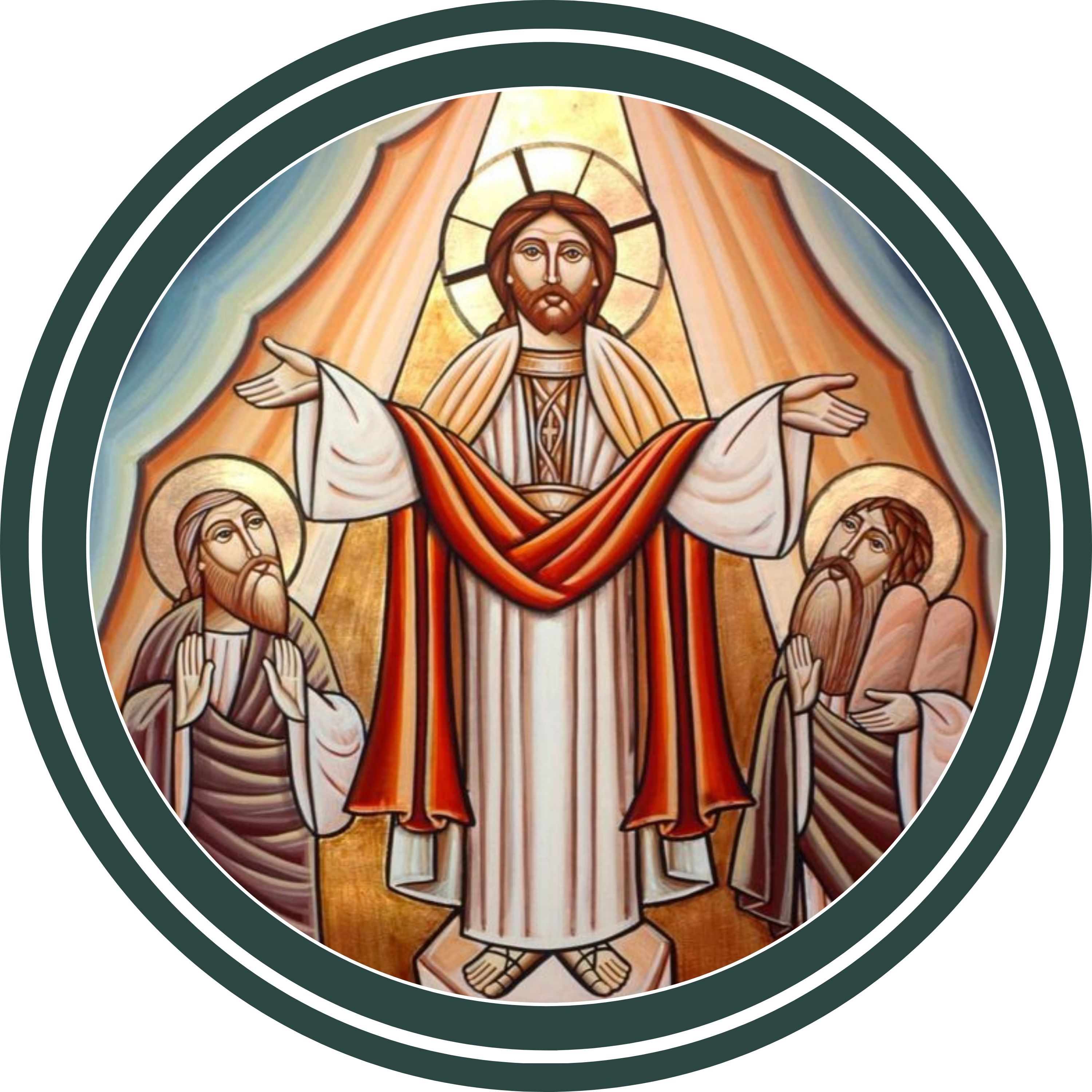
this is between Jesus and me

Christianly, struggling is always done by single individuals, because spirit is precisely this, that everyone is an individual before God, that “fellowship” is a lower category than “the single individual,” which everyone can and should be. And even if the individuals were in the thousands and as such struggled jointly, Christianly understood each individual is struggling, besides jointly with the others, also within [themselves], and must as a single individual give an accounting on judgment day, when [their] life as an individual will be examined.

Practice in Christianity (slightly modified)

I think people sometimes misunderstand Kierkegaard on the issue of being “the single individual”. I have heard him quoted as an individualist who promotes absolute subjectivity. Hardly! The context into which he speaks is Christianity properly understood. The people I have heard accuse him of being an individualist tend to be Biblicists or fundamentalists (even the Catholic variety) who place the individual below doctrine – or, as Kierkegaard might say, “place the abstract over the individual”.

Yes, other people can help – they can be examples, share their insights, and support me within my struggles and journey. I have felt that reality and I am thankful to God for the faithful people He has placed in my life. And I need to be encouraged (and reminded) to be that person for others – to seek spiritual friendship and to allow my gifts (and struggles) to help others. But in the end, I cannot answer for another when Jesus returns. I cannot answer for their life and no one can answer for my life. Maybe the best way is to think of it in terms of being “alone together”?!

God became a Single Individual in Jesus and went to the cross alone for me, so I come before God alone, seeking His love and mercy.

before Jesus

And now, what of Christianity! Christianity teaches that this individual human being—and thus every single individual human being, no matter whether man, woman, servant girl, cabinet minister, merchant, barber, student, or whatever —this individual human being exists before God, this individual human being who perhaps would be proud of having spoken with the king once in his life, this human being who does not have the slightest illusion of being on intimate terms with this one or that one, this human being exists before God, may speak with God any time he wants to, assured of being heard by him—in short, this person is invited to live on the most intimate terms with God! Furthermore, for this person’s sake, also for this very person’s sake, God comes to the world, allows himself to be born, to suffer, to die, and this suffering God—he almost implores and beseeches this person to accept the help that is offered to him! Truly, if there is anything to lose one’s mind over, this is it! Everyone lacking the humble courage to dare to believe this is offended. But why is he offended? Because it is too high for him, because his mind cannot grasp it, because he cannot attain bold confidence in the face of it and therefore must get rid of it, pass it off as a bagatelle, nonsense, and folly, for it seems as if it would choke him.

Sickness unto Death, Hong 85

A longer passage from Sickness unto Death to start the day. I admit that it is not a SK book I often read. But the above about says it all – it is a Kierkegaardian approach to Christianity. It includes both major ideas: before God and the Absolute Paradox. And, for bonus points, it includes the idea of intimacy with God in Jesus.

getting out of the cave

What must be the first step of the self upon this road to perfect union with the Absolute? Clearly, a getting rid of all those elements of normal experience which are not in harmony with reality: of illusion, evil, imperfection of every kind. By false desires and false thoughts man has built up for himself a false universe: as a mollusc, by the deliberate and persistent absorption of lime and rejection of all else, can build up for itself a hard shell which shuts it from the external world, and only represents in a distorted and unrecognisable form the ocean from which it was obtained. This hard and wholly unnutritious shell, this one-sided secretion of the surface-consciousness, makes as it were a little cave of illusion for each separate soul. A literal and deliberate getting out of the cave must be for every mystic, as it was for Plato’s prisoners, the first step in the individual hunt for reality.

Underhill, Mysticism

Double points: Absolute sounds like Kierkegaard, and Plato’s cave is a great metaphor for the spiritual life.

no masks

I was thinking about a Merton quote this morning before saying Morning Prayer:

I need solitude for the true fulfillment which I seek – that of being ordinary.

A Search for Solitude, 27

In those moments of solitude and silence I have during the day, I wear no masks. When I am alone with God, I am truly me. All the pretence is gone. All my pain and suffering is laid open before the Heart of Jesus.

Yet that solitude and silence requires effort on my part. I need to slow down, take a breath, and be intentional about my focus. It is much easier to have my mind filled with the everyday – the worries, the hurts, and the constant need to be in control or at least seem to be in control. That moment of silence requires effort!

Rest in Jesus

Prayer was the very heart of the desert life, and consisted of psalmody (vocal prayer – recitation of the Psalms and other parts of the Scriptures which everyone had to know by heart) and contemplation. What we would call today contemplative prayer is referred to as quies or “rest.” This illuminating term has persisted in Greek monastic tradition as hesychia, “sweet repose.” Quies is a silent absorption aided by the soft repetition of a lone phrase of the Scriptures – the most popular being the prayer of the Publican: “Lord Jesus Christ, Son of God, have mercy on me a sinner!” In a shortened form this prayer became “Lord have mercy” (Kyrie eleison) – repeated interiorly hundreds of times a day until it became as spontaneous and instinctive as breathing.

Thomas Merton, The Wisdom of the Desert, 20

The repeating of a single phrase while breathing is a great way to pray. I find, especially at night, it is super relaxing but it also focuses me on Jesus. But what I really like about the above quote is that “sweet repose” and liturgical prayer live alongside each other. As it should be!

excuses and evasions

What an individual is capable of may be measured by how far his understanding is from his willing. What a person can understand he must also be able to make himself will. Between understanding and willing lie the excuses and evasions.

Søren Kierkegaard, The Journals (1846)

I read this SK quote online. So it does not have a detailed source attached to it – a personal gripe. But I like the last sentence: between thinking and doing are excuses. People know what the right thing to do is but they evade it with excuses (not reasons). It illustrates again that there is a qualitative difference between knowing and doing.

for you

Christ is no play-actor, if I may say it this soberly; neither is he a merely historical person, since as the paradox he is an extremely unhistorical person. But this is the difference between poetry and actuality: contemporaneity. The difference between poetry and history is surely this, that history is what actually happened, whereas poetry is the possible, the imagined, the poetized. But that which has actually happened (the past) is still not, except in a certain sense (namely, in contrast to poetry), the actual. The qualification that is lacking—which is the qualification of truth (as inwardness) and of all religiousness is—for you. The past is not actuality—for me. Only the contemporary is actuality for me. That with which you are living simultaneously is actuality—for you. Thus every human being is able to become contemporary only with the time in which he is living—and then with one more, with Christ’s life upon earth, for Christ’s life upon earth, the sacred history, stands alone by itself, outside history.

Practice in Christianity, 63-64 (Hong)

I have always liked this quote from Kierkegaard. Truth as inwardness being qualified by “for you”. There is a distinction between something being true and something being true for me. In a world of “objective truth” that is often missed!

single individual

The paradox of faith then is this, that the single individual is higher than the universal, that the single individual, to recall a now rather rare theological distinction, determines his relation to the universal by his relation to the absolute, not his relation to the absolute

Kierkegaard: Fear and Trembling (Cambridge Texts in the History of Philosophy), 61.

I find this a very interesting part of Fear and Trembling. I think this is what Kierkegaard means by “faith” – the distinction between the single individual and the universal, and the relationship between the single individual and the absolute. And I think people’s misunderstanding of him, and his thought, comes from a misunderstanding of this distinction and relationship.

First to make it clear: I do not think that Kierkegaard is anti-community. Kierkegaard writes for the single individual and not for a theological school or ecclesial tradition. In some ways, his writing is closer to spirituality than theology or philosophy. He is speaking of the relationship between the individual and God, not between two or more individuals. Community is part of God’s good creation but it is not the goal of the individual’s life. The goal is a relationship with the “absolute” – to transcend the here and now. And it is this transcending relationship that must proceed any other relationship.

Belonging to a Christian community is very different to belonging to Jesus. Or, as I once read Kierkegaard saying, “being in the parish register is not the same as being in the Book of Life”. Yes, I need other people! And I have really learned what that means in the last three months. But I need Jesus more. And my relationship with Jesus gives context to my relationship with others, and not vice versa.

Anyway, I like the above quote!

anonymous in Jesus?

[the individual] is incognito, but [their] incognito consists precisely in looking just like everyone else.

Kierkegaard: Concluding Unscientific Postscript (Cambridge Texts in the History of Philosophy), 345.

Kierkegaard writes the above in his broader discussion of monasticism.

The individual does not stop being a human being, take off finitude’s motley in order to be dressed in the abstract garb of the monastery.

344

Kierkegaard’s gripe with monasticism is that monasticism is worldly defining itself by distinction in changing their dress (and name). The issue of dress is one of making oneself different from everyone else and that is the attitude of the world. Ok, the discussion is a little more involved!

So the quote about being incognito is not anti-monasticism but against the idea of being different in religious life. For me, it speaks of being “human” while being anonymous. To be anonymous in Jesus by looking just like everyone else! To fully live for Jesus while looking just like everyone else!

So the lesson for me? It is not about being outwardly different but about being inwardly attached to Jesus. It is about a relationship that is at the same time extremely private and life transforming.

Experiencing Jesus

To be grateful is to recognize the Love of God in everything He has given us—and He has given us everything. Every breath we draw is a gift of His love, every moment of existence is a grace, for it brings with it immense graces from Him. Gratitude therefore takes nothing for granted, is never unresponsive, is constantly awakening to new wonder and to praise of the goodness of God. For the grateful [person] knows that God is good, not by hearsay but by experience. And that is what makes all the difference.

Thomas Merton, Thoughts in Solitude (20 in my edition)

“Not by hearsay but by experience”. Yes, that does make all the difference. I feel that is something I would like to be able to say. To experience Jesus is the aim of it all. To really know Him above all.

All of that reminds me of a Kierkegaard quote which I think I have already used:

I do not dare to call myself a Christian; but I want honesty, and to that end I will venture.

“What do I want?”, The Moment

To be honest, like Kierkegaard, I dare not call myself a Christian – my life does not reflect Him nor does my thinking. My life does not conform to the Pattern – my life does not follow Jesus. I try! I try by doing Christian things and choosing Him when I have the choice. I try by allowing myself to be swept along by His Love. I try by living with hope that in God all things are possible.