
The contribution which stands out, however, as one reads the debate a century later, came from Charles Grafton, Bishop of Fond du Lac in the USA, the only bishop present who had been a member of a community. He made three important points. First, he believed Religious Life was a vocation and should be treated as such. Second, it did not belong, as priesthood did, to the corporate life of the Church, but instead belonged ‘to the economy of the Holy Ghost’. Obedience to a Religious superior was a voluntary action of love, not the result of the legislative action of the Church. Unlike ‘the fixity of ministerial orders’ then, he believed the work of the Holy Ghost in the call of Religious Life manifested itself in a variety of different forms. Bishops had to trust this call to have a corrective power in itself. Third, he reminded the Conference that in Religious, bishops were dealing with ‘special devotional temperaments’ that could be ‘personally emotional’ about small matters of worship. A high-handed approach would not therefore be advisable. He went on to echo the arguments put forward in Father Puller’s paper, and concluded by suggesting bishops should regulate communities only in relation to property, financial donations and insisting on communities’ having sound government.
Petà Dunstan, Bishops and Religious 1897-1914
Category: SolitaryLife
rise


This may sound a little strange – and, well, it is. I like to get up early. I mean really early. Currently, my alarm is set for 4:30 am. Often I am awake before it.
Why so early? I have found that it offers me time for mental prayer. And it provides me silence. I have a cup of tea in darkness without the possibility of interruption. I say Morning Prayer at 5:30 am and listen to the 6:00 am ABC News. And then my day starts!
It is something to which I look forward. It is a habit that brings me much joy.
Day 635 – “abstraction”
One of my favourite Kierkegaard quotes relates to levelling and the power of abstraction:
… leveling is an abstract power and is abstraction’s victory over individuals.
Two Ages: The Age of Revolution and the Present Age A Literary Review, 84
The parish is in a period of transition – moving to welcoming a new vicar. I struggle with change so it is a time of anxiety. And my brain likes to play the “what if” game.
In that context, I was thinking about how I would explain my life. I tried, with little success, to write a rule in the form of a letter like the anchorite guidance literature. Also, I tried to collect Scripture verses to illustrate various precedents. One issue surrounding the solitary life is its very nature: an individual living an individual life. Yes, there is a historical precedent. But, like Lessing, there is an “ugly ditch” between the precedent and the lived experience.
So the first lesson is that maybe I simply need to live. My greatest battle is to surrender the desire (the motivation for my actions) to be accepted and loved. If I live for Jesus alone, I should seek all good things from Him alone! And then, restored and refreshed, I can love my neighbour without seeking something in return. (I am some distance away.)
Is any attempt to define, to abstract this life, really a desire to be admired as a spiritual hero?
Second lesson: my lived experience is beyond abstraction. Perhaps the whole point of the solitary life is a life dedicated to Jesus without further abstraction? Maybe real life is lived in the space beyond definition? A personal relationship is as individual as the persons involved. While there may be common elements, these do not define the relationship.
Just some random thoughts! Anyway …
Day 633 – tears
I am a stickler for references. No reference (which I can check), no quote. But I am breaking my own rules and sharing this quote from Augustine:

This quote summarises “anchorite spirituality”. Affective piety that reflects on the Passion of Jesus.
(So if someone could please give me the reference, I will be eternally thankful.)
Day 627 – reform
Ordericus Vitalis on the Cistercian life.
All go without trousers and lambskins. They abstain from the eating of fat and meat… They have a care for silence all the time and wear no dyed clothing. They work with their own hands to provide food and clothing for themselves. They fast from 13 September until Easter, except on Sundays. They bar their entrances and allow no access to the interior [of the monastery]… By their own work they have founded monasteries in deserts and wooded places.
“Go without trousers”? So glad there was a habit for them to wear.
Day 624 – prayer

It follows, therefore, since the Office flows from the Eucharist, that there will be great variability as to how the Office is recited or offered. I know of one solitary who recites out loud, verse by verse, the whole Office by day and by night with all the appropriate bodily actions as in Choir. For another the Office may gradually become more interiorised so that the words of Scripture and psalmody are embodied by the Jesus Prayer or some other form of rhythmic prayer.
Allchin, A.M; Louf OCSO, Dom André; Ware, Metropolitan Kallistos; Walls, Fr Roland; Ward SLG, Sr Benedicta; Clare SLG, Mother Mary. Solitude and Communion: Papers on the Hermit Life (Fairacres Publications) . SLG Press.
Day 623 – affective
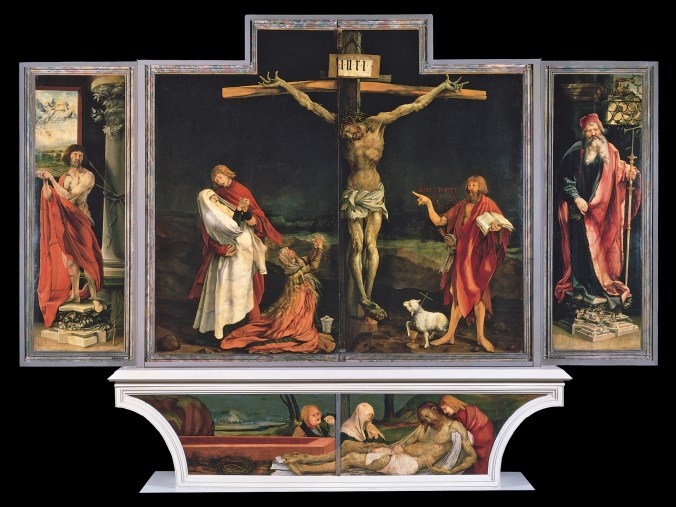
Affective piety is most commonly described as a style of highly emotional devotion to the humanity of Jesus, particularly in his infancy and his death, and to the joys and sorrows of the Virgin Mary. It was a major influence on many varieties of devotional literature in late-medieval Europe, both in Latin and in the vernacular. … Affective piety can be described as a type of highly emotional devotion, focused on the humanity of Jesus, which developed during the High Middle Ages. Anselm of Canterbury, Bernard of Clairvaux, and Francis of Assisi each played a key role in the development of this approach to spirituality. Traces of an affective sensitivity can be found in Late Antiquity, when clergymen preached sermons with vivid descriptions of the Passion.
Affective Piety
The spirituality of Ancrene Wisse is affective … Incarnational spirituality, expressed in devotion to the Passion of Christ and in eucharistic piety centring on the presence of Christ in the consecrated Host, is at the heart of Ancrene Wisse. The spirituality of Ancrene Wisse is essentially incarnational: within the anchorhold the anchoresses could share the suffering of their lover, Christ.
Ancrene Wisse: From Pastoral Literature to Vernacular Spirituality, Cate Gunn
Day 618 – desire?
I like being alone! Not that people are bad or evil. I like being with people but being alone feels much more natural.
Yet the desire to be liked, the desire to be heard, the desire to be an authority, remains. Or, in other words, to seek love in return for love.
Purity of heart is the desire for Jesus alone. That is the aim of the solitary life. Not to escape or be a “spiritual master”. But to turn to Christ wholeheartedly. And allow my actions to follow!
Anyway …
Day 614 – the amish
The Amish fascinate me. They are counter-cultural, “separatist”, and really nice dressers. The above video has meaningful insights, especially the language of sin (starting at about 12 minutes).
So what is sin? I am not going to offer a definition. But I will offer an alternative view: accountability. Rather than seeing it in terms of action, maybe we could see it in terms of being accountable for my actions. “Alone before God”. Sin is the state of being “outside of relationship”, expresses itself in actions, and makes me accountable to God for the good of my neighbour.
I am free to act but always accountable (to God) for those actions. Any particular action may not break the Ten Commandments (with “hate in the heart”) but still not be for the good of another.
Day 613 – mondays?
Mondays are often difficult for me. Sunday is the one day a week I go outside of the Anchorage. On Monday mornings, I cook (often for the week) and prepare for the rest of the week. But it is the day I struggle most to find some peace.
Why? The conversations of “yesterday” are at the front of my mind. It makes time to move them to my heart where they become my prayer. I try to pray for all people I encounter, especially those who are part of my community of faith. But my human side often takes over at the start of the week and I replay conversations (and my depression tries to find hidden motives and intents).
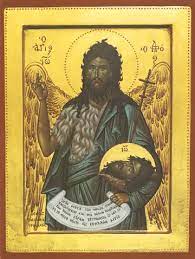
So today I celebrate the Nativity of St John the Baptist. Witness to Jesus and messenger. Not always popular, not always sociable. The first “Jesus” solitary. I wonder if he ever struggled with Mondays?
 this solitary life