Category: SolitaryLife
Day 600 – ready?
Oh, Master, make me chaste and celibate – but not yet.
To know what to do and to be ready to do it are two completely different things.
I have known for some time that I am called to more enclosure – more solitude. And I prayed that God may grant me that gift. But am I ready for it? Today is a day of change. I finish one calling and enter more deeply into another. And I return to a much older one. With Your help, O Lord!
… Day 597: Jesus alone
Do continue to practice diligently what I then, as if giving birth, instilled in your ear: “Weep before the Lord.” That is, you should ask of God only one thing: that you may desire Christ alone in wounded love, and that you may with full concentration of your heart and with all your soul wish for him alone as your dowry.
Otter, Monika C. Goscelin of St Bertin: The Book of Encouragement and Consolation [Liber Confortatorius]
… Day 595
The anchorite’s role and influence in the community was a byproduct of his spiritual life rather than something envisaged as its purpose. The initial obligations went rather in the other direction: Wulfric sought an encounter with God and counted on the community to provide the necessary conditions.
John of Ford. The Life of Wulfric of Haselbury, Anchorite (Cistercian Fathers Series Book 79)
To be solitary (in Jesus) is to not be productive (in a worldly sense).
… 6 June: Day 594

Things are changing – aren’t they always!?
Today in 1841, Marian Rebecca Hughes made private vows before Edward Bouverie Pusey – the first woman to take religious vows in the Anglican church since the Reformation. So maybe today’s festival should be “All Saints of Anglican Religious Life”?
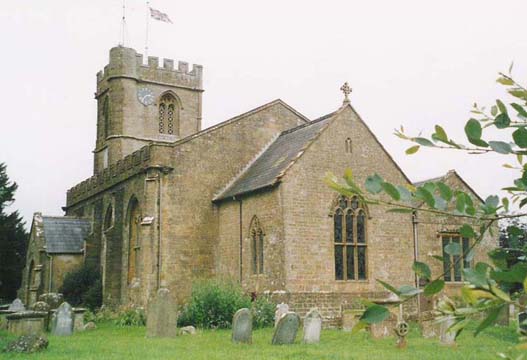
Wulfric of Haselbury was an anchorite, recluse, solitary priest. Know for his healing and insight. He lived the life of a solitary next to St Michael and All Angels Church in Haselbury Plucknett, Somerset. I am encouraged that while he worked well with the vicar, he was never “licensed” to this life by his bishop. He was, in the original sense, a house ascetic. He said Mass in his inner cell and spoke to people in his outer cell.
Sometimes, to be honest, God moves and I am not ready for it. I felt the need to surrender above all the desire to be heard and trusted: to be the person with the answers. Or, to put it differently, the desire to be loved by people. I need to desire to be friends with people (rather than using them for my own ends).
Today is Day 594 in The Anchorage. Circumstances mean my “solitary life” is going to be more defined. And I am not ready. “Maybe tomorrow, Lord!!!”
… the agony aunts of their day
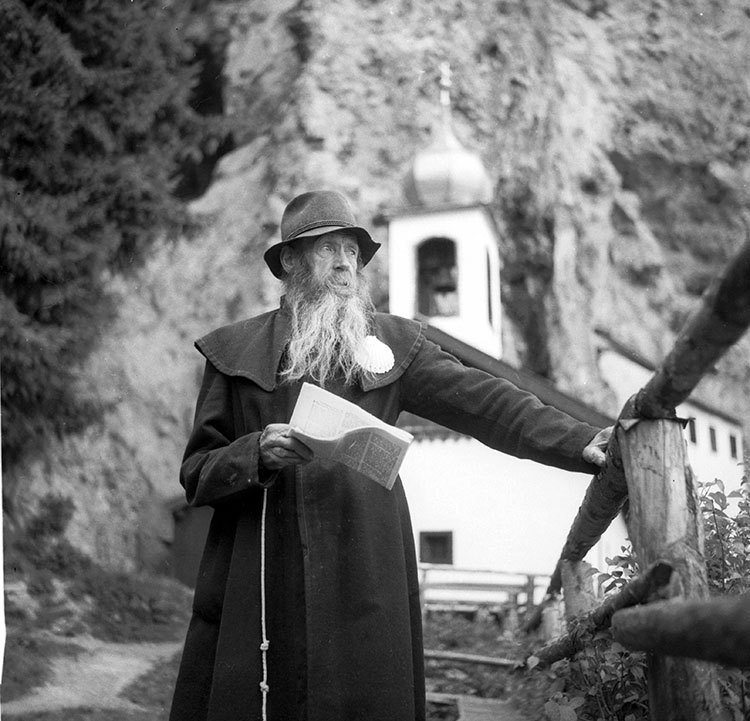
A few quotes from The Friendly Recluse: Medieval hermits were the agony aunts of their day.
Hermits, anchorites and anchoresses (men or women who lived enclosed in a small cell in a church) were holy figures with looser ties to ecclesiastical authorities and more autonomy than those who lived in formal religious communities. … their nature was one of isolation and ‘the solitary combat of the desert’.
While the degree of social contact medieval recluses had differed, there is evidence to suggest that they were the agony aunts of their day, often flying in the face of the recommendations of religious authorities. … The scholar of medieval devotional literature, Michelle M. Sauer, has said that while ‘The anchorite, in theory, was utterly alone in the cell … the reality of this lifestyle was quite different’ and ‘anchoresses were sought out by devout Christians and courted by towns, becoming a visible sign of holiness and protection’
The whole article is interesting – a good introduction to some of the literature. And, the main purpose, a town advertising for hermit/anchorite is a solid idea that many more modern towns should consider.
… asceticism and freedom
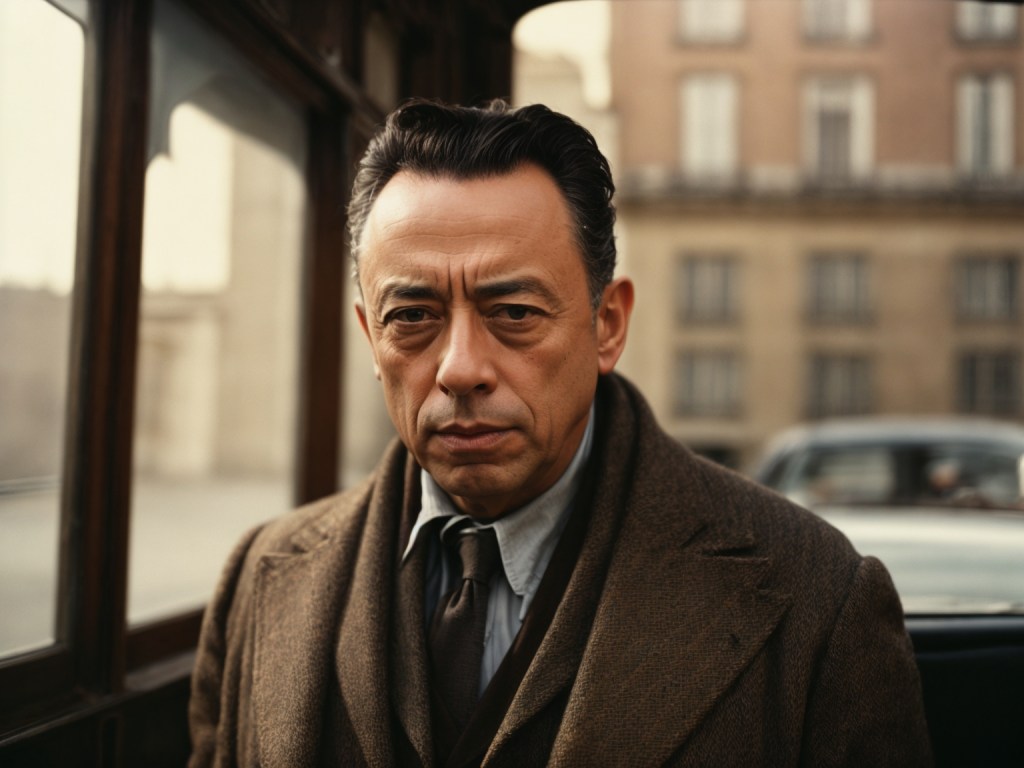
I am reading Asceticism – a collection of papers on various topics related to … yes, you guessed it … asceticism.
The opening paper has a quote from The First Circle by Aleksandr Solzhenitsyn when the prisoner says to the Minister:
I’ve got nothing, see? Nothing! … You only have power over people so long as you don’t take everything away from them. But when you’ve robbed a man of everything he’s no longer in your power – he’s free again.
I was reflecting on that quote in the context of the oft-quoted Albert Camus:
The only way to deal with an unfree world is to become so absolutely free that your very existence is an act of rebellion.
As a community (ie the Church) we often speak of not being ruled by the world. But in reality what does that mean for the individual? There is a political aspect to the solitary life: a life not ruled (in theory!) by the standards of the world. For me, and I have thought about this a lot in the last month, the solitary life is a place and that place is a person. I refuse to be objectified! I refuse to be put in a box and then told, “see you are not acting right (ie according to the box which you have been put into)”. For many years I have looked for the “right box” – the right objective truth that defines me.
The only freedom is in Nothing (ie a NOthing, a Person!)
Anyway …
… tears
More important than baptism is the spring of tears that comes after baptism, although it may be somewhat bold to state this. Because baptism is the cleansing from evils that were present in us beforehand, but the sins which we commit after baptism are cleansed by tears. Although baptism is performed at infancy, all of us have polluted it, and so we need to purify it anew with tears. If, in His love for humanity, God had not granted us tears, few there would be, and difficult to discover, those who would be in a condition of grace.
The Ladder of Divine Ascent
… zombie apocalypse
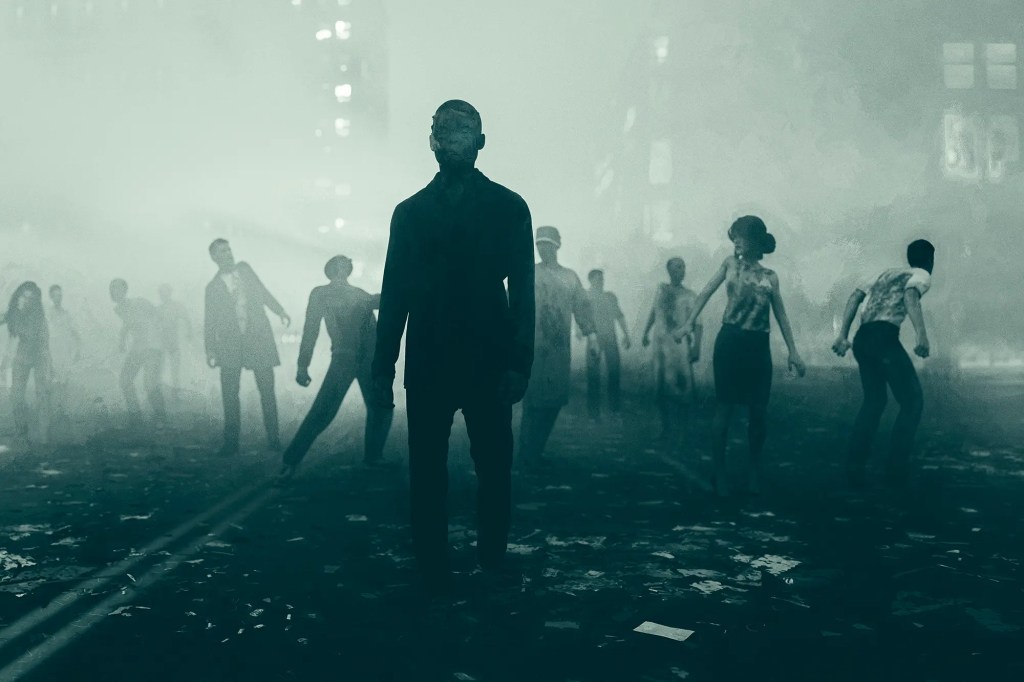
Would you survive a zombie apocalypse? (Without discussing the likelihood of such an event or the possibility of the walking dead.)
Maybe I would struggle! I have no practical skills. So I think I would be some zombie’s lunch before I could starve. Maybe I could lock the doors and just live as I do now? But I would still starve. The library would come in handy for heating. But a complete collection of Kierkegaard’s works will be of little practical help. The person who has read the complete collection even less. I would still starve. My phone would quickly become a paperweight and I would struggle without coffee. Maybe I could survive a little but not long? I would most certainly not thrive in such a context. I am not a fighter, nor a leader, nor a motivator of people. I would starve.
If this zombie apocalypse would happen, what would remain of this life? Money? Paper money may serve another purpose. Yet the numbers on a computer somewhere would be absolutely useless. No more internet so no way to pay with my phone. Time? The sun would still rise but after all the batteries have run out, would there still be an 11:00 am meeting? Would there still be a church? Would there be theological debates about the nature of the current issue?
So, with this possible scenario before me, what really matters now? What is simply for this time and place (contingent) and what would be useful in a zombie apocalypse? To what extent is my life now defined by contingent things and ideas? As a follower of Jesus, there is a time coming when “heaven and earth” will pass away and will be no more. Then what will remain? So maybe the question is not so much about zombies?
… conflict
When I started living alone, in my current context, I remember thinking, “Now I can relax!”. Solitude, at first, can seem like an escape. “Peace is to be alone”, at least for some people. Freedom to move and be as you desire without outside obligations.
Yet what I have discovered is the opposite. Solitude is conflict. There is nothing here to distract me from me. My memories are what I bring into the cell. And, for me, these memories often mean pain and hurt. There is nothing to distract, nothing to darken the memories, nothing to ease the pain.
What do I do to forget? Do I want to forget or is my purgatory these memories? I have found only one prayer, “Lord Jesus, have mercy on me”. And to forget? Remember Jesus on the cross! Enter into the mystery of the Incarnation by answering (or attempting to) the question, “Do you turn to Jesus?”.
Maybe in this, I am like everyone else?
 this solitary life