Sophronius’ account of Mary of Egypt is rich in theological and symbolic meaning. Her life dramatizes the Christian doctrine of metanoia, or radical repentance. In contrast to idealized virgin martyrs or pious abbesses, Mary’s starting point is one of abjection and vice. Her sanctification, however, does not stem from institutional religion, monastic guidance, or sacramental regularity, but from personal encounter with divine grace. Sophronius portrays the desert as both a site of temptation and a crucible of transformation—echoing the biblical paradigm of the Israelites and Jesus himself.
Category: Spirituality
… tears
More important than baptism is the spring of tears that comes after baptism, although it may be somewhat bold to state this. Because baptism is the cleansing from evils that were present in us beforehand, but the sins which we commit after baptism are cleansed by tears. Although baptism is performed at infancy, all of us have polluted it, and so we need to purify it anew with tears. If, in His love for humanity, God had not granted us tears, few there would be, and difficult to discover, those who would be in a condition of grace.
The Ladder of Divine Ascent
… must see
I stumbled across this yesterday. This is a must-watch for those who are interested in the solitary life. Not only is it benefical spiritually but it is beautifully shot and edited. So go forth and watch!
… mouth and stomach
Abba Pambo asked Abba Anthony, “What ought I to do?” and the old man said to him, “Do not trust in your own righteousness, do not worry about the past, but control your tongue and your stomach.”
The Sayings of the Desert Father, Ward
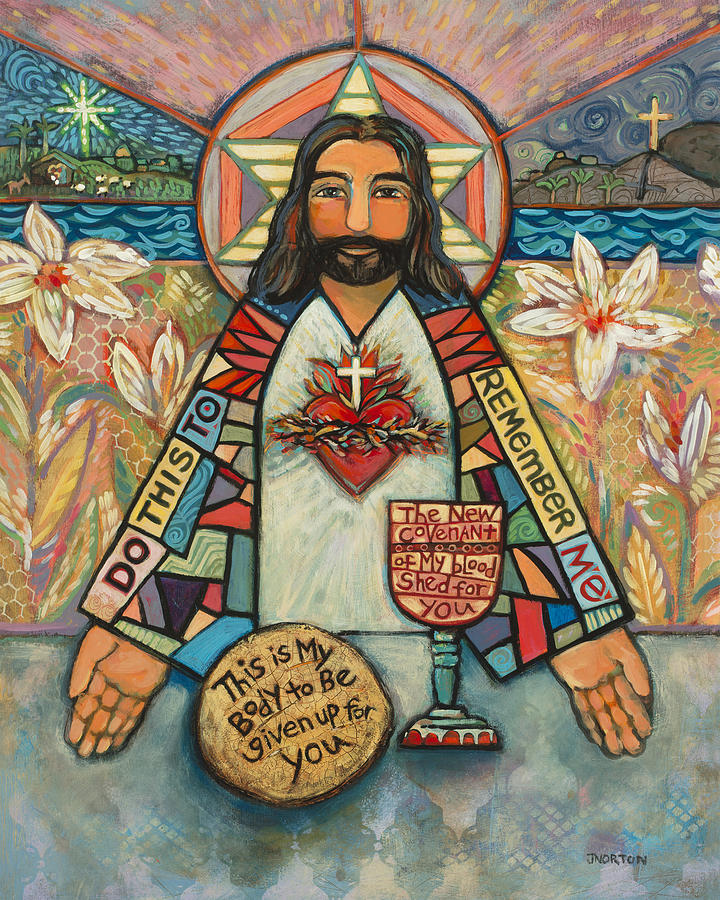
heart of jesus

your heart is my home
There is a Matt Maher song that says, “And forever and ever His heart is my home”. I have always liked that image: Jesus’ heart is my home! Maybe that is a form of the sacred heart?! Maybe it is simply me!?
I found this image today that reminded me and I thought I would share:
accept to expect
I have been meaning to write this for a couple of days. While having a coffee I was challenged (indirectly) by someone to move from “accept to expect”. And I have been reflecting on that for a couple of days.
I really like that! Not “I accept God will come to my help” but “I expect God to come to my help”. I think there is a sense of action in being “expectant” on God. As the shift from “choice” to “resolution” is a movement toward action, from possibility to actuality, so “accepting” to “expecting” is a movement.
I think, in a way, that is the movement that Kierkegaard expects (!!) in faith. The change from possibility to actuality. The movement from having faith in Jesus to imitating Jesus in my daily life. Maybe that is what the Brethren of the Common Life called “conversion”. From the head to the heart?!
Is that too over the top philosophical?
the experience of now
Every experience is a paradox in that it means to be absolute, and yet is relative; in that it somehow always goes beyond itself and yet never escapes itself.
T.S. Eliot
I could not sleep so I read The Cloud of Unknowing during the night. My mind wandered while I tried to go back to sleep and I thought about how “living in the now” and “experiencing God” are very similar.
I struggle with “living in the now”. I feel the pull of yesterday and I am extremely anxious about tomorrow. So much so that I struggle to stay in the moment for any length of time. I try!
I have always liked the quote above from T.S. Eliot. There is something paradoxical about all experiences. Like the current moment, it is absolute. There is nothing else! And when the moment has passed, the next is absolute when I am in it. Augustine speaks about time in Book 11 of The Confessions – only the present has any existence. And so only the present is absolute.
Anyway, strange night and strange day ahead. I cannot concentrate to read. All I can do it sit in the moment.
no story without me
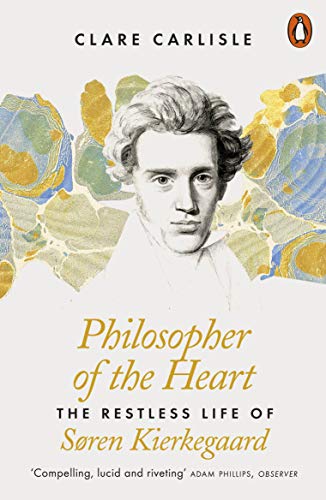
So I have been reading some very different books. On the one side, I have been reading about the Sisters and Brothers of the Common Life and Thomas a Kempis. On the other, I have started Philosopher of the Heart: The Restless Life of Søren Kierkegaard by Clare Carlisle.
I have been struck by how, in the 1300s and 1400s, there was a movement of laypeople reading (for the first time) scripture and spiritual writings in their own language and “converting” fully to Jesus. Often these laypeople were women. Theology and spirituality had been “Latin” rather than vernacular – the domain of clerics, academics, and religious. People simply “did” – they followed the prescribed ritual and laws of the Church. Because that is what they were told. Yet in the midst of this culture, there is a group of faithful who not only read in the vernacular but who also write in their own language about spiritual things. Yes, the church saw these are “suspect” and even as heretical. Yet this group focuses on “inwardness”, on a real connection with Jesus, and on living this to the fullest as a layperson.
Carlise’s book on Kierkegaard is a great read. It shows that the “me” is part of the story that is told. Kierkegaard’s “oddness” is part of his writing and trying to understand his writing apart from his story is impossible. Every book, every story, has the author as a character. Our scientific world tries to proclaim “objectivity” as possible – a “truth” that is independent of context and people. Maybe that is possible? I can read about a mathematical formula (which I would not) and have no personal engagement in the formula. I would, however, be wondering why I was reading about the formula if I had no engagement in it? But when it comes to Jesus? Jesus is never independent of a response by me. We like to elevate “logic” or reason as the deciding fact. But reasonable logical individuals come to different conclusions on the same question. Personal engagement, personal story, is always a part of the logic and the reason. Ignoring the storyteller means we do not understand the story!
What does all of that mean? I am not sure! But understanding that the people whom I read all have an agenda means I read differently. Yes, a priest thinks the best way to serve Jesus is to be a priest; a monk to be religious. Just because a person is not “clerical” does not mean they are not proclaiming Jesus. A hierarchical church does not mean all truth resides with the clerical class, nor only with the learned. People throughout the ages have known this! People of faith – lay and clerical – have proclaimed “inwardness”, subjectivity, when it comes to our relationship with Jesus. Yes, that needs to be a lived engagement. But following the rules does not mean a relationship.
So maybe a quote from Aelred of Rievaulx (writing to an anchorite) about gossip, which could equally be applied to reading, to finish:
… their purpose no longer being to arouse desire but to gratify it.
solitude
… their purpose is no longer being to arouse desire but to gratify it.
Alred of Rievaulx, Rule of Life for a Recluse
I remembered the above quote as I was reading today. I think Alred is thinking in terms of speech – especially for those who have chosen to live a life as an anchorite – but I think it equally applies to reading.
When people say that they like to read I often wonder what they mean?! I think there is a strong desire for escapism in reading. It can take you to faraway places and to situations very different from the one you find yourself. Reading can also be used to pass time, to see what the rich and famous are doing, or to catch up on the latest gossip. I wonder what the “end” of such reading is?
I think when I think of reading I am thinking of something very different. Reading is about “arousing desire” for Jesus. It is not always the Bible or the Prayer Book that arouses that desire. Traditional literature on spirituality, or modern, can move the heart as well as the head. I often read only a few words of a good book and allow them to float around my head. (Yes, plenty of space for floating!)
The religious life can be very self-indulgent. Solitude is not the absence of people – a religious form of misanthropy – but being alone with God. Solitude is a desire to be alone with Jesus. Solitude is a luxury to enjoy the presence of Jesus, to live in the Son, to sit and listen to Jesus.
 this solitary life