sleep?

Daily writing prompt
What time do you go to bed and wake up currently?

I have not answered one of these for some time.

I normally wake at 5ish. Yes, I am a morning person. I have not used an alarm clock in a long time, and I do not use my phone. I simply wake naturally at about the same time. At the moment it is still dark and very cold. Heater on and make a cup of tea.

I either listen to the news or just pray. Sometimes I try to plan my day but it never works out. I try to be ready for my day by 6. I stay in my “bedroom”, which is also my main room, to pray and enjoy a cup of tea. I love watching the sun rise over the water. There is a “no rush” attitude for my mornings.

When do I go to bed? When the sun goes down it is time for bed, as my grandmother used to say. I try to stay in a natural rhythm with the sun. I try to pray a little and then sleep.
… Day 597: Jesus alone

Do continue to practice diligently what I then, as if giving birth, instilled in your ear: “Weep before the Lord.” That is, you should ask of God only one thing: that you may desire Christ alone in wounded love, and that you may with full concentration of your heart and with all your soul wish for him alone as your dowry.

Otter, Monika C. Goscelin of St Bertin: The Book of Encouragement and Consolation [Liber Confortatorius]

… Day 595

The anchorite’s role and influence in the community was a byproduct of his spiritual life rather than something envisaged as its purpose. The initial obligations went rather in the other direction: Wulfric sought an encounter with God and counted on the community to provide the necessary conditions.

John of Ford. The Life of Wulfric of Haselbury, Anchorite (Cistercian Fathers Series Book 79)

To be solitary (in Jesus) is to not be productive (in a worldly sense).

… 6 June: Day 594

Things are changing – aren’t they always!?

Today in 1841, Marian Rebecca Hughes made private vows before Edward Bouverie Pusey – the first woman to take religious vows in the Anglican church since the Reformation. So maybe today’s festival should be “All Saints of Anglican Religious Life”?

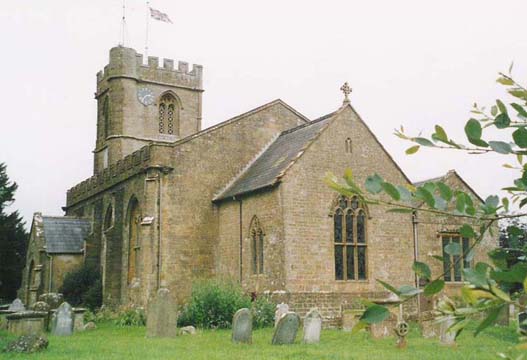
Wulfric of Haselbury was an anchorite, recluse, solitary priest. Know for his healing and insight. He lived the life of a solitary next to St Michael and All Angels Church in Haselbury Plucknett, Somerset. I am encouraged that while he worked well with the vicar, he was never “licensed” to this life by his bishop. He was, in the original sense, a house ascetic. He said Mass in his inner cell and spoke to people in his outer cell.

Sometimes, to be honest, God moves and I am not ready for it. I felt the need to surrender above all the desire to be heard and trusted: to be the person with the answers. Or, to put it differently, the desire to be loved by people. I need to desire to be friends with people (rather than using them for my own ends).

Today is Day 594 in The Anchorage. Circumstances mean my “solitary life” is going to be more defined. And I am not ready. “Maybe tomorrow, Lord!!!”

… asceticism and freedom

I am reading Asceticism – a collection of papers on various topics related to … yes, you guessed it … asceticism.

The opening paper has a quote from The First Circle by Aleksandr Solzhenitsyn when the prisoner says to the Minister:

I’ve got nothing, see? Nothing! … You only have power over people so long as you don’t take everything away from them. But when you’ve robbed a man of everything he’s no longer in your power – he’s free again.

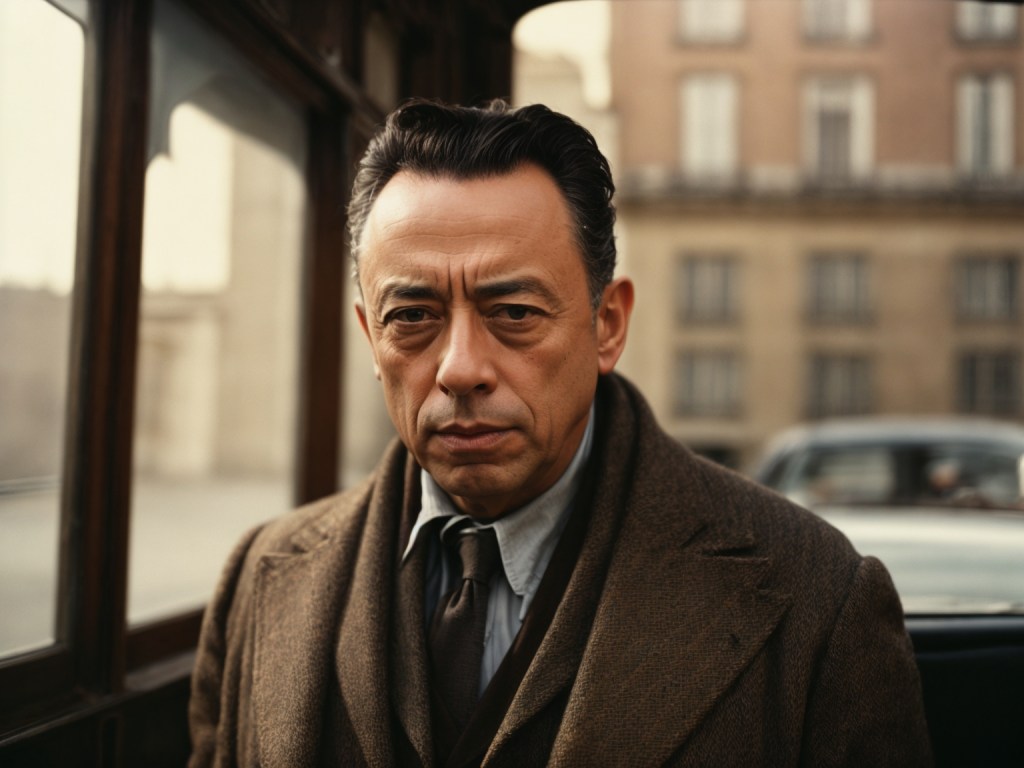
I was reflecting on that quote in the context of the oft-quoted Albert Camus:

The only way to deal with an unfree world is to become so absolutely free that your very existence is an act of rebellion.

As a community (ie the Church) we often speak of not being ruled by the world. But in reality what does that mean for the individual? There is a political aspect to the solitary life: a life not ruled (in theory!) by the standards of the world. For me, and I have thought about this a lot in the last month, the solitary life is a place and that place is a person. I refuse to be objectified! I refuse to be put in a box and then told, “see you are not acting right (ie according to the box which you have been put into)”. For many years I have looked for the “right box” – the right objective truth that defines me.

The only freedom is in Nothing (ie a NOthing, a Person!)

Anyway …

… before God

Abba Antony said to Abba Poemen: “This is the great work of a person: always to take the blame for one’s own sins before God and to expect temptation to one’s last breath.”

… zombie apocalypse

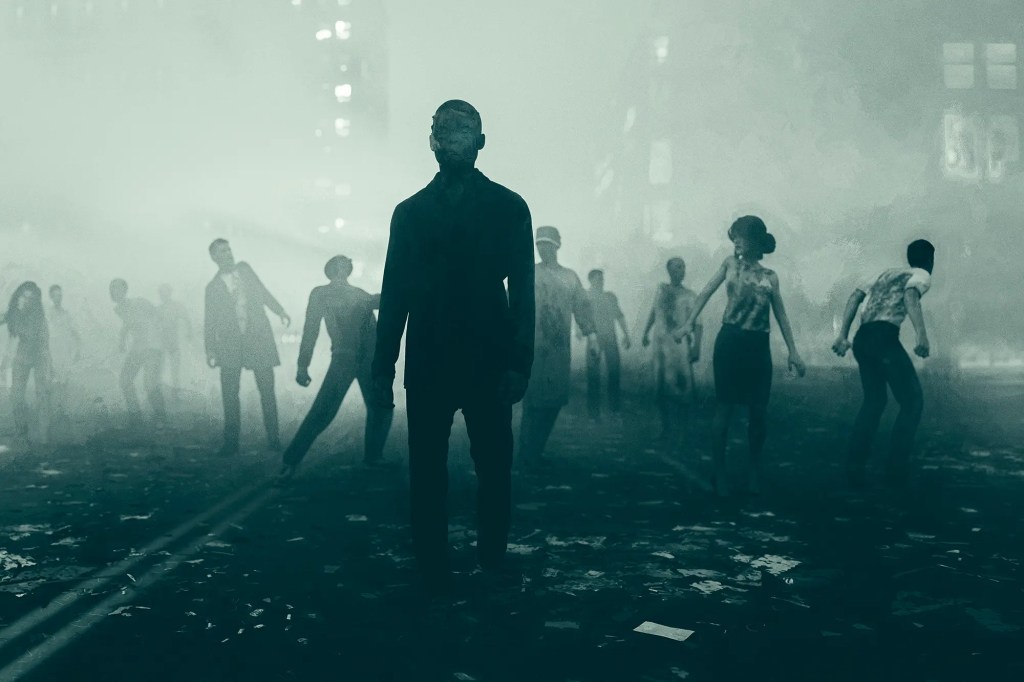
Would you survive a zombie apocalypse? (Without discussing the likelihood of such an event or the possibility of the walking dead.)

Maybe I would struggle! I have no practical skills. So I think I would be some zombie’s lunch before I could starve. Maybe I could lock the doors and just live as I do now? But I would still starve. The library would come in handy for heating. But a complete collection of Kierkegaard’s works will be of little practical help. The person who has read the complete collection even less. I would still starve. My phone would quickly become a paperweight and I would struggle without coffee. Maybe I could survive a little but not long? I would most certainly not thrive in such a context. I am not a fighter, nor a leader, nor a motivator of people. I would starve.

If this zombie apocalypse would happen, what would remain of this life? Money? Paper money may serve another purpose. Yet the numbers on a computer somewhere would be absolutely useless. No more internet so no way to pay with my phone. Time? The sun would still rise but after all the batteries have run out, would there still be an 11:00 am meeting? Would there still be a church? Would there be theological debates about the nature of the current issue?

So, with this possible scenario before me, what really matters now? What is simply for this time and place (contingent) and what would be useful in a zombie apocalypse? To what extent is my life now defined by contingent things and ideas? As a follower of Jesus, there is a time coming when “heaven and earth” will pass away and will be no more. Then what will remain? So maybe the question is not so much about zombies?

… ego

Did you hear my covert narcissism I disguise as altruism
Like some kind of congressman? (Tale as old as time)
I wake up screaming from dreaming
One day I’ll watch as you’re leaving
And life will lose all its meaning
(For the last time)

Anti-Hero

I walked to the shops to buy food. It is going to be very hot today so I thought I would do it as early as possible. On the way, I heard the above song. I am no “Swiftie” – maybe in the Australian way of using it. Yet there is insight in this song. Yes, “I should not be left to my own devices” and “Sometimes I feel like everybody is a sexy baby and I’m a monster on the hill“.

The lesson for me this Lent is “Did you hear my covert narcissism I disguise as altruism“. Being alone does not stop the ego from talking. The lesson for me this Lent is that I need not be the person with the answers, I do not need to be at the centre of things, and I do not need to be involved. How often do I dress service as something that feeds my ego? And, in my case, get hurt when it does not go the way I think it should?

Alone means, for me, not competing. My relationship with Jesus is not an Olympic event. It is personal and private (in the sense that it involves only me). How often do I love without looking for love in “payment”?

Anyway, thanks Tay Tay!!!!

… today, yesterday, right, and wrong

What we do today is ruled not by the past but by the adaptation of tradition to the needs of the present. History can only help us decide what the essentials of that tradition are, and the parameters of its adaption.

The Liturgy of the Hours in East and West, xv

I am reading Taft’s chapter on Egyptian monasticism and noticed that I marked this passage in the Introduction. The mindset that asks, “Why is what was right now wrong?”, is a temptation for me. Maybe even for others?

So two ways: the past is always right; the present is always right. Either way the word “Tradition” becomes a battle cry. Both miss that Tradition, like experience, can be used both as a verb and as a noun. It is a living Tradition, for me, that is important. (And, please, do not get me started on the Scripture vs Tradition debate!!!!)

Jesus speaks of the good scribe (Matthew 13). Words to think about.

Anyway …