wrong answers?

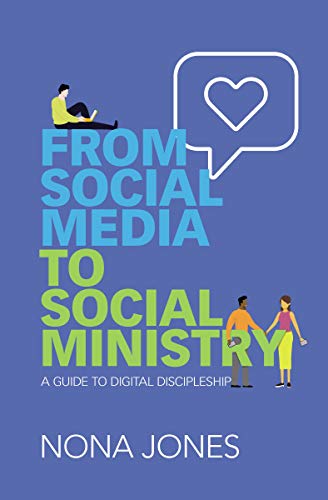
I have been reading From Social Media to Social Ministry. I am always a little hesitate of books that claim to be a guide or an answer. Often these books have a good analysis of the problem, it is just the step-by-step answers that leave me a little disappointed.

The book is written for an American evangelical audience, all of which I am not. Yet there are some real gems in the mess. (See someone does agree with me!)

The data links the decline to one main thing: a perceived lack of relevance. And relevance isn’t only a question of your message; it’s also a question of your method.

Jones, Nona. From Social Media to Social Ministry

I think a major problem for modern churches is that they are answering questions that no one (except them) is asking. In reality what person outside of the church is interested in what you think the Bible is, or how your escatology connects with your Christology? Some Christian communities behave more like cults (world evil, us good) than loving followers of Jesus.

While the data is not as convincing as the author makes out, I think that the basic point is solid: are churches answering questions people are asking? Or is the church shame-blaming people outside of the church for not asking the right questions?

Jesus connected with people. He used parables (word pictures) for people to experience Him and the Kingdom of God. Jesus used images that people were familiar with and related to. So fundamentally are modern churches building community around an argument, an idea, or around the Person of Jesus?
a witness

The true knight of faith is a witness, never a teacher, and therein lies the deep humanity that is worth more than this frivolous concern for the welfare of other people that is extolled under the name of sympathy but is really nothing more than vanity.

Kierkegaard: Fear and Trembling (Cambridge Texts in the History of Philosophy), 70

Faith cannot be taught but only “caught”.

heroes of the faith

A hero who has become an offense or stumbling block to his age in the awareness that he is a paradox that cannot make itself intelligible cries out confidently to his contemporaries: “The outcome will indeed show that I was justified.”

Kierkegaard: Fear and Trembling (Cambridge Texts in the History of Philosophy), 55

Another quote! I like that being a hero for SK is connected to the paradox. Rather than explaining everything, having all the answers, the hero stands and says, “I don’t know”.

more about faith …

The paradox of faith then is this, that the single individual is higher than the universal, that the single individual, to recall a now rather rare theological distinction, determines his relation to the universal by his relation to the absolute, not his relation to the absolute by his relation to the universal.

Kierkegaard: Fear and Trembling (Cambridge Texts in the History of Philosophy), 61.

More to add to the list of quotes for a definition of discipleship.

stilling the storm within …

On that day, when evening had come, he said to them, “Let us go across to the other side.” And leaving the crowd behind, they took him with them in the boat, just as he was. Other boats were with him. A great windstorm arose, and the waves beat into the boat, so that the boat was already being swamped. But he was in the stern, asleep on the cushion; and they woke him up and said to him, “Teacher, do you not care that we are perishing?” He woke up and rebuked the wind, and said to the sea, “Peace! Be still!” Then the wind ceased, and there was a dead calm. He said to them, “Why are you afraid? Have you still no faith?” And they were filled with great awe and said to one another, “Who then is this, that even the wind and the sea obey him?”

Mark 4:35-41

I have been working on this Sunday’s gospel reading, Jesus Stills the Storm. Interesting in the context of mission and the original audience of Mark’s gospel. There are forces that try to stop us – I say “try” because Jesus is the ultimate force.

While working on tomorrow night’s study I found this quote from Augustine of Hippo (via Pope Benedict’s “Jesus of Nazareth”):

“When you are insulted, that is the wind. When you are angry, that is the waves. So when the winds blow and the waves surge, the boat is in danger, your heart is in jeopardy, your heart is tossed to and fro. On being insulted, you long to retaliate. But revenge brings another kind of misfortune – shipwreck. Why? Because Christ is asleep in you. What do I mean? I mean you have forgotten Christ. Rouse him, then; remember Christ, let Christ awake within you, give heed to him.… ‘Who is this, that even the winds and sea obey him?’

Healy, Mary. The Gospel of Mark (Catholic Commentary on Sacred Scripture), 97.

Allow Jesus to still the storm within because He has all authority. That is a message for me. Revenge is a shipwreck. I need to move on with Jesus. Jesus in me! Silence and solitude to find Jesus again. Please, Lord!!!!

existential individuals

We are born biological beings but we must become existential individuals by accepting responsibility for our actions. This is an application of Nietzsche’s advice to ‘become what you are’. Many people never do acknowledge such responsibility but rather flee their existential individuality into the comfort of the faceless crowd.

Flynn, Thomas. Existentialism: A Very Short Introduction

I have always thought the above is a good definition of existenalism. If not a definition than a great place to start the discussion. I think SK would add “before God” but that is covered by “accepting responsibility for our actions”.

I often flee into the “comfort of the faceless crowd” – I allow others to define me, to give me meaning, to give me purpose. I escape to a mask that others ask me to wear. Because, in the end, it is much easier to let other’s define me than to do the hard work of looking at myself “before God”.

Yet I have a choice – yes or no. Do I allow others to define me or just to describe me? Yes, I am weird and awkward. But those are not failures but superpowers! I need to learn to be an “I” with all the quirks and eccentricities. Because, in the end, Jesus calls me to place my centre in Him – I am by faith an eccentric.

more “I”

The basic depravity of our times is that personality has been abolished. No one in our time dares to be a personality, everyone shrinks in cowardly anthrophobia from being I over against, perhaps in opposition, to others. Then the politicians avail themselves of the public. The politician is no I – good gracious no, he speaks in the public’s name. Religiously, ‘the Church’ is used in just the same way. What people want is an appropriate abstraction which helps them avoid being I, which is surely the greatest danger of all.

The Journals (1855)

I have to find the source of the quote! Maybe I should start a new category “Find Quote”?! Anyway, well said SK!