Christendom is the enemy of Christianity—it is, Kierkegaard says repeatedly, the “blasphemy”—that stands in the way of encountering Christ as our contemporary. Christendom assumes that Christ is far in the past, having laid the foundation for the wonderful thing that has historically resulted, Christendom. Of course we are all good Christians because we are all good Danes. It is a package deal and Christ and Christianity are part of the package. If we are good Danes (or good Americans), if we work hard and abide by the rules, the church, which is an integral part of the social order, will guarantee the delivery to heaven of the package that is our lives. But Christ is not in the distant past, protests Kierkegaard. He confronts us now, and a decision must be made. “In relation to the absolute there is only one tense: the present. For him who is not contemporary with the absolute—for him it has no existence.”
This encounter with Christ the contemporary is not to be confused with today’s evangelical Protestant language about conversion as a decisive moment in which one “accepts Jesus Christ as one’s personal Lord and Savior.” Kierkegaard did not, of course, know about the nineteenth-century American revivalism from which today’s evangelicalism issues, but he had some acquaintance with the enthusiasms that were in his day associated with “pietism.” As he inveighed against Christendom, it seems likely he would also inveigh against Evangelicaldom today. As he would inveigh against Christianity of any sort—whether it calls itself liberal or conservative, orthodox or progressive—that neatly accommodates itself to its cultural context. To decide for Christ our contemporary is always a decision to be a cultural alien, to join Christ on his way of suffering and death as an outsider.
Kierkegaard for Grownups
Category: Personal
Heroism?!
Some SK from SUD:
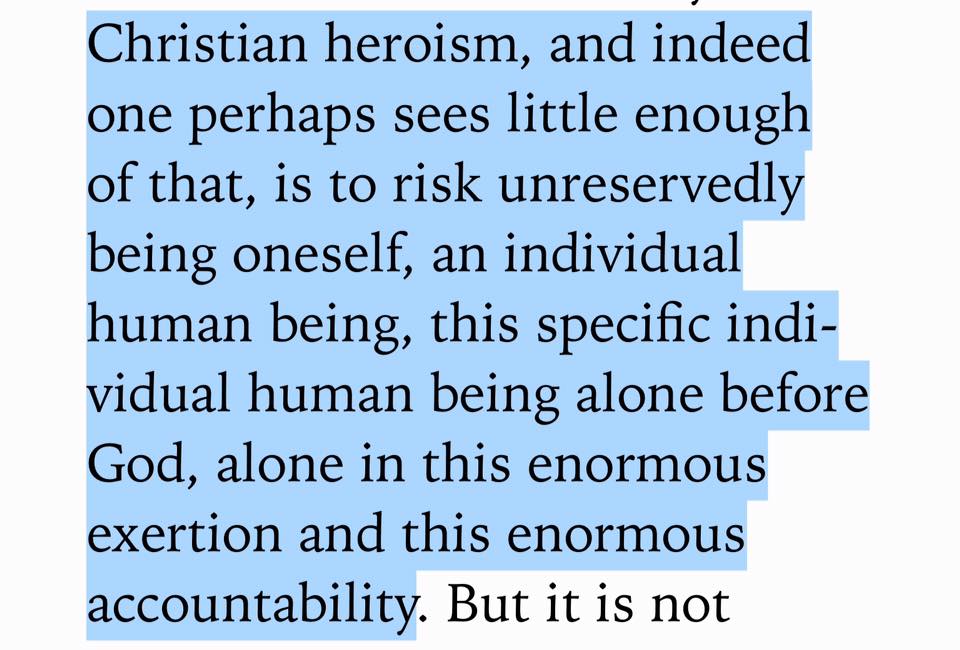
yep …
I saw this on Facebook and thought it said things pretty well:
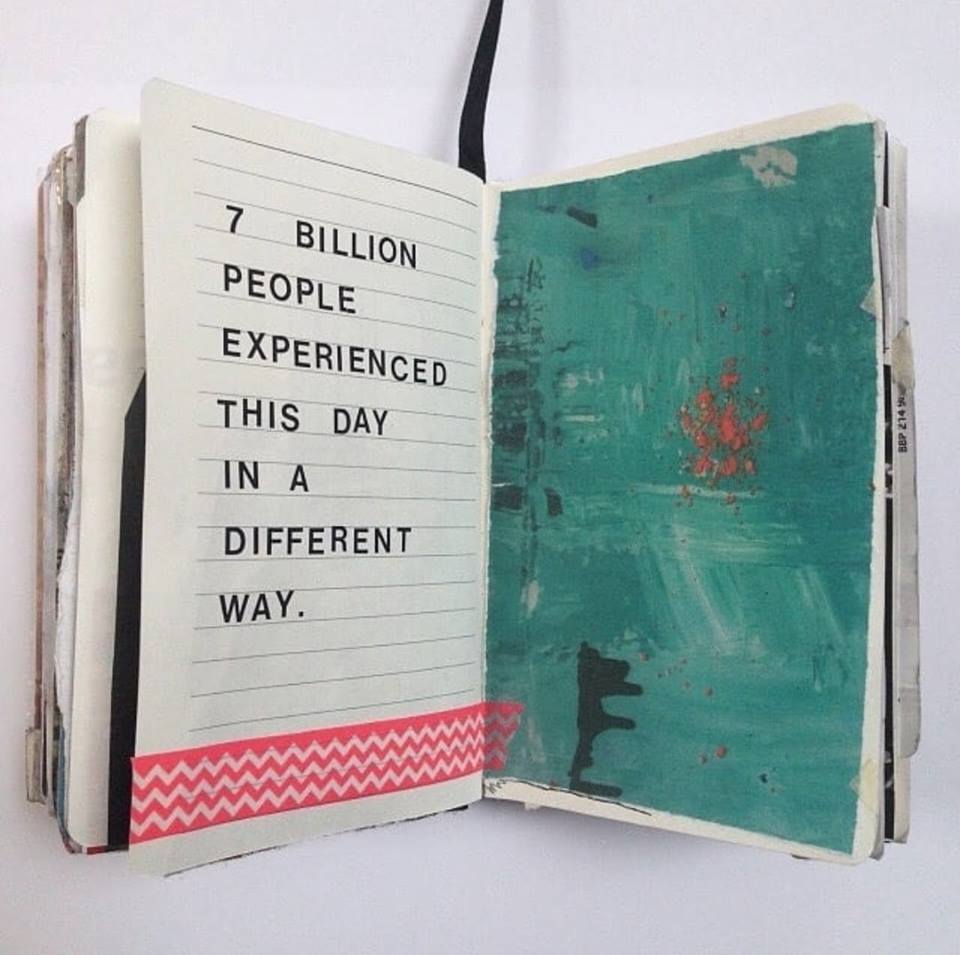
#ThomasMerton
This is just wonderful: On the Road with Thomas Merton
Also a podcast. I always enjoy hearing Merton’s voice.
Thomas Merton
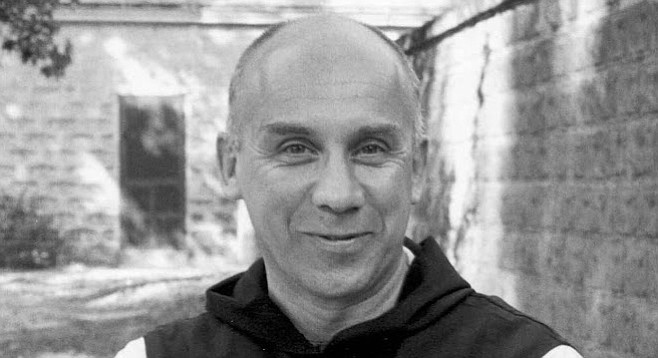
Today, 31 January, is Thomas Merton’s birthday. He would have turned 104. So here is a quote:
A tree gives glory to God by being a tree. For in being what God means it to be it is obeying [God]. It “consents,” so to speak, to [God’s] creative love. It is expressing an idea which is in God and which is not distinct from the essence of God, and therefore a tree imitates God by being a tree.
New Seeds of Contemplation, 29
common experience?
One of the strongest memories of my youth is of an orchard next to our house. Maybe it was not really an orchard but more of a hobby garden. at the front of this garden there was an apple tree that grew into the street. My strongest memory of growing up is hiding in the garage and eating the apples on a warm summer afternoon.

As you read that story (and be honest) what was the image of an apple that you had in your mind? Was the apple large or small? Was it sweet or sour? And was the apple green or red?
For the record the apples were green, small and extremely sour. When I hear the word “apple” that is the image I have in my mind.
So here is the “moral of the story”: can I assume that my experience of the world is anything like your experience of the world? I know I experience the world but can I abstract a common experience from my experience. Or is it an act of faith?
faith and reason?
I am saving this for later viewing.
SK and small talk
I really suck at small talk so I really relate to this on so many levels.

The above is from Existentialist Comics!
#music
I just like this song!
SK and Merton – winning!
I stumbled across this in my Reader:
It is said that one of the most terrifying things that can happen to us at the final judgement, when we stand before God, is that He asks us this one question:
“Why did you not become the person I had created you to be?”
This Is How Kierkegaard, Merton, And An Obscure Book On Spinoza Helped Me Become A Writer
Now the post has SK and Merton – so we are winning right from the start. But seeing my journey reflected in other people’s journey is always an amazing experience.
I would love to be a writer but I know deep down that I will never be one. Nothing to say! Yet the post has reminded me that other’s have struggled with the same things and they have come through to the other side. So keep going!
There is another post I will check out later:
 a fool and his prayer book