choice and God
I would like to explore preaching in a modern context from a Kierkegaardian point of view, if I had the time. Most of the preaching I have heard is average at best, simple battle of authorities, or spoon feeding. The academic lecture explaining doctrine is my least favourite form of preaching! I once heard a preacher, in a parish setting, parse a greek verb during his sermon. And there is no need to explore every point of the text. I think Show, don’t tell is a good summary of the type of sermon I would like to hear.
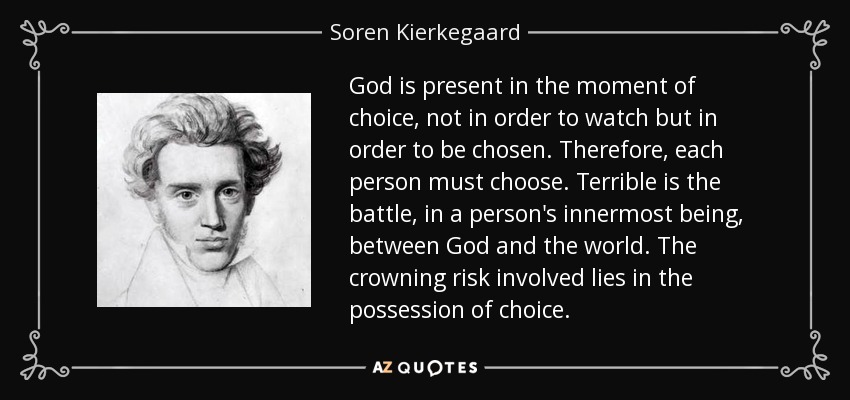
Anyway, here is a Kierkegaard quote:
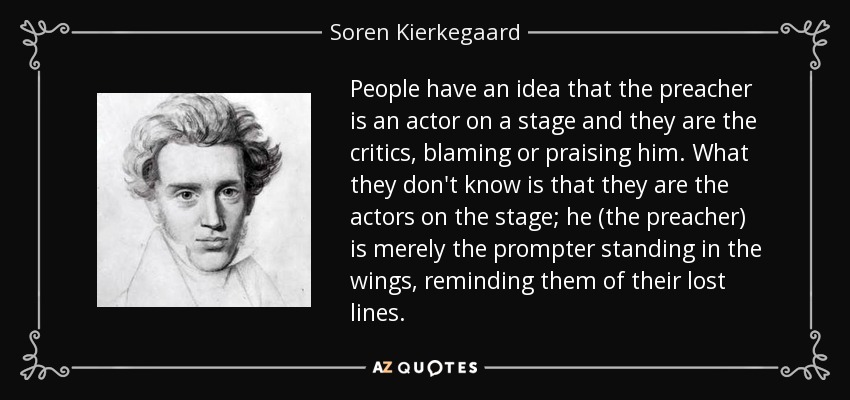
I stumbled across this link on Twitter and was struck by these paragraphs:
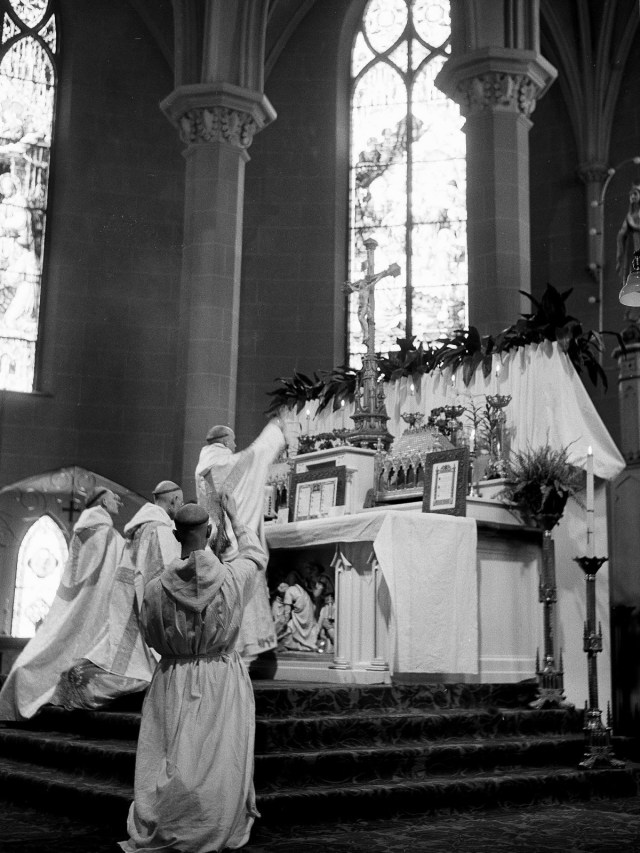
The lesson Merton derives from the liturgy at Corpus Christi is that “it is not the style that matters but the spirit,” and he illustrates the difference between the old spirit and the new with a series of dichotomies: “Is Christian worship to be communion in correctness or communion in love? Oneness in Law or oneness in Christ? Sharing in valid sacraments or in the Spirit of life that is in the Risen Savior?” While the laws of the church are important, we must “learn to participate in a free, open, joyous communion of love and praise.”
…
Merton’s exhortation to love, and even more importantly, his example of liturgical openness to others rooted in an ecclesiology of communion, remains important today as we continue to squabble about the liturgy and about a myriad of other issues: “Let us frankly realize that our task is precisely this: to demonstrate our elementary charity and unselfishness – indeed our Christian maturity – by setting aside our own preferences (whether progressive or conservative) in order to arrive at some working formula by which we can all continue to worship as one in Christ.”
Communion of Love: Thomas Merton and Liturgical Reform by Gregory K. Hillis
A magnificent article to be printed and pondered.
I have changed the blog theme and reworked the header image. Let me know what you think?
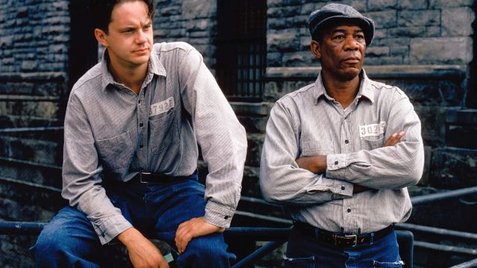
I just wanted to share this article from Philosophy Now (the only magazine for which I have a subscription):
I was especially struck by the section with the heading, Hope is… Another Person. One of the things I find particularly depressing in a modern context – maybe because we have swallowed the scientific objective pill – is the way we treat other people. If we can label them (define them), we can forget about them. People who are different from us can be ignored or, worse, abused. Survival of the fittest, rule of the jungle, the majority vote is the truth.
As an Australian, I have been deeply affected by the Christchurch shooting. Yet the shooting is only really the tip of the iceberg. We have “leaders” (elected politicians) who give credence to the act by continuing the hate filled rhetoric. And worse, for me, is that the pastor of the church we attend used the same “what about us” rhetoric to tacitly justify the act.
We are all created in the image of God. The New Testament tells us that “God is love”. So to love (as opposed to hating) is the most human of all actions. Not a sentimental feeling towards another that validates wrong. Rather seeing the other as a person (created in the image of God) and not as an object (that feeds my needs). I wonder, too, if a majority of religion (in my context Christianity) makes “god” an object to be defined and labeled – and, in some way, to be upset with when that object does not behave as expected.
Anyway, that was a lot more convoluted than intended.
I love this picture!

Here are a few articles I have bookmarked:
There are more!
I find this website so helpful and informative:
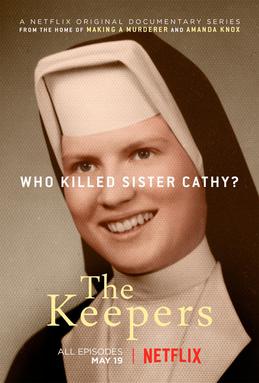
I have just finished watching the Netflix original series The Keepers. It is a very powerful and very sad story. I would like to reflect more on it but I will need to let it sink in a little.
And I just wanted to share two articles I have read recently:
Kierkegaard’s ways to be human (by Ray Monk) which is a review of the soon to be released book by Clare Carlisle.
Appropriating the Paradox (by Karl Dusza) which is a review of SK’s Three Discourses on Imagined Occasions and Upbuilding Discourses in Various Spirits. I would like to explore SK’s discourses more!
I would normally not do this – quote someone as a “bad example” – but this tweet speaks volumes to me. (BTW: I have great respect for the person who wrote it as someone of insight and spiritual maturity and hence I have blacked out the name.)
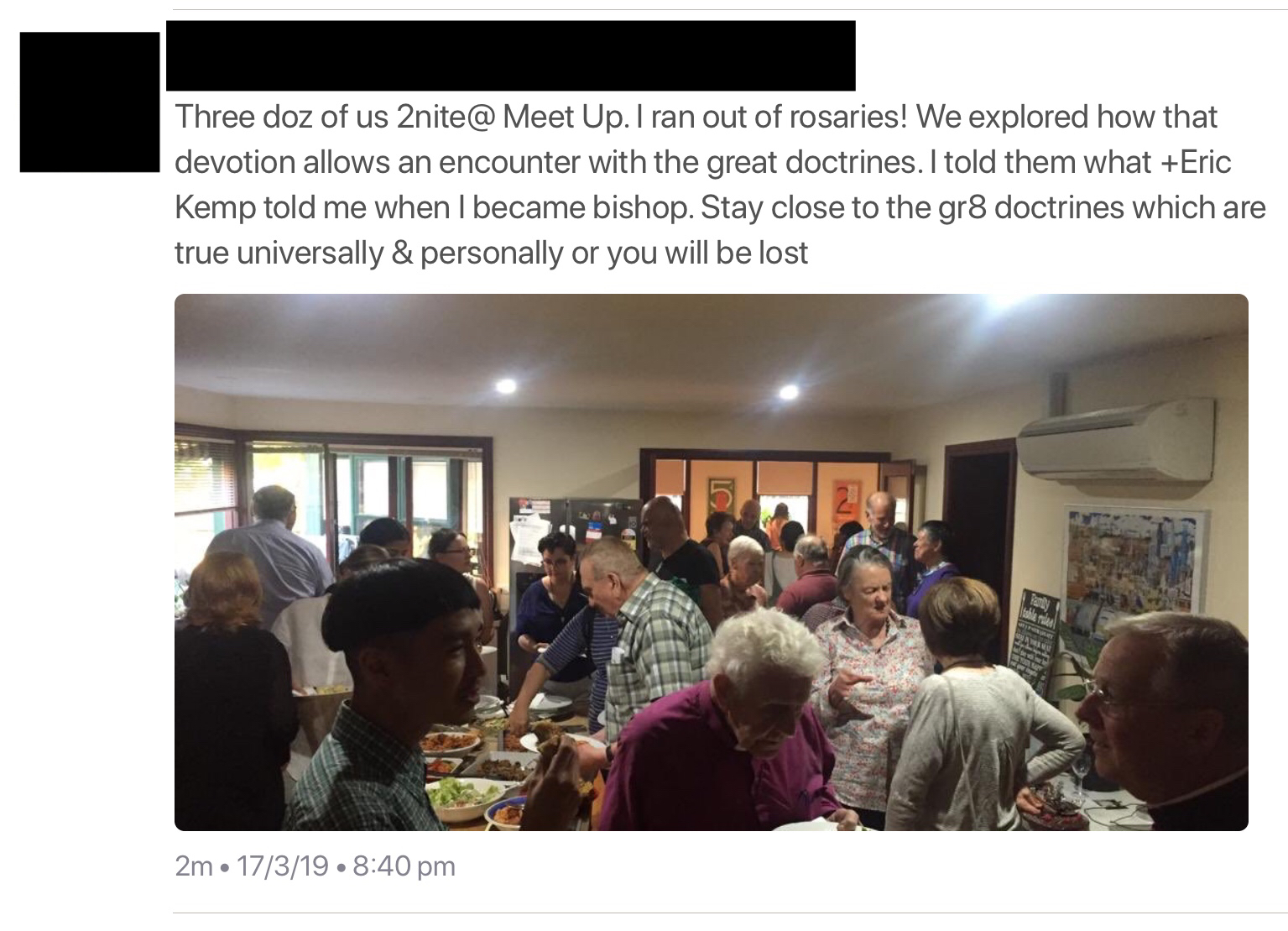
“Allows an encounter with great doctrines”?? “Stay close”?? If the rosary, or any devotion (reading the Bible or saying the Office), keeps us close to a doctrine, all is lost!!! Not to put too fine a point on it, no doctrine will ever “save” us but only the person of God-incarnate, Jesus Christ. Yes, theology and doctrine is important. But it is the person who is behind the rosary – Our Lady leading us to Jesus – that is of the upmost importance. It is the person who is behind the doctrine. A devotion is never (!!!!!) an encounter with a doctrine, a teaching, an idea, a moral. It is always an encounter with a person.
My main problem – after much reflection and soul-searching – with modern forms of Christianity is that it has become a “philosophy” (in the broadest sense of the word) and has abdicated the encounter with the divine for intellectual consent. It feels to me like Christianity needs people to agree with it – culture at large or individuals – and they have a product to sell (one among many). All of this makes God an object and individuals “brains in jars”.
Stay close to Jesus else all is lost!!!!
 a fool and his prayer book