Some random thoughts while I go for my daily walk. Yes, I cannot tell my left from my right!
Asides
Missionaries of confusion
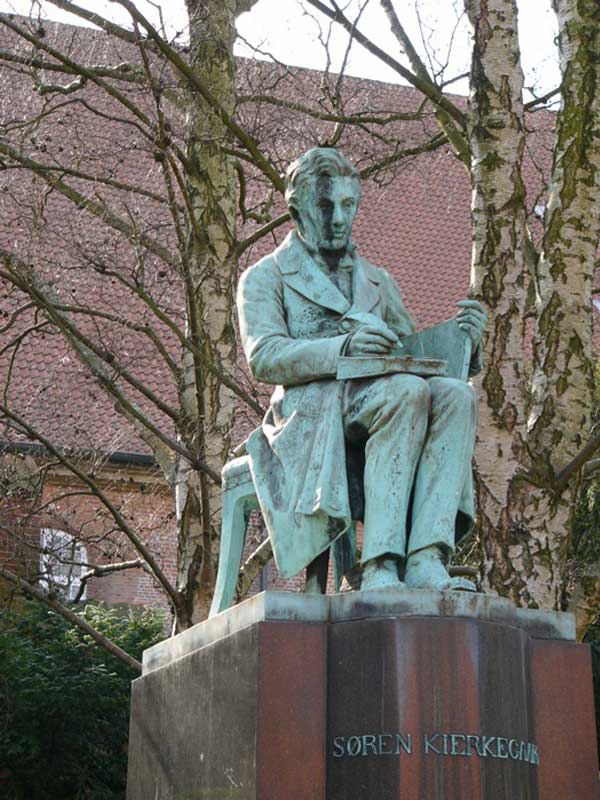
“No generation can endure without religion. But then when the front rank, the militia of attackers who want to do away with Christianity (which enemies are by no means the most dangerous), has finished, then comes the second rank of the missionaries of confusion, those who either want to concoct a new religion or even want to be apostles. These are by far the more dangerous, simply because they are religiously influenced and religiously confused but to that extent are also in connection with what is deeper in human beings, whereas those others are irreligiously obsessed.”
Book of Adler
The Book of Adler has been on my list of Kierkegaard books to read. The whole situation is interesting. As with all Kierkegaard books I think it expresses some of the problems within Christendom today.
I am finishing a study on 1 John – a divided congregation struggling with the future. People have left and are now stirring things up. The elder reminds the congregation what (or who) is at the centre of their life together: Jesus and love. I think Kierkegaard’s term “missionaries of confusion” is a good way to describe the situation.
Maybe it’s ok if I am not ok.
I heard this song in the car driving today. And I am struck by the line, “maybe it’s ok if I am not ok”.
I have been trying to work on living for Jesus now. In the midst of depression and anxiety to receive Jesus’ love and mercy. And to accept that sometimes I am not ok – to accept that I need Him all the time.
Anyway, here is the song:
Saint Anthony Abbot Tempted by a Heap of Gold

Episode 0 – Welcome to the feed
Like the Pink Floyd song says, Welcome to the feed! Going to do a podcast again. Only the opening at the moment but need something to create an iTunes link.
The crowd and the single individual
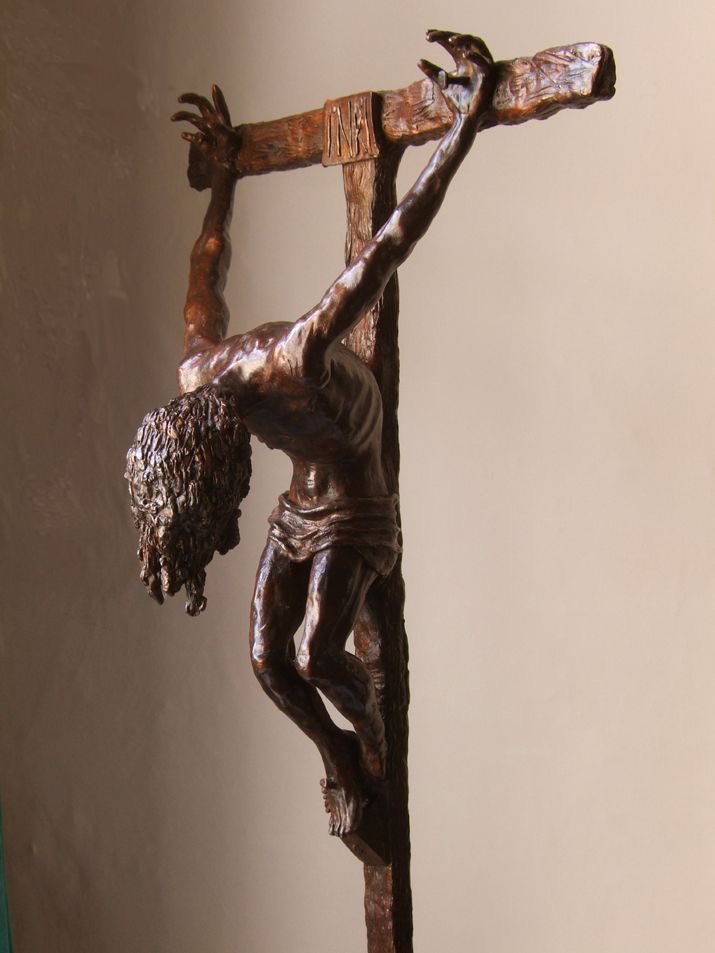
6 Now at the festival he used to release a prisoner for them, anyone for whom they asked. 7 Now a man called Barabbas was in prison with the rebels who had committed murder during the insurrection. 8 So the crowd came and began to ask Pilate to do for them according to his custom. 9 Then he answered them, “Do you want me to release for you the King of the Jews?” 10 For he realized that it was out of jealousy that the chief priests had handed him over. 11 But the chief priests stirred up the crowd to have him release Barabbas for them instead. 12 Pilate spoke to them again, “Then what do you wish me to do with the man you call the King of the Jews?” 13 They shouted back, “Crucify him!” 14 Pilate asked them, “Why, what evil has he done?” But they shouted all the more, “Crucify him!” 15 So Pilate, wishing to satisfy the crowd, released Barabbas for them; and after flogging Jesus, he handed him over to be crucified.
Mark 15:6-15
I read the Passion in Mark’s gospel this morning. It is the Palm Sunday reading for Year B.
I was struck by the role the crowd plays in the sentencing of Jesus. And the reason given for Pilate’s handing over Jesus to be crucified, “wishing to satisfy the crowd”. The faceless crowd doing the bidding of the religious leaders against The Single Individual. Jesus stands alone while the crowd shouts for Him to be put to death. The crowd is often an obstacle in the gospels to people meeting Jesus, to being healed, to seeing Him. The crowd is fickle. The Processional Gospel for Palm Sunday reminds us that the crowd acclaimed The Single Individual as King and Messiah.
It is easy to escape into the faceless crowd. And the modern age has made it a virtue to follow the will of the majority. It is easy to do what I am told by those in authority. It is easy to blame and to push the guilt unto someone else – never have to look at myself and my actions. It is easy to escape the single me for the role assigned by the many. The crowd is the opposite of the Single Individual.
During my earthly life that Single Individual calls me to follow Him. As we enter Holy Week, that Individual reminds me that I am called to follow Him to the cross: to be alone with God, alone before God.
An anniversary of “Who am I?”
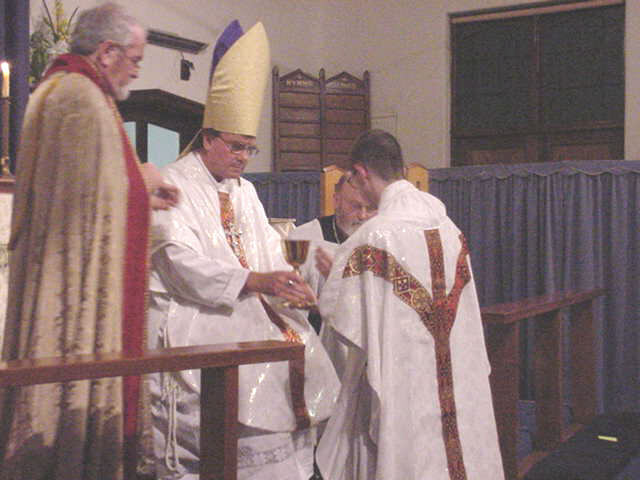
I wasn’t going to share this but today (19 years ago) I was ordinated to the Anglican priesthood.
I have not functioned as a priest in a long time (since 2007) and since returning to Anglicanism I have no desire to function as one. I miss preaching but I really see myself as a layperson with a past.
I had all these dreams and ideas about what life would be like at my ordination. An “Anglican Catholic” paradise coming with “valid orders”. Parish life would be all daily Mass and rosaries with people joining by the hundreds. Beautiful liturgy would bring the people in the door and they would stay. All to boast my ego as an another great “Anglo-Catholic priest”. But … none worked out as I thought. While I think the priesthood was (is?) a true vocation for me, I now see that it was another way of escaping “me”. The anxiety over my own identity could be replaced by simply adopting a position within the community and expecting people to recognise it. It was their divine duty to listen to me as their priest sent from God. But apart from right liturgy – how to hold my hands during the Eucharistic prayer – I had little insight into parish life. I doubt I connected with any person while I was a parish priest.
Time showed that I have no organisational and very little inter-personal skills. Since then I have become increasingly uncomfortable with some of the ideas I held about God (especially my relationship with Jesus), the Church (as an earthly institution), and especially the priesthood (the purpose of it and the place within the Church). Religion is not magic – my relationship with Jesus is personal and real. I have since met real Anglican priests (and a real deacon) and I know that I am nothing like them – the way they authentically connect with people and reflect Jesus.
So the problem of identity is still with me. Who am I? Yes, I am one loved by Jesus. But apart from that I can honestly say I have little idea. I am not a role assigned to me by the crowd – a persona into which I can escape. To be honest I have gifts that often make me feel ashamed – I see myself as opinionated and arrogant. Sometimes I think I am just a loudmouth with a smile.
I am extremely thankful that the priesthood introduced me to the Anglican tradition of daily prayer. The Office (once I gave up being the judge) has been a great comfort. SO with all of that here is a verse from today’s Morning Prayer reading:
“Because he himself was tested by what he suffered, he is able to help those who are being tested”
(Hebrews 2:18)
In the end my priesthood (what a horrible term!) was never about Jesus. I saw the signs, and I proclaimed the signs, but I never saw where they were pointing. I argued about Jesus’ presence on the altar, discussed proper reverence and (much to my shame now) modesty for women in church. But I never heard him say to me “for you”. I had reached the position from which I could tell others what to do without every having to look at myself. I escaped “me” for a role and the question that I simply cannot answer.
Today is the anniversary of my ordination to the priesthood. I am not sure if I should celebrate or lament.
BTW: I reflected on my priesthood this time last year. So much has changed – lots very painful. I wrote about an “inner priesthood” – I suspect that idea has little meaning for me now.
Sisyphus
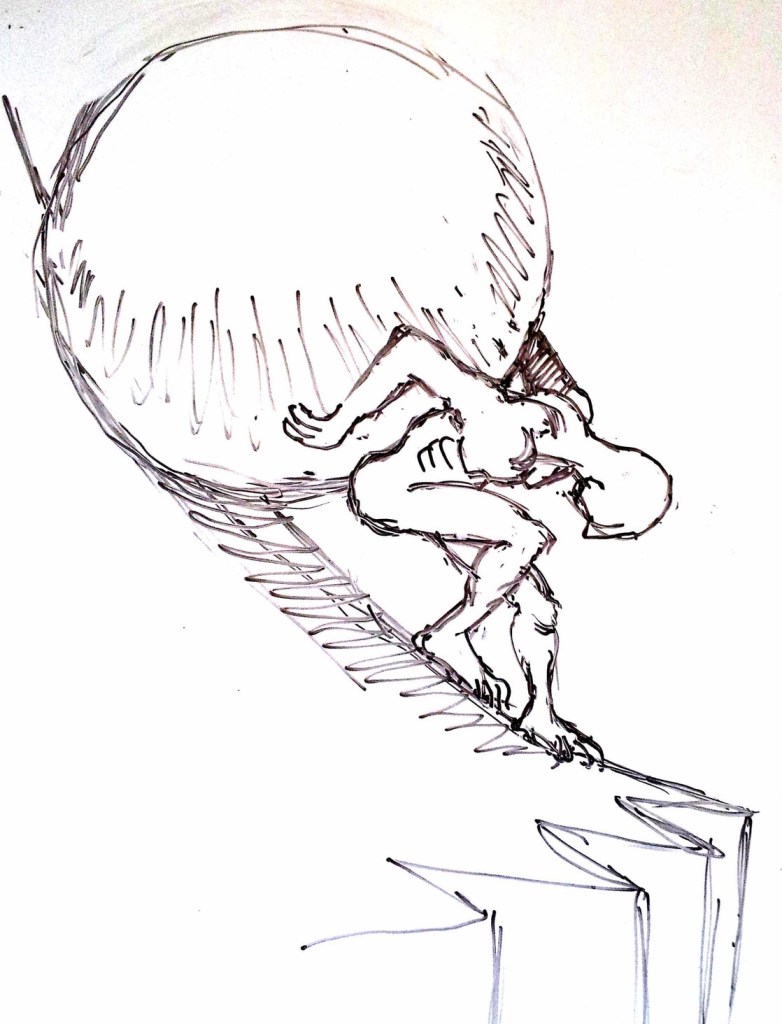
This morning I was thinking that living with depression is like Sisyphus. I have no idea how he felt walking down the hill, returning to the boulder that nearly made it to the top. I know what depression feels like for me: everyday life is a struggle to get to some balance only for the boulder to slip and end up at the bottom again.
I now see the signs in my own life. I do things to try to balance my thinking. But I know what is coming. The “up” is great – creative, involved, interested. Then comes the realisation that the boulder is about to roll back down. And the cycle starts again.
I do not know if I should be “happy” that I now see it. I feel that through the counseling I can step outside myself and recognise the emotions. I know that I am not the emotions and I am not my story. I am “me”. And this “me” needs to live with Jesus Now!
I am struck by how the Psalmist really speaks to my depression. The Psalms describe the physical as well as the emotional side. And they become my prayer when I cannot pray. My context gives meaning to the words.
Living with depression
A week ago I came to the realization that I will be open about what it means to live with depression. And, for me, with extreme anxiety. I am on medication for both but that only levels me out – it is not a cure. I have tried for years to hide it – to put on the happy face and, unfortunately, let the people whom I am closed to suffer from my hiding. I have treated the people I love worst of all because I was completely me – a horrible person out of control. No intent but I naively thought that I could be me with these people.
So … depression hurts. Life is dark, painful, lonely (not in the sense of being physically alone but being misunderstood). I rarely have any idea what I am feeling and often have completely opposite feelings at the same time. My mind is full of ideas and feelings that battle inside my head. It is a little like someone yelling at you in your head while outside you are smiling. Everyday things are a battle – getting up, eating, taking care of myself. And, unfortunately, those closest to me have taken the worst of it. It has taken time and space for me to see that and to be fully, truly, sorry for my behavior. And that makes me cry!
I have no excuse! I have no reason for my behavior. And I will be honest that often there seems only one way out. (I have a very understanding counsellor and some incredible friends whom I have made a deal with to not hurt myself without speaking to them.) I do not want to die (death is very final) but I want the pain to stop. I do not want attention or sympathy but I want to be open about every aspect. And when I was open about it (to my doctor and to my counsellor) life changed.
There are other aspects that I will write about some other time. Except to say that in the midst of it all there is always people who encourage me and take care of me (spiritually and physically). Random people who encourage, people who smile.
So I am going to keep writing about it.
God’s mercy
The thief on the cross certainly did not receive
John Cassian
the Kingdom of Heaven as a reward for his virtues
but as a grace and a mercy from God.
He can serve as an authentic witness
that our salvation is given to us
only by God’s mercy and grace.
Yesterday’s word was “love” for me, today it is “mercy”. God’s mercy towards me and also my mercy towards me. I like the Cassian quote. God gives Himself in His mercy – the thing I cannot do, He does completely. There is lots bouncing around my head but I want to come back to God’s mercy.
 a fool and his prayer book