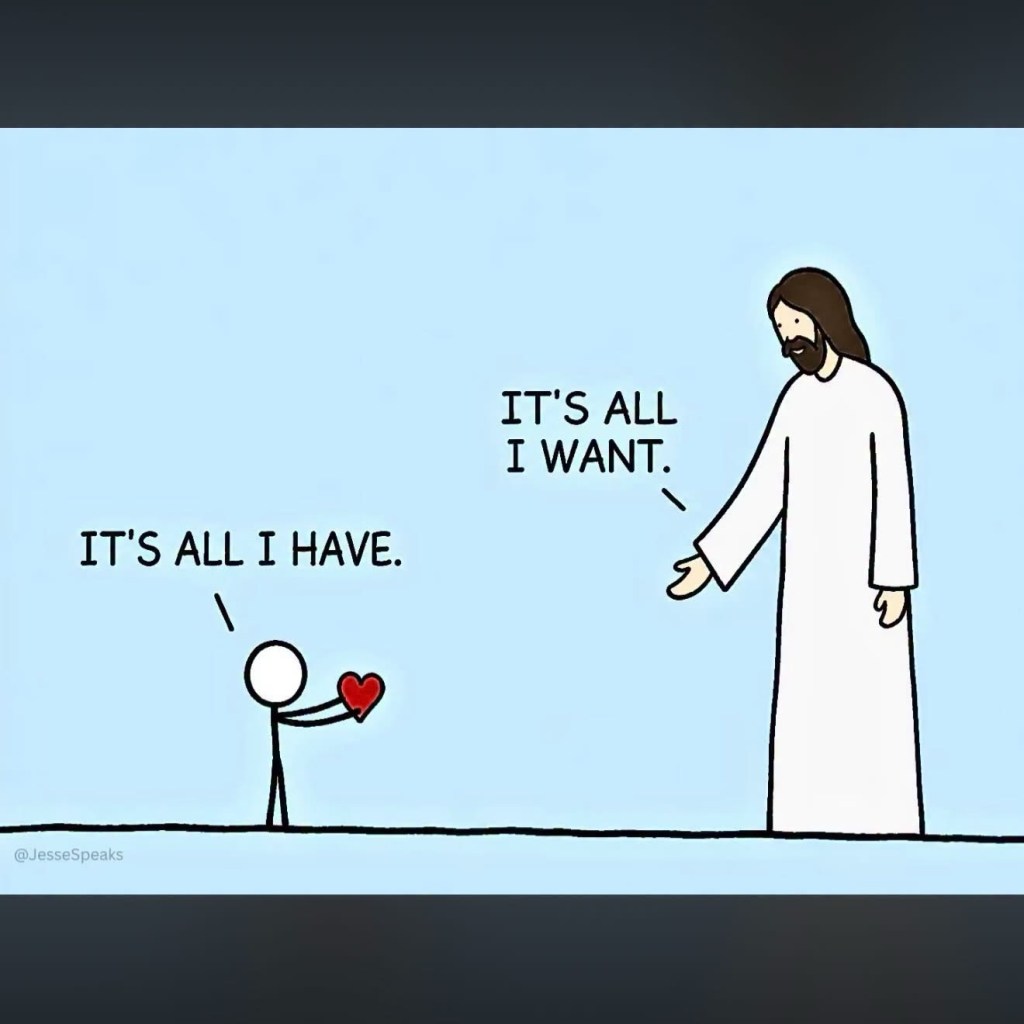
all I have
Are you a lifelong learner?
Are we not all lifelong learners? If I act differently today because of something that happened yesterday, I learned something!?
So I like books. I sometimes read. And maybe sometimes learn. But I rarely act any different from yesterday.

But above all, grace is attributed to you, that you call me by name, whom you have never seen. But since grace is not known by dignity, but is accustomed to be signified by the actions of souls, bless for the sake of God, and grant a prayer of your perfection’s indulgence.
St. Sophronius of Jerusalem. Life of St. Mary of Egypt (p. 15). (Function). Kindle Edition.
A desert encounter! Two people who have never meet. But grace is obvious!
Being “clergy” does not mean grace! Nor insight. Nor faith.
By avoiding being recognised as an institution, monasticism remains hidden from the eyes of this world, and this allows it to keep its perfect and absolute freedom to exist purely on the spiritual plane, governed exclusively by the power of the Holy Spirit. If monasticism were to become an institution, it would cease to be a life ‘outside the camp of this world;’(Heb 13:13) it would lose its charismatic power of humility and its prophetic and paradoxical character, whereby it maintains the knowledge of God on earth.
Zacharou, Archimandrite Zacharias. Monasticism: The All-Embracing Gift of the Holy Spirit (p. 8). (Function). Kindle Edition.
“To be or not to be” is not an institutional question. For me, the “battle” is the urge (the desire) for an “institutional yes”. But outside means outside the institution.

What’s a book you think deserves a sequel?
I really had to think about this one. But I have an answer.
The Book of Common Prayer (1662) deserves a sequel. I do not mean an update – like the Uk 1928 or any of the Australian versions. Nor a version when there is a new monarch. A continuing story with new material within the same family.
It would contain some of the offices that are missing from the original. (Maybe an office for the setting aside for monastic life – a BCP version of the tonsure.) And some of the “red letter days” (like the Transfiguration) that are missing from the 1662 version.
“Codes and patterns are very different from each other,” Langdon said. “And a lot of people confuse the two. In my field, it’s crucial to understand their fundamental difference.”
Dan Brown, Origin 486
“That being?”
Langdon stopped walking and turned to her. “A pattern is any distinctly organized sequence. Patterns occur everywhere in nature—the spiraling seeds of a sunflower, the hexagonal cells of a honeycomb, the circular ripples on a pond when a fish jumps, et cetera.”
“Okay. And codes?”
“Codes are special,” Langdon said, his tone rising. “Codes, by definition, must carry information. They must do more than simply form a pattern—codes must transmit data and convey meaning. Examples of codes include written language, musical notation, mathematical equations, computer language, and even simple symbols like the crucifix. All of these examples can transmit meaning or information in a way that spiraling sunflowers cannot.”
Ambra grasped the concept, but not how it related to God.
“The other difference between codes and patterns,” Langdon continued, “is that codes do not occur naturally in the world. Musical notation does not sprout from trees, and symbols do not draw themselves in the sand. Codes are the deliberate inventions of intelligent consciousnesses.”
Ambra nodded. “So codes always have an intention or awareness behind them.”
“Exactly. Codes don’t appear organically; they must be created.”
Ambra studied him a long moment. “What about DNA?”
A professorial smile appeared on Langdon’s lips. “Bingo,” he said. “The genetic code. That’s the paradox.”
 a fool and his prayer book