wilderness road

I read the story of Philip and the Ethiopian Eunuch (Acts 8) at Morning Prayer and was struck by this:

(This is a wilderness road.)

Philip proclaims Jesus on a wilderness road. Not in a cultural setting or a religious community – in the wilderness.

I have been reading a book about desert spirituality. The author makes the point that fundamental to this form of asceticism is the relationship between mentor and student, abbot and disciple. It is a personal teaching by example. I guess we would call it spiritual mentoring. I really like that picture and that approach – a spiritual relationship with a mentor that is personal and practical. A wilderness road for the modern context?

no masks

I was thinking about a Merton quote this morning before saying Morning Prayer:

I need solitude for the true fulfillment which I seek – that of being ordinary.

A Search for Solitude, 27

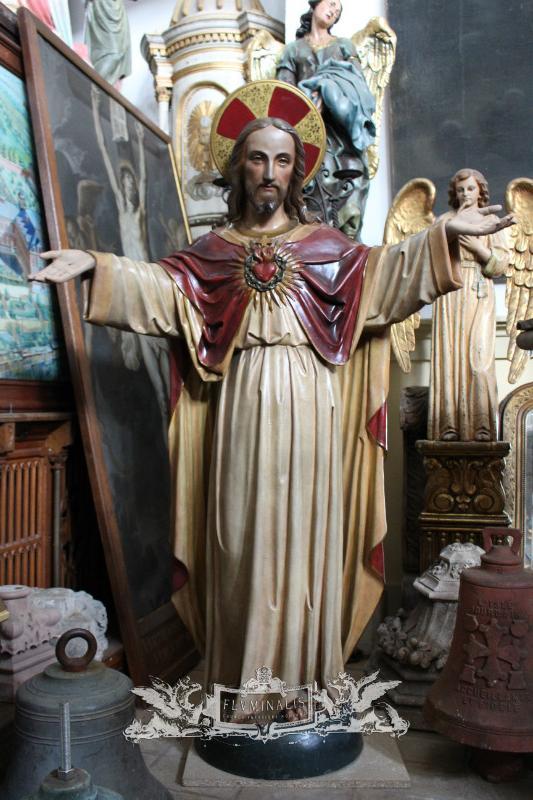
In those moments of solitude and silence I have during the day, I wear no masks. When I am alone with God, I am truly me. All the pretence is gone. All my pain and suffering is laid open before the Heart of Jesus.

Yet that solitude and silence requires effort on my part. I need to slow down, take a breath, and be intentional about my focus. It is much easier to have my mind filled with the everyday – the worries, the hurts, and the constant need to be in control or at least seem to be in control. That moment of silence requires effort!

Rest in Jesus

Prayer was the very heart of the desert life, and consisted of psalmody (vocal prayer – recitation of the Psalms and other parts of the Scriptures which everyone had to know by heart) and contemplation. What we would call today contemplative prayer is referred to as quies or “rest.” This illuminating term has persisted in Greek monastic tradition as hesychia, “sweet repose.” Quies is a silent absorption aided by the soft repetition of a lone phrase of the Scriptures – the most popular being the prayer of the Publican: “Lord Jesus Christ, Son of God, have mercy on me a sinner!” In a shortened form this prayer became “Lord have mercy” (Kyrie eleison) – repeated interiorly hundreds of times a day until it became as spontaneous and instinctive as breathing.

Thomas Merton, The Wisdom of the Desert, 20

The repeating of a single phrase while breathing is a great way to pray. I find, especially at night, it is super relaxing but it also focuses me on Jesus. But what I really like about the above quote is that “sweet repose” and liturgical prayer live alongside each other. As it should be!

Pentecost 3B: Mark 4:26-34

He also said, “The kingdom of God is as if someone would scatter seed on the ground, and would sleep and rise night and day, and the seed would sprout and grow, he does not know how. The earth produces of itself, first the stalk, then the head, then the full grain in the head. But when the grain is ripe, at once he goes in with his sickle, because the harvest has come.”

He also said, “With what can we compare the kingdom of God, or what parable will we use for it? It is like a mustard seed, which, when sown upon the ground, is the smallest of all the seeds on earth; yet when it is sown it grows up and becomes the greatest of all shrubs, and puts forth large branches, so that the birds of the air can make nests in its shade.”

With many such parables he spoke the word to them, as they were able to hear it; he did not speak to them except in parables, but he explained everything in private to his disciples.

Mark 4:26-34

I wrote about the last verses in the previous post. So I will not rework that idea here.

The two parables are the only ones about the kingdom of God in Mark. And they are pretty clear: God brings growth and that growth is beyond our measure. So what is my job? Focus on Jesus. Listen to Him! Speak to Him! Now to put that into a comprehendible study.

intentionally focused on Jesus

I will preface this post by saying that I am not a philosopher, nor am I a theologian. I am a person who reads and thinks. So the following has no standing in either philosophy or theology (or reasoned argument).

I have been trying to understand phenomenology. Maybe understand is the wrong word!? I am trying to skip the stone on the surface of phenomenology to see where the ripples go to.

So Wikipedia defines it as the

philosophical study of the structures of experience and consciousness.

It is the first part that interests me: what is experience? Maybe to put it more in context, what does it mean to ‘experience Jesus’? I have no answers, either can there be an answer, but I have one observation. And that observation relates directly to this week’s gospel reading, Mark 4:26:34 (about which I will post later).

In that context I stumbled upon the idea of intentionality.

Intentionalism is the thesis that all mental states are intentional, i.e. that they are about something: about their intentional object.

Now, to wrap up a long and convoluted post, to experience Jesus one must be intentionally focused on Jesus.

With many such parables he spoke the word to them, as they were able to hear it; he did not speak to them except in parables, but he explained everything in private to his disciples.

Mark 4:33-34

To hear Jesus in the midst of all the noise of this world, one must be listening for Him. And to listen for Him one must be focused on Him alone. The lesson for me is that I need to have times of the day that I am completely focused on Jesus. For me, silence helps. And, of course, Jesus is not an object but a person. So I need to be focused on a person, settle my mind and see with the eyes of faith the Person.

Does any of that make sense?

a rule of life

I have been wondering about revising my rule of life. I think it is too prescriptive rather than descriptive. So I have been reading a book about how to create a rule of life, Crafting a Rule of Life. I think I need to read the book with an open mind and not just look for validation. But the following from the introduction does very much say what I have been thinking:

A rule of life is descriptive in that it articulates our intentions and identifies the ways in which we want to live. And when we fall short of these intentions, the rule becomes prescriptive, showing us how we can return to the path that we have set for ourselves and recapture our original vision.

Stephen A. Macchia, Crafting a Rule of Life

I would like to be more descriptive in my spiritual life. For me, it can all become very legalistic and “against the Spirit”. I do not make myself more (or less) acceptable to God by what I do. The rule of life needs to grow out of a desire for holiness – to be transformed in Jesus. My rule of life needs to express a relationship that is beyond the rule not somehow encapsulated by it.

Also I am not a monastic. I am not called to the religious life. My rule needs to reflect my context. And it needs to actually work in my context. No good prescribing the whole sevenfold office when I struggle to pray ones a day.

So I am going to work on this for a while. I might share more about the process and maybe even the end result. Pray for me!

building up

So I write these things while I am away from you, so that when I come, I may not have to be severe in using the authority that the Lord has given me for building up and not for tearing down.

2 Corinthians 13:10

I really like the above quote from Paul. I want to work in the Holy Spirit for “building up”. The opposite is “tearing down” which is not of the Spirit. It is true in our personal life too – tearing down is not of the Spirit.

I pray I can be part of the “building up”!

excuses and evasions

What an individual is capable of may be measured by how far his understanding is from his willing. What a person can understand he must also be able to make himself will. Between understanding and willing lie the excuses and evasions.

Søren Kierkegaard, The Journals (1846)

I read this SK quote online. So it does not have a detailed source attached to it – a personal gripe. But I like the last sentence: between thinking and doing are excuses. People know what the right thing to do is but they evade it with excuses (not reasons). It illustrates again that there is a qualitative difference between knowing and doing.

purification

I have been thinking (and reading) about the first step in the Threefold Path of mysticism: purification or purgation. (As an aside, when I googled it I got a lot of results for “laxatives”!)

This aspect focuses on discipline, particularly in terms of the human body; thus, it emphasizes prayer at certain times, either alone or with others, and in certain postures, often standing or kneeling. It also emphasizes the other disciplines of fasting and alms-giving, the latter including those activities called “the works of mercy,” both spiritual and corporal, such as feeding the hungry and sheltering the homeless.

In essence, it is a step of negation – of stripping the body of its attachment to this world. And in a positive sense, it is a step of focusing on the things of God and, of course, on God Himself. All in a desire to experience the presence of God. Sometimes purification, in this sense, is a choice of the individual, sometimes it is due to circumstances. The aim is union with God and a fuller experience.

I am very encouraged by how God uses “darkness” to draw people closer to Himself. Often in suffering and pain, God reveals Himself to the individual. God reveals Himself on the cross and the individual is called to see Jesus in their cross and suffering. I am called to embrace my suffering and pain as a moment of revelation or experience of God.

God reveals Himself as Light in the darkness. And only in complete darkness can I only see Him.