Kafka’s parable, “Before the Law,” serves as a profound commentary on the nature of authority and individual freedom. In the story, the protagonist can only access the law through a guardian who symbolizes the oppressive power of authority. The narrative suggests that the barrier to freedom is not merely external, but also internal, as individuals often succumb to fear and doubt, preventing them from asserting their autonomy. The parable emphasizes the necessity of transcending authoritative barriers to achieve true spiritual and personal liberation, prompting a reflection on the individual’s journey toward self-actualization.
Franz Kafka: A Religion of Freedom Against Legal Authority
Category: Kafka
Day 3
Another day! Nearly halfway through this period of isolation. And, to be honest, if I was not sick, this would be heaven.
Yesterday, I did manage to read. I read parts of Kafka’s The Castle, which I had not read before, some of Kierkegaard’s Two Ages and Sickness unto Death, and a little of I am Dynamite. Kafka is always interesting, as he is just so weird, and the two Kierkegaard books pick up the same themes. But I know how K. feels!
And I slept. I tried to listen to the cricket and slept through most of the play. (I was awake for the rain delay!)
Tomorrow is Ember Wednesday in Advent, so I hope to return to praying liturgically. My food order should arrive today, and I have started some beans in the slow cooker – my staple for most days. I did eat a little yesterday. What is it with me and food? Also, today is not as hot as yesterday.
I do not have a title for this post. No insights yesterday. Well, there were but they are private at the moment. Have a super blessed day!
Kafka airport
I like the guy saying everyone refers to him as “S”.
… as if …
[Hello to all the new subscribers – please comment where you are in the world (physically or existentially.)]
So I have been reading a lot about Kafka. (I have a thing for “Ks”.) While I see myself in him (and his writing), I am drawn to the idea of “reading Kafka” as something active rather than passive. The author through the text asks a question of the reader that only the reader can answer. There is no general key to finding meaning in the text. There is an “… as if …” to the text.
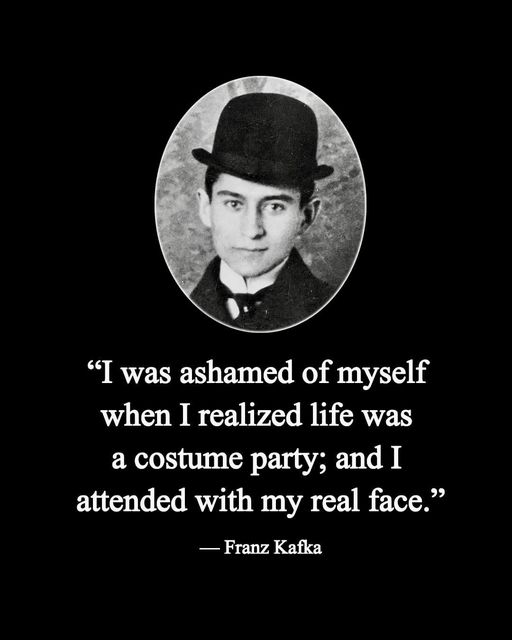
Anyway, here is a Kafka quote that really does speak for me:
 this solitary life