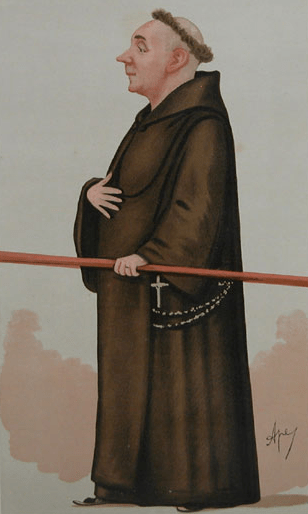
Fr Ignatius

  • The restoration of the ascetic life and continual prayer in the Church of England;
  • home mission work, by preaching, visiting the poor, and teaching the young;
  • to afford a temporary religious retreat for the secular clergy;
  • to raise the tone of devotion in the English Church to a higher standard by showing the real exemplification of the evangelical counsels;
  • to aid in bringing about the union of Christendom.
Joseph Leycester Lyne

rule-breaker

It was because of this positive desire for the Kingdom of Heaven which came to dominate their whole lives that they went without things. They kept silence, for instance, not because of a proud and austere preference for aloneness but because they were learning to listen to something more interesting than the talk of men, that is, the Word of God. These men were rebels, the ones who broke the rules of the world which say that property and goods are essential for life, that the one who accepts the direction of another is not free, that no one can be fully human without sex and domesticity. Their name itself, anchorite, means rule-breaker, the one who does not fulfil his public duties. In the solitude of the desert they found themselves able to live in a way that was hard but simple, as children of God.

The Desert Of The Heart: Daily Readings with the Desert Fathers

monastic vs religious

Monasticism, in all its varieties, involves withdrawal from society. Monastic life is distinct from the “religious orders” such as the friars, canons regular, clerks regular, and the more recent religious congregations. The latter involves a special work or aim, such as preaching, teaching, liberating captives, etc., which occupies a large place in their activities. While monks have variously labored, in every case this work is extrinsic to the essence of the monastic state. Monks and friars are two distinct roles.

Christian monasticism

This is the Google AI Summary:

Monastic life is a specific, usually secluded, subset of the broader religious life, characterized by separation from the world for intense spiritual focus (contemplation). While all monastics are religious, not all religious are monastics; religious life often involves active, public service (apostolic work), such as teaching or nursing, rather than cloistered prayer.

Key Differences at a Glance:

  • Monastic (e.g., Benedictine monk): Cloistered or semi-cloistered, focused on prayer, manual labor, and stability within a monastery.
  • Religious/Apostolic (e.g., Franciscan, Jesuit): Active, apostolic work in the community (schools, hospitals) while living in a community.

Monastic Life

  • Lifestyle: Ascetic, plain clothing, celibacy, poverty, and obedience to an abbot/abbess.
  • Focus: Continual conversion of life (Conversatio Morum) and communal prayer (Divine Office).
  • Types: Cenobitic (living in a community) or Eremitic (solitary hermits).
living in silence

The whole monastic state consists of three specific kinds of establishment: either the retirement and solitude of a spiritual athlete, or living in silence with one or two others, or settling patiently in a community. Turn not to the right hand nor to the left, but follow the King’s highway. Of the three ways of life stated above, the second is suitable for many people, for it is said: ‘Woe unto him who is
alone when he falleth’ into despondency or lethargy or laziness or despair, ‘and hath not another among men to lift him up’. ‘For where two or three are gathered in My name, there am I in the midst of them,’ said the Lord.

    Ladder of Divine Ascent, 1:26

    not in essence but in intensity

    Monasticism is the most authentic form of Christian discipleship. As Basil sees it, if we would let the Lord’s grace have its way with us, if we would follow our baptism to its end and keep all the commandments, we would end up in the monastic life. Indeed, Basil’s word (eisagomenoi) for candidates seeking to enter the monastic community is also the word for catechumens, indicating a “link between the ascetic life and baptism.” Basil’s “monks”—as they would later be called and as we call them—“were simply,” Robert Taft writes, “Christians taking the whole business seriously.” The monastic life, then, differs from the life of ordinary discipleship not in essence but in intensity. But what does this most intense Christian life look like in Basil’s thought and practice?

    One of the most fascinating features of the fourth-century church is that we get to observe monasticism in its various stages of development, from devoted and pious family to highly organized monastery, from informal household virginity to ritually consecrated virginity.

    Stephen Hildebrand, Basil of Caesarea, 125