discipleship pathway

Until very recently I had not heard of discipleship pathways. I must admit, after reading about it a little online, I can see how a clear road for discipleship can be extremely helpful. So here is a link to a post I found helpful: How to Create a Discipleship Pathway.

I want to share just one point:

Celebrating success – which shapes your culture – becomes trickier if people have different views on what success looks like.

We need to be facing the same direction and aiming for the same goal.

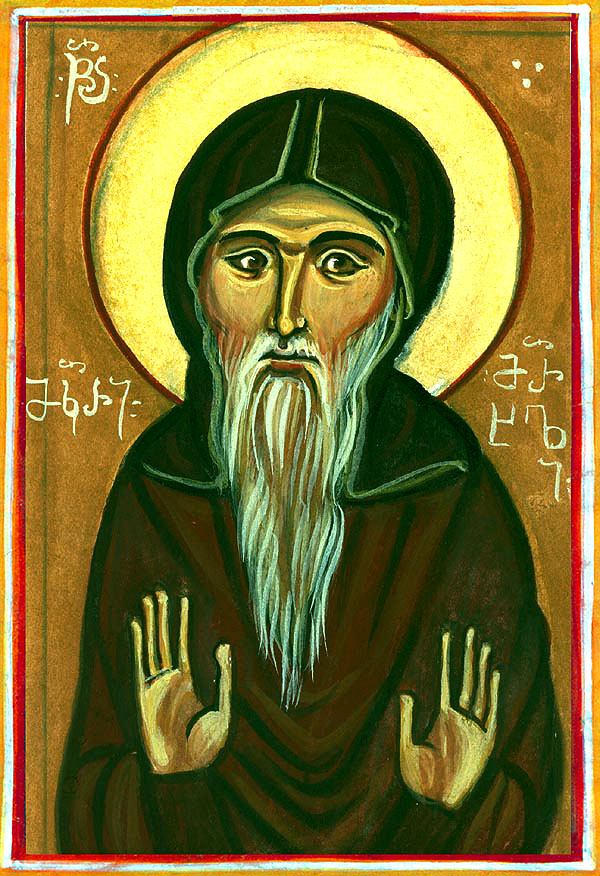
Macarius of Egypt

I was reading about sketes (is that the plural?) yesterday. A skete is a monastic community of hermit at the time of the Desert Fathers. I think it is an interesting model for modern monasticism.

Macarius of Egypt

While reading I stumbled across St Macarius of Egypt. I was really struck by this part of his life:

… a pregnant woman accused him of having defiled her. Macarius did not attempt to defend himself, and accepted the accusation in silence.

I have been thinking about Jesus on the cross. The cross is that symbol of love that the world cannot understand. Becausen on the cross God said, “You cannot do it so I will!”. Like Macarius, Jesus accepted it in silence.

Lord, teach me silence!

a good find

What a good find! A book on Keirkegaardian theology of conversion. YES! I will read the book and try to write some notes. I am glad to have found it!

sometimes …

… I find things by accident but it is really by Providence. Today I was going through some “tags” I follow. I was happily reading someone else’s story and stumbled upon this quote:

My instinct is to defend myself. Yet the Holy Spirit whispers, “Make peace with the fact that you will be the villain in someone else’s story.”

ACCEPTANCE OF REJECTION

Yes!!!! That is me today. I needed to hear that!

I woke up sad. Some to-and-fro last night that left me emotionally exhausted. And I am struggling with the guilt of not doing more or trying harder. Simply getting through the day has been a struggle the last couple of days. It is all numb and emotionless. Yes, I am someone else’s villain. But the constant struggle is exhausting. I want to move on but God has other ideas – or, a least, I hope He does.

So, thank you to the author of reconcilingthings. I will be back!

internet christian?

I have just finished season 2 of The Devil you Know. It has been extremely interesting and made me think.

Season 2 looks at the internet cult around Sherry Shriner. What made this show interesting for me was how a person created a cult that is wholly on the internet! People go searching for answers online – to “google” has become a common verb in English. And, as the show points out, the algorithms on social media sites, and especially on YouTube, place people into a filter bubble – a context of confirmation of their assumptions. A person who watches a clip of a particular theory while be directed to other clips that confirm that theory.

What really made me think is that “cult” have worked out how to use this, why haven’t the people of God? Instinctively Shriner knew how to built community online and how to control people through that community. And how to use confirmation bias to move people to action. Yet the church is stuck in trying the same old things and wondering why it does not produce new outcomes!

I think this is worth exploring further!

wrong answers?

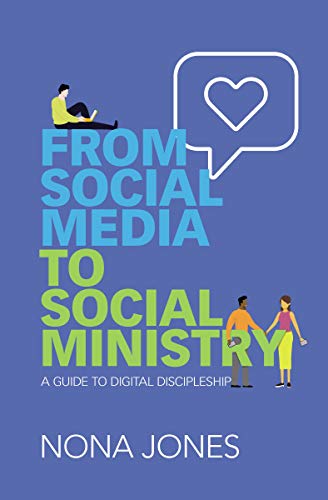
I have been reading From Social Media to Social Ministry. I am always a little hesitate of books that claim to be a guide or an answer. Often these books have a good analysis of the problem, it is just the step-by-step answers that leave me a little disappointed.

The book is written for an American evangelical audience, all of which I am not. Yet there are some real gems in the mess. (See someone does agree with me!)

The data links the decline to one main thing: a perceived lack of relevance. And relevance isn’t only a question of your message; it’s also a question of your method.

Jones, Nona. From Social Media to Social Ministry

I think a major problem for modern churches is that they are answering questions that no one (except them) is asking. In reality what person outside of the church is interested in what you think the Bible is, or how your escatology connects with your Christology? Some Christian communities behave more like cults (world evil, us good) than loving followers of Jesus.

While the data is not as convincing as the author makes out, I think that the basic point is solid: are churches answering questions people are asking? Or is the church shame-blaming people outside of the church for not asking the right questions?

Jesus connected with people. He used parables (word pictures) for people to experience Him and the Kingdom of God. Jesus used images that people were familiar with and related to. So fundamentally are modern churches building community around an argument, an idea, or around the Person of Jesus?

what if?!

Nobody realizes that some people expend tremendous energy merely to be normal.

Albert Camus

What if, just what if, I refuse to be normal?! What if I use all that energy to be me with all the weirdness and awkwardness. Just what if?!

existential individuals

We are born biological beings but we must become existential individuals by accepting responsibility for our actions. This is an application of Nietzsche’s advice to ‘become what you are’. Many people never do acknowledge such responsibility but rather flee their existential individuality into the comfort of the faceless crowd.

Flynn, Thomas. Existentialism: A Very Short Introduction

I have always thought the above is a good definition of existenalism. If not a definition than a great place to start the discussion. I think SK would add “before God” but that is covered by “accepting responsibility for our actions”.

I often flee into the “comfort of the faceless crowd” – I allow others to define me, to give me meaning, to give me purpose. I escape to a mask that others ask me to wear. Because, in the end, it is much easier to let other’s define me than to do the hard work of looking at myself “before God”.

Yet I have a choice – yes or no. Do I allow others to define me or just to describe me? Yes, I am weird and awkward. But those are not failures but superpowers! I need to learn to be an “I” with all the quirks and eccentricities. Because, in the end, Jesus calls me to place my centre in Him – I am by faith an eccentric.