the crowd is untruth

We are born biological beings but we must become existential individuals by accepting responsibility for our actions. This is an application of Nietzsche’s advice to ‘become what you are’. Many people never do acknowledge such responsibility but rather flee their existential individuality into the comfort of the faceless crowd.

Existentialism: A Very Short Introduction

I have a tattoo that says, “the crowd is untruth”. People sometimes see it and think it is an act of rebellion: I can do what I want. (Which is so funny if you know me!) But it is Kierkegaard’s way of summarising the existentialist task we are all called to.

I have been thinking about that distinction: the single individual (Kierkegaard) vs individualism. Individualism is the reason for an action – I can do what I want – while “the single individual” is taking personal responsibility for my actions.

In the context of faith, I am sometimes (often?) intellectually stretched by the idea that what I believe is less important than that I have faith. I have no answer! Apart from saying that the what (or much better the who) is important to me. When the content of faith remains outside of me, do I really have faith? But if the content is only inside of me?

So anyway, feeling cactus so I am escaping into books.
faith is a passion

When a person sets out on what in a certain sense is the hard way of the tragic hero, many will be able to advise him; the one who goes faith’s narrow way, him no one can advise, no one can understand. Faith is a miracle, and yet no human being is excluded from it, for that which unites all human life is passion, and faith is a passion.

Kierkegaard: Fear and Trembling

More classical than modern in his definition of passion. The way of faith is travelled alone – alone before God.

intimacy

So he set off and went to his father. But while he was still far off, his father saw him and was filled with compassion; he ran and put his arms around him and kissed him.

Luke 15:20

I had a dream about the Parable of the Compassionate Father (Luke 15:11-32). It was vivid and emotional.

Yesterday, during prayers, I thought of the above verse: the intimacy that the father shows to his returning son. People sometimes (not to me!) sign their emails, “Hugs and kisses”, and that is what is happening here.

I can honestly say that I do not remember the last time someone hugged me. Alas, I do remember the last time someone kissed me. I thought I had a relationship in which I could in an earthly sense experience the above intimacy. Where someone had compassion on me (and my many failings) and initiated intimacy because of that compassion. I think I have always searched for this type of intimacy.

The insight the dream gave me (or maybe the reflection afterwards) is that I cannot find that type of intimacy in people. Only in Jesus! I can attempt to be close to people – and I realise that I am a person people do not get close to – but my desire for intimacy will only find fulfilment in Jesus.

So the paradoxical is that in choosing Jesus, desiring him alone, and “being alone” (that is, apart from people), I find that which I have been searching for all my life. And, in return, my relationship with people will be more intimate because of Jesus.

love and rules

I am a Prayer Book nerd. I like the older versions but I also like the modern versions. The Prayer Book has formed me in a particular way. But (an important distinction) my relationship with Jesus is so much more than liturgy.

I was thinking about the traditional structure of the Communion Service in the Prayer Book. It starts with the Collect for Purity (my favourite prayer) and then has this (from Common Worship):

Our Lord Jesus Christ said:
The first commandment is this:
‘Hear, O Israel, the Lord our God is the only Lord.
You shall love the Lord your God with all your heart,
with all your soul, with all your mind,
and with all your strength.’

The second is this: ‘Love your neighbour as yourself.’
There is no other commandment greater than these.
On these two commandments hang all the law and the prophets.
Amen. Lord, have mercy.

The original compilers of the Prayer Book must have felt it was important to rehearse this central message of Jesus. Maybe because it is the Rule of Life for all Christians? Is there really any need to go beyond?

Anyway, I have updated my Rule of Life page to reflect the above.

chasmic difference

There is, namely, an infinite chasmic difference between God and man, and therefore it became clear in the situation of contemporaneity that to become a Christian (to be transformed into likeness with God) is, humanly speaking, an even greater torment and misery and pain than the greatest human torment, and in addition a crime in the eyes of one’s contemporaries. And so it will always prove to be if becoming a Christian truly comes to mean becoming contemporary with Christ. And if becoming a Christian does not come to mean this, then all this talk about becoming a Christian is futility and fancy and vanity…

Practice in Christianity

I have always liked the above quote from Practice in Christianity. Yes, SK is very Lutheran/Augustinian in it but I think it says something about God: God’s transcendence in being and his imminence in action (in Jesus). It is about the King and the Servant, and love, and surrender.

wish you were here

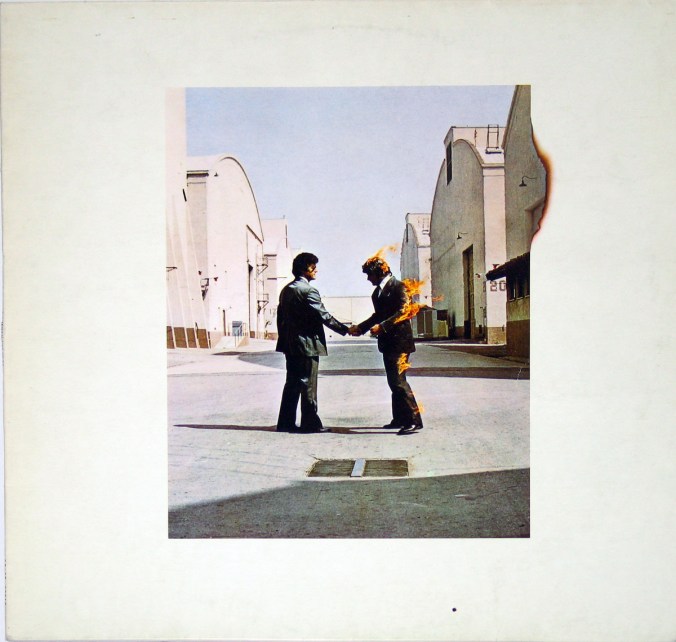
This is my “goto” album when I am finding life hard. The longer songs, the emotional memory, the “sing-along” effect of the album all add to its significance. It was the first album I ever purchased as a very young boy and it has stayed with me most of my life.

I have often wondered who I wish were here?! I have no answer. But when I listen and close my eyes I am taken somewhere else for a few moments. And that is why I like the album.

silence

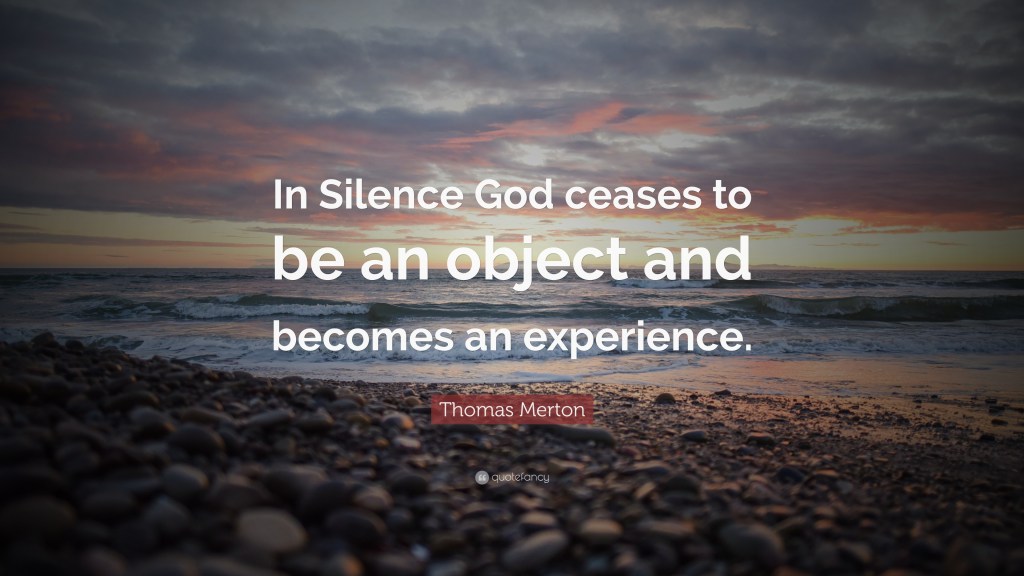
I have two Merton quotes about silence I have been thinking about. Silence has been my solas for two weeks. While I have felt much more balanced and in control, I wonder if it is due to the periods of silence I have enjoyed.

In so many ways, I think, Jesus is an experience rather (God forbid) a doctrine, teaching, or idea. I think the same can be said of our meeting with other people – in the silence of presence they become an experience and not an object to be used or manipulated.


I think I like this one more for the insight – silence is necessary to understanding. We are often (yes, I!) more willing to make noise than stand in the silence.

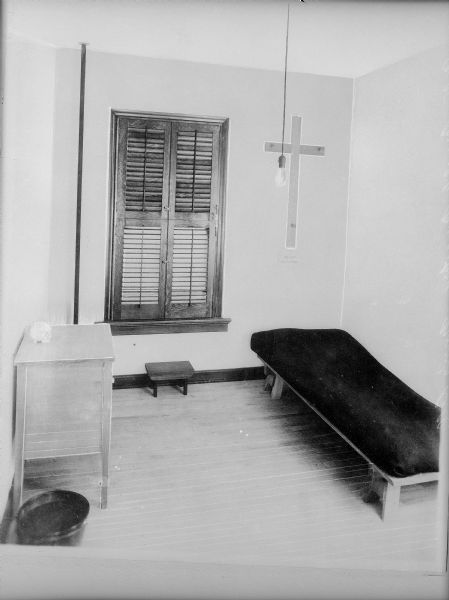
Alone and lonely?

In the book I am enjoying the anchoress (sic) is asked by a visitor, “Are you lonely?”. Of course she answers is a resounding “no”. I have been thinking about that answer.

I think it is natural to feel lonely at times. That is only human. Yes, I feel lonely sometimes. I admit very rarely in the last year or so. But the point of the anchorite or solitary life is that “loneliness” is given new meaning in Jesus. And that is the point – Jesus does not change the way I feel but he changes what it means to me.

Today is a public holiday. It changes very little in my day. So I am just trying to be me in the presence of Jesus.