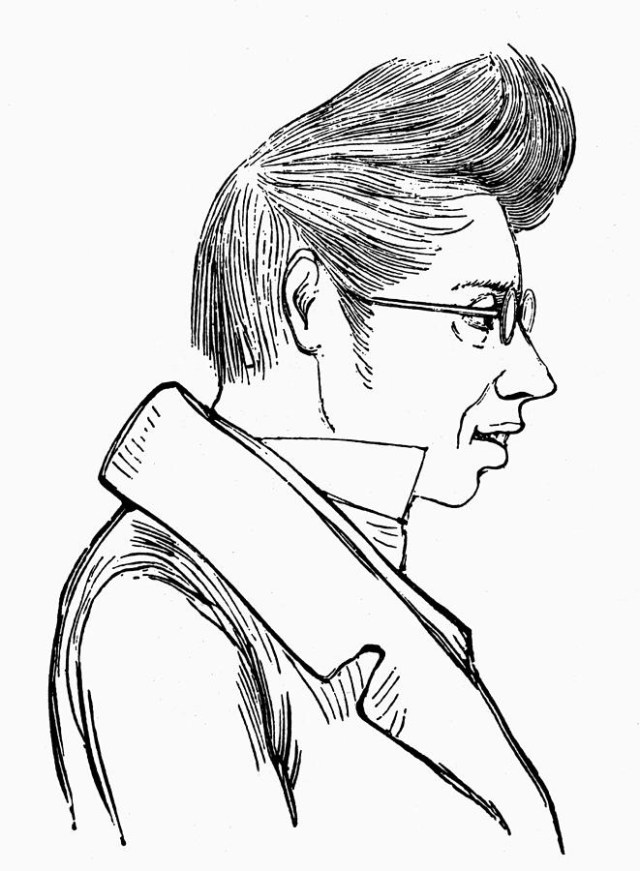
Via Kierkegaard: A Very Short Introduction (Very Short Introductions Book 58) by Patrick Gardiner:

Is SK’s problem real? Have we forgotten what it means to be a “person”? Has our own forgetfulness got us to this point in history?
Via Kierkegaard: A Very Short Introduction (Very Short Introductions Book 58) by Patrick Gardiner:

Is SK’s problem real? Have we forgotten what it means to be a “person”? Has our own forgetfulness got us to this point in history?

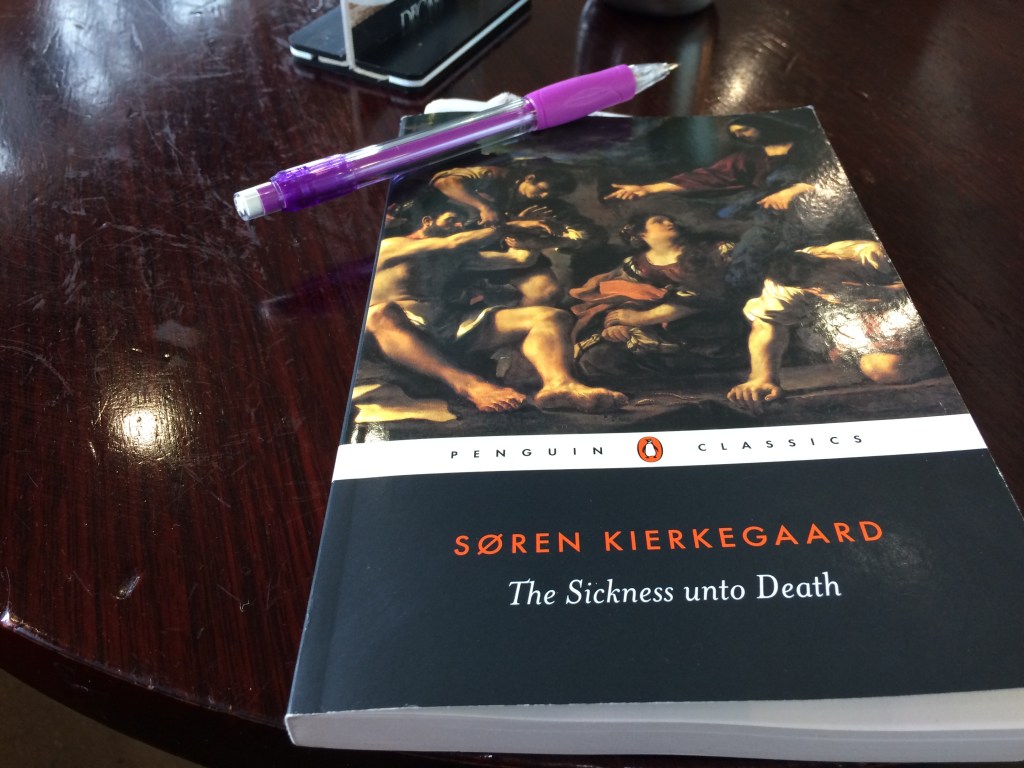
I read a great article on SK and possibility this morning. It is especially useful since I am reading Sickness unto death. Anyway, here is a quote:
The important step for Kierkegaard is the concept “before God”. This is a Christian concept. He sees this actuality, standing in prayer before God, or becoming contemporary with God, as the highest for any Christian. Here the possibility of the offense is present, and must be ever-present. But here also the possibility of being able to become a believer is present and is ever present.
SK & Possibility
The great risk in possibility is also the risk in faith.

“A man who as a physical being is always turned toward the outside, thinking that his happiness lies outside him, finally turns inward and discovers that the source is within him.”
Soren Kierkegaard
I often think about SK’s “inside vs outside” at the start of Either/Or. I especially think about it when I listen to modern preaching. There appears to be a common understanding of religion that, simply put, emphases the external over the internal. “Just be obedient, follow the rules” – learn the script to play the part! Or, in theological terms, there is an emphases on “Christ for me” over “Christ in me”. It often strikes me that modern religion calls me to give up “me”, to conform to a model (of worship, life, thinking, emotions, vocations), and then calls that obedience.
Anyway, what would I know!
“Existentialism”, therefore, may be defined as the philosophical theory which holds that a further set of categories, governed by the norm of authenticity, is necessary to grasp human existence. To approach existentialism in this categorial way may seem to conceal what is often taken to be its “heart” (Kaufmann 1968: 12), namely, its character as a gesture of protest against academic philosophy, its anti-system sensibility, its flight from the “iron cage” of reason. But while it is true that the major existential philosophers wrote with a passion and urgency rather uncommon in our own time, and while the idea that philosophy cannot be practiced in the disinterested manner of an objective science is indeed central to existentialism, it is equally true that all the themes popularly associated with existentialism—dread, boredom, alienation, the absurd, freedom, commitment, nothingness, and so on—find their philosophical significance in the context of the search for a new categorial framework, together with its governing norm.
Existentialism (Standford)
This is one of the first articles that I read about SK from a former Lutheran who died a Catholic priest. Anyway, here is a quote:
There are Christians who call themselves Kierkegaardians, much as others call themselves Augustinians or Thomists or Barthians. But Kierkegaard provides no school of thought, and most emphatically no “system,” that can be a secure resting place for one’s Christian identity. Kierkegaard offers only a mode of being, of thinking, of living that has no end other than the end of being “contemporaneous” with Jesus Christ, true man and true God, who has no end. The certifying mark that one has accepted what he offers—or, more precisely, what Christ offers—is martyrdom, and Kierkegaard yearned to be a martyr. The word martyr, one recalls, means witness. If Kierkegaard was not to be given the privilege of literally shedding his blood, he would bear witness in other ways. He welcomed the derision of those surrounding him, recognizing in them the same crowd that surrounded the cross of his contemporary, Jesus Christ.
Reading last night, I found this in Kierkegaard’s Journals (1847):
The evolution of the whole world tends in the direction of the absolute significance of the category of the particular, which is precisely the principle of Christianity. But as yet, concretely, we haven’t come especially far, for it is only recognized in abstracto. That explains why it is still impresses people as presumptuously and overwhelmingly arrogant to speak of the single individual, instead of recognizing that absolute humanity means precisely that everyone is a single individual.

As I look at people going about their daily lives, I wonder if the first step for a Single Individual is to show people that their lives are much more than survival. Life is much more than food, drink, pleasure, money, power, influence. Life is much more than the basics for day to day existence.
Survival seems so self-evident. If I do not have the basics there will be no tomorrow! Of course I need food, shelter, “love”. But it does not end there. Existence is much more than survival.