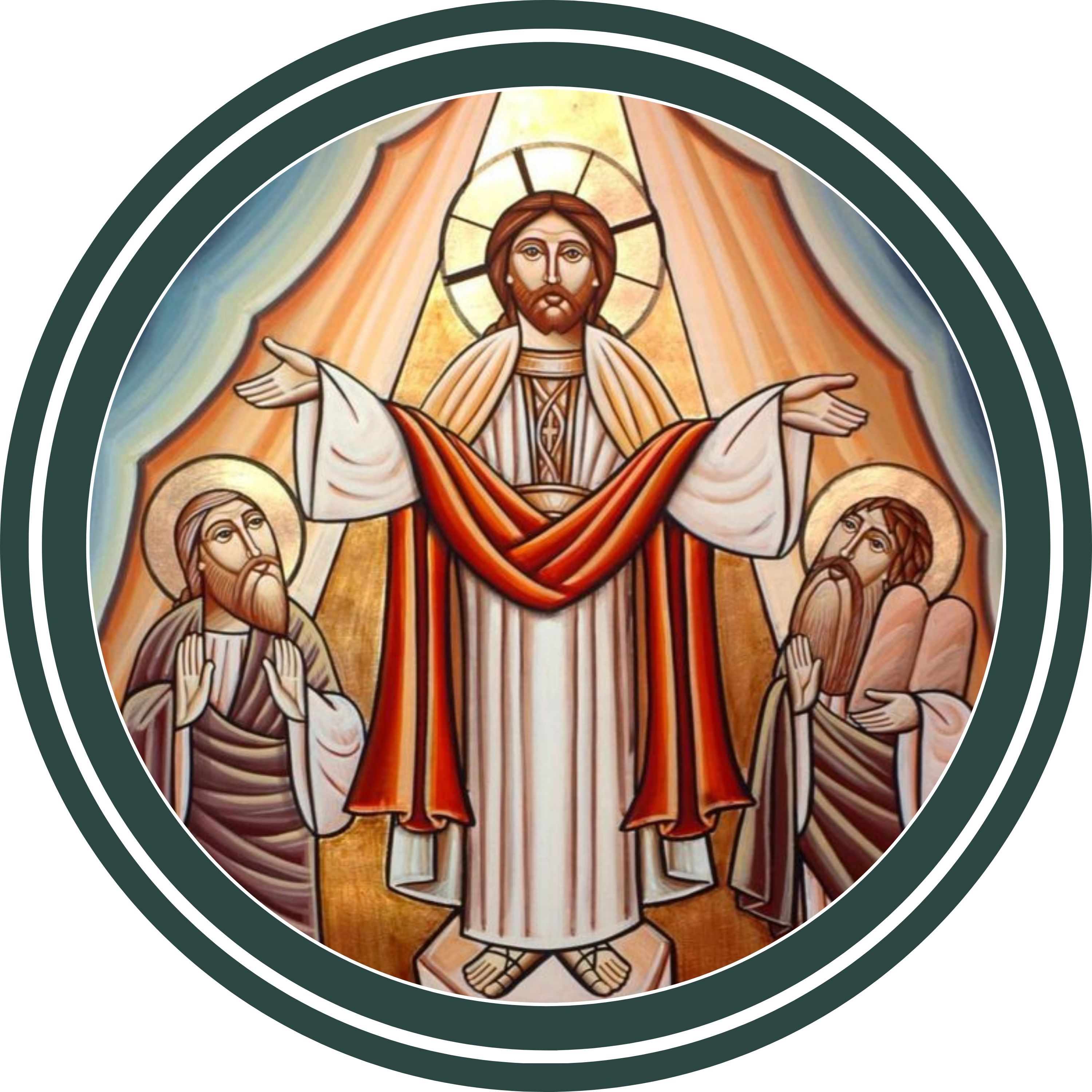
Sophronius’ account of Mary of Egypt is rich in theological and symbolic meaning. Her life dramatizes the Christian doctrine of metanoia, or radical repentance. In contrast to idealized virgin martyrs or pious abbesses, Mary’s starting point is one of abjection and vice. Her sanctification, however, does not stem from institutional religion, monastic guidance, or sacramental regularity, but from personal encounter with divine grace. Sophronius portrays the desert as both a site of temptation and a crucible of transformation—echoing the biblical paradigm of the Israelites and Jesus himself.
Category: SolitaryLife
… in solitude
… all voices sound different in solitude.
Friedrich Nietzsche; The Gay Science
Rule
Sit in your cell as in paradise.
Put the whole world behind you and forget it.
Watch your thoughts like a good fisherman watching for fish,
The path you must follow is in the Psalms — never leave it.
If you have just come to the monastery,
and in spite of your good will you cannot accomplish what you want,
take every opportunity you can to sing the Psalms in your heart
and to understand them with your mind.
And if your mind wanders as you read, do not give up;
hurry back and apply your mind to the words once more.
Realize above all that you are in God’s presence,
and stand there with the attitude of one who stands
before the emperor.
Empty yourself completely and sit waiting,
content with the grace of God,
like the chick who tastes nothing and eats nothing
but what his mother brings him
work of the soul
Abba Theodore of Pherme once complained: “When I was in Scetis, the work of the soul was our real job (ergon), and our handiwork we thought of as a sideline (parergon). But now the work of the soul has become the sideline and the handiwork has become the real job.”
solitary and the “church”
In the carliest, least structured stage of monasticism the lines of “control between the church and the desert monks of Egypt seen to have been highly tenuous, after which their gradual imposition can be traced. Initially, retirement from the world entailed also retirement from the body of the church, since the earliest mont were solitaries. There is evidence too of a strong charismatic tendency among these ascetics which on occasion to served by-pass an important aspect of the authority nexus in the primitive church which was located in the dispensing of sacraments. So of the Egyptian hermits claimed to have received a miraculous distribution of the eucharistic sacraments, and this was representative of a more general devaluing of the church’s sacrame control which was the logical corollary of, if not the general practice of, the desert solitaries.
The Religious Order, 22
John?
In those days came John the Baptist, preaching in the wilderness of Judaea, and saying, Repent ye: for the kingdom of heaven is at hand.
Matthew 3:1-2
By what authority does John the Baptist preach?
… with my books

I do not need the money – I do it for free. Can I bring my books? BCP!
desert ascetics

These are the reading for Mattins (alternative First Lesson), the Gospel for Mass from the Book of Common Prayer, and the Collect for the First Sunday in Lent.
My son, if thou come to serve the Lord, prepare thy soul for temptation. Set thy heart aright, and constantly endure, and make not haste in time of trouble. Cleave unto him, and depart not away, that thou mayest be increased at thy last end. Whatsoever is brought upon thee take cheerfully, and be patient when thou art changed to a low estate. For gold is tried in the fire, and acceptable men in the furnace of adversity. Believe in him, and he will help thee; order thy way aright, and trust in him. Ye that fear the Lord, wait for his mercy; and go not aside, lest ye fall. Ye that fear the Lord, believe him; and your reward shall not fail. Ye that fear the Lord, hope for good, and for everlasting joy and mercy. Look at the generations of old, and see; did ever any trust in the Lord, and was confounded? or did any abide in his fear, and was forsaken? or whom did he ever despise, that called upon him? For the Lord is full of compassion and mercy, longsuffering, and very pitiful, and forgiveth sins, and saveth in time of affliction. Woe be to fearful hearts, and faint hands, and the sinner that goeth two ways! Woe unto him that is fainthearted! for he believeth not; therefore shall he not be defended. Woe unto you that have lost patience! and what will ye do when the Lord shall visit you? They that fear the Lord will not disobey his Word; and they that love him will keep his ways. They that fear the Lord will seek that which is well, pleasing unto him; and they that love him shall be filled with the law. They that fear the Lord will prepare their hearts, and humble their souls in his sight, Saying, We will fall into the hands of the Lord, and not into the hands of men: for as his majesty is, so is his mercy.
Ecclesiasticus 2
Then was Jesus led up of the Spirit into the wilderness, to be tempted of the devil. And when he had fasted forty days and forty nights, he was afterward an-hungred. And when the tempter came to him, he said, If thou be the Son of God, command that these stones be made bread. But he answered and said, It is written, Man shall not live by bread alone, but by every word that proceedeth out of the mouth of God. Then the devil taketh him up into the holy city, and setteth him on a pinnacle of the temple, and saith unto him, If thou be the Son of God, cast thyself down; for it is written, He shall give his angels charge concerning thee, and in their hands they shall bear thee up, lest at any time thou dash thy foot against a stone. Jesus said unto him, It is written again, Thou shalt not tempt the Lord thy God. Again, the devil taketh him up into an exceeding high mountain, and sheweth him all the kingdoms of the world, and the glory of them; and saith unto him, All these things will I give thee, if thou wilt fall down and worship me. Then saith Jesus unto him, Get thee hence, Satan; for it is written, Thou shalt worship the Lord thy God, and him only shalt thou serve. Then the devil leaveth him, and behold, angels came and ministered unto him
The Gospel St. Matthew 4.1-11
O Lord, who for our sake didst fast forty days and forty nights: Give us grace to use such abstinence, that, our flesh being subdued to the Spirit, we may ever obey thy godly motions in righteousness and true holiness, to thy honour and glory, who livest and reignest with the Father and the Holy Ghost, one God, world without end. Amen.
The Collect
deChurched?
… commentators distinguish between people who are un-churched (as in never had any significant contact with a church) and those who are de-churched (as in once were involved, but no more thank you very much).
Churched, Un-churched or De-churched
I used the term for the first time yesterday. It was a little of a shock to me. “Yes, I am de-churched but still in love with Jesus”.
It is a gigantic leap to say that the earthly institution we call “church” is the same as the Body of Christ. Even more that a system of thought or decisions of a particular organisation is more important than an individual person. How can any system that is above the individual be acceptable? Obedience is not simply conformity (to an external) but accountability (for my actions). My experience is valid and meaningful to me. The individual’s confession – my confession – is “Jesus is Lord”, not “Jesus and various other things are Lord”. No Jesus+ or faith+. No institution above intimacy.
Sorry, that is a brain dump that was floating in my head for some time. I am not looking for someone to agree with me (or disagree with me). This is simply where Jesus has led me. Anyway …
elders
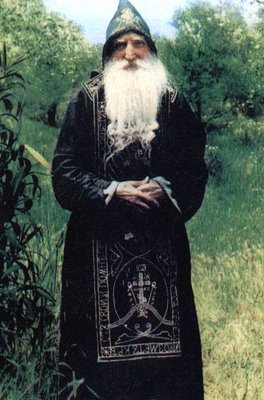
A starets … is an elder of an Eastern Orthodox or Eastern Catholic monastery or convent who functions as venerated adviser and teacher. Elders or spiritual fathers are charismatic spiritual leaders whose wisdom stems from God as obtained from ascetic experience. … Elders are not appointed by any authority; they are simply recognized by the faithful as being people “of the Spirit”. An elder, when not in prayer or in voluntary seclusion, receives visitors (some who travel very far) and spends time conversing with them, offering a blessing (if the elder is an ordained cleric) and confession, and praying. People often petition the elder for intercessionary prayers, believing that the prayer of an elder is particularly effective.
Starets
To this there is a simple answer. The spiritual father or starets is essentially a ‘charismatic’ and prophetic figure, accredited for his task by the direct action of the Holy Spirit. He is ordained, not by the hand of man, but by the hand of God. He is an expression of the Church as “event” or “happening”, rather than of the Church as institution.
The Spiritual Father in Orthodox Christianity
 this solitary life