The significance of the Nazarene vow was a sign of God’s power resting on the person who made it. To cut off the hair meant to cut off God’s power as in the example of Samson (see Judges 16:17-19). The strength of these pious observances, transmitted to the New Testament Church, were observed without question till our present times of willfulness and the apostasy resulting from it. Why, one might ask, do those Orthodox clergymen, while rejecting the above pious ordinances about hair, continue to observe the custom of granting various head coverings to clergy, a practice which also has its roots in the ancient ordinances of the Old Testament (cf. Ex. 24:4-6) and the tradition of the early Church (see Fusebius and Epiphanius of Cyprus concerning the miters worn by the Apostles John and James)?
Concerning the Tradition of Long Hair and Beards
Author: a fool
All alone with Jesus
the nazirite
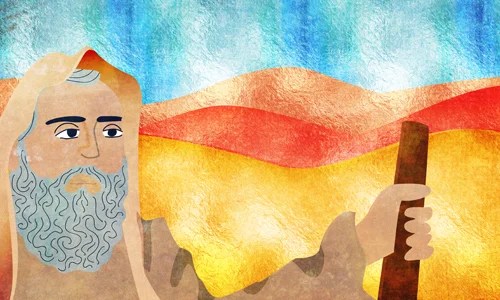
The simplest form of the ascetical life: the Nazirite.
All the days of his separation he is holy unto the Lord.
Numbers 6:8
Vow: I will not cut my hair
All the days of the vow of his separation there shall no razor come upon his head: until the days be fulfilled, in the which he separateth himself unto the Lord, he shall be holy, and shall let the locks of the hair of his head grow.
Numbers 6:5
Vow: I will not drink any alcohol
He shall separate himself from wine and strong drink, and shall drink no vinegar of wine, or vinegar of strong drink, neither shall he drink any liquor of grapes, nor eat moist grapes, or dried.
Numbers 6:3
in love
What’s something you used to believe as a kid that seems ridiculous now?
This might sound cynical or jaded: I believed in love. But life has taught me that what we call love is often more about being useful. Maybe love exists but not for me.
1 John 2
Love not the world, neither the things that are in the world. If any man love the world, the love of the Father is not in him. For all that is in the world, the lust of the flesh, and the lust of the eyes, and the pride of life, is not of the Father, but is of the world. And the world passeth away, and the lust thereof: but he that doeth the will of God abideth for ever.
Little children, it is the last time: and as ye have heard that antichrist shall come, even now are there many antichrists; whereby we know that it is the last time. They went out from us, but they were not of us; for if they had been of us, they would no doubt have continued with us: but they went out, that they might be made manifest that they were not all of us. But ye have an unction from the Holy One, and ye know all things.
I have not written unto you because ye know not the truth, but because ye know it, and that no lie is of the truth. Who is a liar but he that denieth that Jesus is the Christ? He is antichrist, that denieth the Father and the Son. Whosoever denieth the Son, the same hath not the Father: he that acknowledgeth the Son hath the Father also.
Let that therefore abide in you, which ye have heard from the beginning. If that which ye have heard from the beginning shall remain in you, ye also shall continue in the Son, and in the Father. And this is the promise that he hath promised us, even eternal life.
These things have I written unto you concerning them that seduce you. But the anointing which ye have received of him abideth in you, and ye need not that any man teach you: but as the same anointing teacheth you of all things, and is truth, and is no lie, and even as it hath taught you, ye shall abide in him.
And now, little children, abide in him; that, when he shall appear, we may have confidence, and not be ashamed before him at his coming. If ye know that he is righteous, ye know that every one that doeth righteousness is born of him.
15-29
internet!?
What’s a piece of media (book, movie, song) that changed how you see the world?
I am so old that I remember life before TV, telephones (that is, landline), and the internet. I remember the excitement of a colour TV and our first landline phone. My parents had a typewriter that I used as a little boy.
So maybe the internet? It opened ideas and the writings of individual people. It allowed me to connect with people from all over and exchange views and life-experiences. It opened the world beyond my small part of it.
only the individual
When Jesus came into the coasts of Caesarea Philippi, he asked his disciples, saying, Whom do men say that I the Son of man am? And they said, Some say that thou art John the Baptist: some, Elias; and others, Jeremias, or one of the prophets. He saith unto them, But whom say ye that I am? And Simon Peter answered and said, Thou art the Christ, the Son of the living God. And Jesus answered and said unto him, Blessed art thou, Simon Barjona: for flesh and blood hath not revealed it unto thee, but my Father which is in heaven.
Matthew 16:13-17
From “whom do [others] say I am” to “whom say ye (pl)” to “Simon Peter answered”.
The interesting thing is that a single individual answers because the question is ultimately only answerable by an individual. Jesus makes this plain by using the singular when He answers Peter.
So my point: only you can answer the question, “Whom say ye that I am?” Not the past, nor the community that surrounds you, but only the single individual standing alone before God. It is the personal encounter with Jesus that asks for a response. And this response changes everything!
movie quote

My first thought, “how do they know where I am going?” (If you know, you know.)
fiction?! Yep!!
If you could change the ending of any book, which one would it be?
A little strange but …
The ending of Dan Brown’s Demons and Angles is terrible. It actually made me laugh out loud. (If you know, you know!) I normally enjoy Brown’s books, and I enjoyed Demons and Angles, but the ending is just plain weird and does not make sense in the context of the book.
and understand?
Which languages do you speak and how did that impact your life?
I speak (write and read) English really poorly, as evidenced by this blog. That is my go-to language and the language in which I mainly think.
I understand German since it is my first language. I can read it but not really speak or write. It changes the way I think and reason. Also gives me words that have no English translation.
How has it impacted me? I read German books in public and sometimes get strange looks. I also understand people when they think they are speaking privately. But it is my life and I know no different.
who’s missing?
The Decision
The president addresses the candidates directly, or through their parents, godparents and sponsors
We all wander far from God and lose our way:
Christ comes to find us and welcomes us home.
In baptism we respond to his call.Therefore I ask:
Do you turn away from sin?
I do.Do you reject evil?
I do.The candidates, together with their parents, godparents and sponsors, may turn at this point.
Do you turn to Christ as Saviour?
I do.Do you trust in him as Lord?
Common Worship – Baptism
I do.
 a fool and his prayer book