It is intrinsic to ascetical theology to adapt itself to the contemporary situation, yet it can only evolve out of a living tradition with roots in the past. We have now discovered, rather painfully, that a scholar cannot just sit down and compose a new liturgy; nor can another scholar sit down and write a modern spirituality. Both depend upon the worshipping community developing a tradition. That, by the grace of God, seems to be happening, but it needs a compatible ascetical theology to support, guide, and nurture it, and the only source of such a theology is the tradition itself: it is sometimes more progressive to look back a thousand years than to look forward three weeks.
English Spirituality, 13
Author: a fool
All alone with Jesus
Optina Pustyn
Which fictional world would be the most fun to vacation in?
This is not a fictional world but rather a world about which I have read.
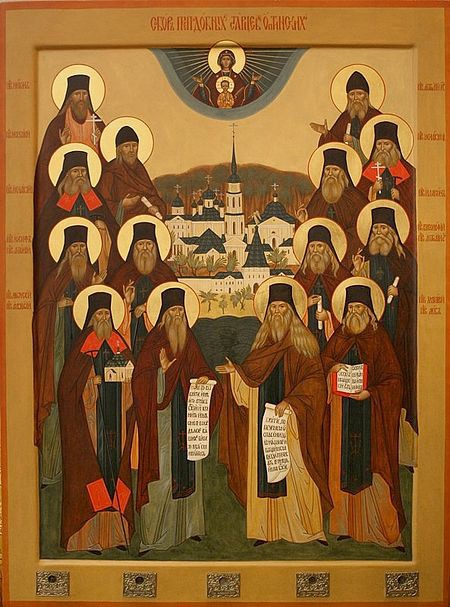
I would like to vacation in the Optina Pustyn (during the 19th century) – Russian religious community that is famous for its elders. It is everything about which I dream. And it is Russian (cf the last tsar). The above icon is in my book of icons.
I am not writing more but it would be so special I doubt very much I would ever leave. So maybe a permanent move?
Companion of New Skete
I am not a joiner! I did not join the “normal Anglo-Catholic” societies when I was a priest, nor any religious order as an oblate etc. But ….
It is intrinsic to ascetical theology to adapt itself to the contemporary situation, yet it can only evolve out of a living tradition with roots in the past.
English Spirituality, 13
I have been accepted as a Companion of the New Skete. And I am super excited. A connection to a living tradition while I remain within my own tradition. The beginning of a Prayer Book Ascetic.
the last tsar
If you could go back and witness any historical event, which one would you pick?
This changes every day but …
I would like to witness the last days of Tsar Nicholas II, especially the death of Rasputin. They are somewhat removed from each other but form a single event. If I could also see St Elisabeth the New Martyr that could really make the event.
Anyway …
salt to society
27. In the deserts of the old world, the first monks and nuns carried on the prophetic ministry of Israel in a renewed vigor. Thus, their lives bore witness to the essential Christian message before a civil and ecclesiastical world that often suffered from secularization, political intrigue, expediency, and a generally exaggerated and inhuman structuralism. They were thereby reminders to all that the Gospel was a way of life to be sought by all through the repentance that leads to the coming universal salvation.
28. Thus, monasticism must strive to keep this goal in mind, for it must be the salt of society; and for this reason if for no other, the monastery must be accessible to all, so that they may savor its life, its worship, and its message.
29. The fourth ecumenical Council of Chalcedon established canons for the inter-relationship of the monastery and the rest of the Church: nd the rest of the Church.
a. Though he may not interfere in the internal affairs of the monastery, the hierarch has the right to visitation, to impart the customary blessings when called for, and to ordain monks presented to him for orders. He should see to it that the integrity, purpose, and goal of the monastic life is preserved free of interference for the best interest the monks and nuns as well as the clergy and laity of the diocese in particular and the Church in general.
Monastic Typikon of the New Skete
the church and me
So I was thinking about “church”. Maybe there are are two issues I have:
- ecclesiolatry
- clericalism
Ecclesiolatry means excessive or obsessive devotion to the church as an institution, its traditions, or its physical and ceremonial trappings, rather than to God or the spiritual faith it represents.
It is therefore necessary, on the one hand, to decisively overcome the scourge of clericalism. Listening and leaving aside stereotypes are powerful antidotes to the risk of clericalism, to which an assembly such as this is inevitably exposed, despite our intentions. Clericalism arises from an elitist and exclusivist vision of vocation, that interprets the ministry received as a power to be exercised rather than as a free and generous service to be given. This leads us to believe that we belong to a group that has all the answers and no longer needs to listen or learn anything, or that pretends to listen. Clericalism is a perversion and is the root of many evils in the Church: we must humbly ask forgiveness for this and above all create the conditions so that it is not repeated.
Pope Francis
There is something the same in each of the above. And I think it is not reserved to liturgy or hierarchical institutions. Some of the most “dictatorial clergy” I have met are non-conformist.
In the end, there is no institutional answer to a personal question.
Father Elijah
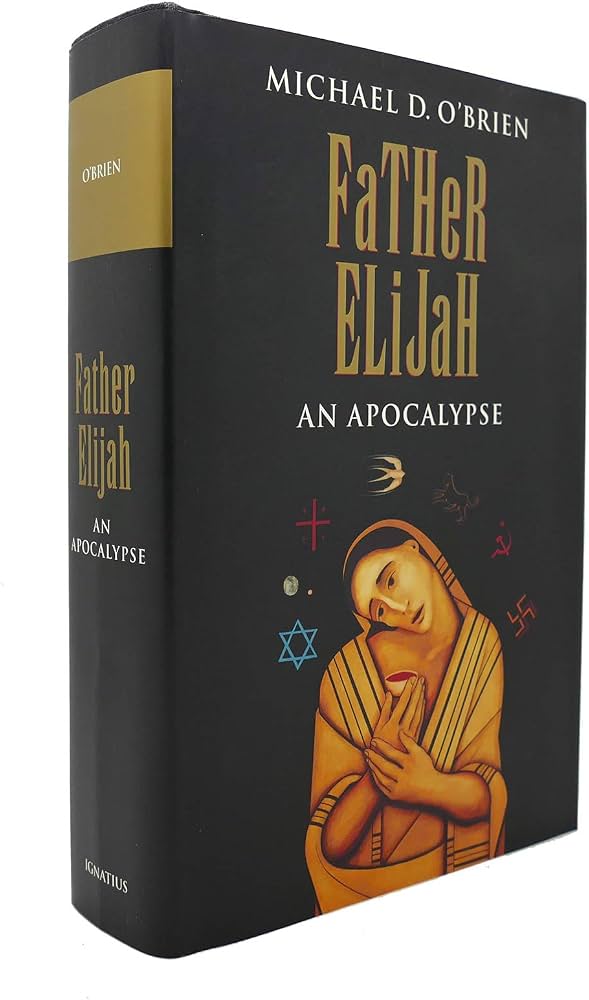
I am reading (is an audiobook still reading?) Father Elijah: An Apocalypse (while I recover from the dentist!!!). And it is most interesting (while a little preachy.) So some quotes:
Was there a missing component in all human beings? The rural masses seeking the metropolis; the urban young fleeing to the woods. Women pretending to be men; men becoming more like women; everyone aping divinity in his desperation to escape creaturehood? Western youths seeking the Orient; orientals seeking capitalism? Monks abandoning their monasteries; married men pining for solitude. Liberals seeking to demythologize the Scriptures in an attempt to flee the exigencies of biblical faith; fundamentalists seeking to fill the empty places in their religion by a return to the Old Testament, fleeing the tasks of the baptized intellect. Was the promise always to be found elsewhere, always just beyond the next horizon? Why this persistent need for signs, wonders, new pillars of fire, arks of covenant, tablets of stone—anything other than the demands of raw, laborious, darkest faith?
“I’m not sure. Exterior enemies are only part of the problem. There’s trouble inside the House of God.”
“I have seen hints of it creeping into the journals.”
“Hints? Lord, what have you been reading! It’s everywhere.”
“Just how bad is it, do you think?”
“I don’t think anyone has an accurate reading on the extent of it. But I’d say it’s pretty big. It’s going to get worse.”
“Why is it happening?”
“A lot of reasons. Spiritual temptation first and foremost. Intellectual pride. The thrill of being revolutionaries. It’s the disease of the century. C. S. Lewis called these people Late Western Man. They’re educated, affluent, restless, and unfulfilled. They’re rational man explaining and theorizing all the way down as he sinks into a totally subjectivized world. What better project for him than the complete demolition and reconstruction of the House of God, right?”
“Is it as conscious as that?”
“Not for most of them. There’s a pattern to their assumptions. With few exceptions, their ideas might be roughly summed up this way: ‘I am an idealist but a realist; I hope for a collective solution of the human problem; I no longer believe (or never have believed) in a transcendent God and organized religion. I believe in the god in man.’ ”
Russian cross
If you had to get a tattoo right now, what would it be and why?
Oh wow!!! Great question. I have two tattoos – one of Kierkegaard and the other my favourite quote – so I am not anti-tattoo.
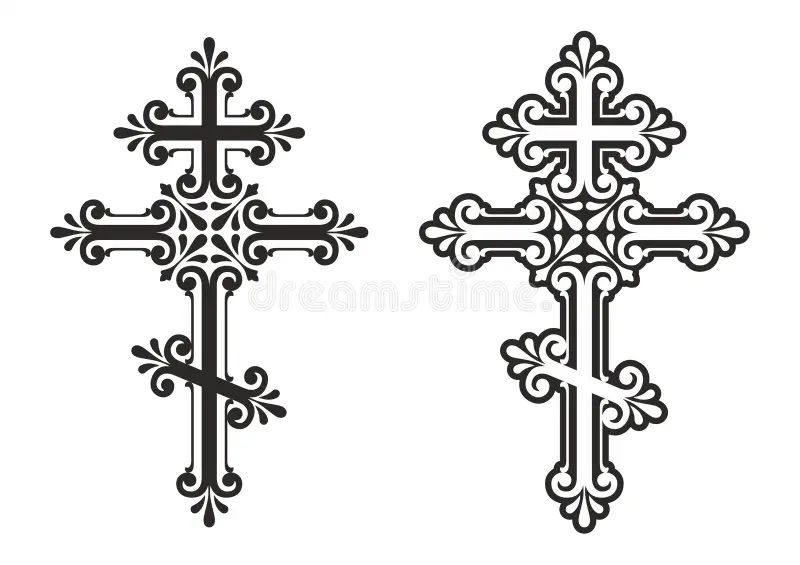
Most likely, if I were to get another, it would be a Russian orthodox cross. Something simple! My tattoos are meaningful to me, they describe a period of my life. In the last year I have read much Russian literature with much appreciation. And some has been religious. So a Russian cross!
Maybe like this:
Jesus?!
How did you meet your significant other?
I did have a significant other but no more. And it is way too painful!!! So …
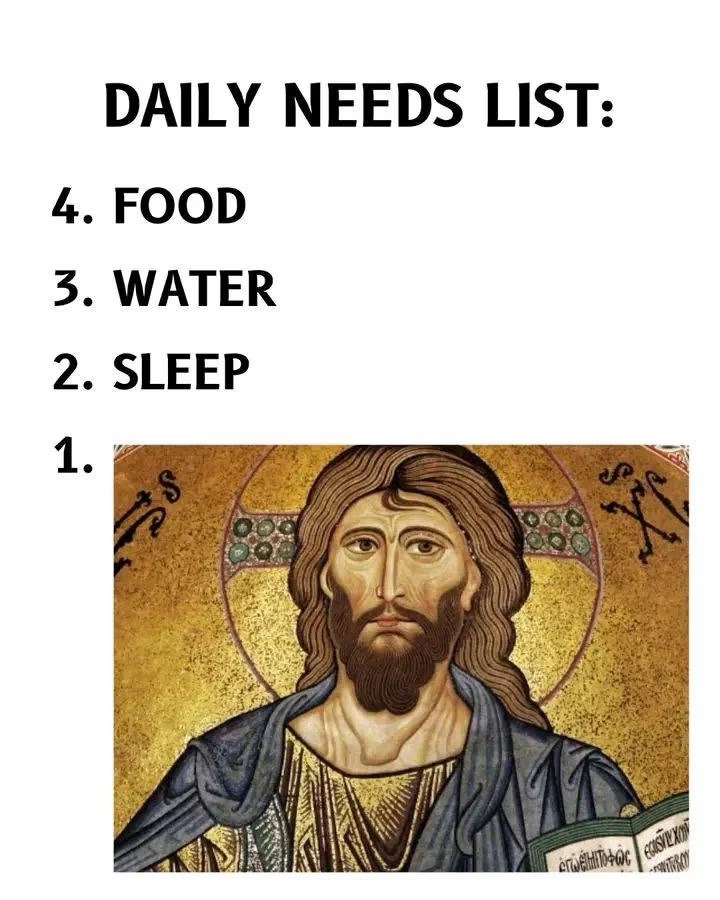
When did meet Him? At my baptism He introduced Himself but it took me a few years to get back to Him. I am still really bad with staying in touch but He is super kind and always welcoming. I try and He really appreciates it.
something funnyish
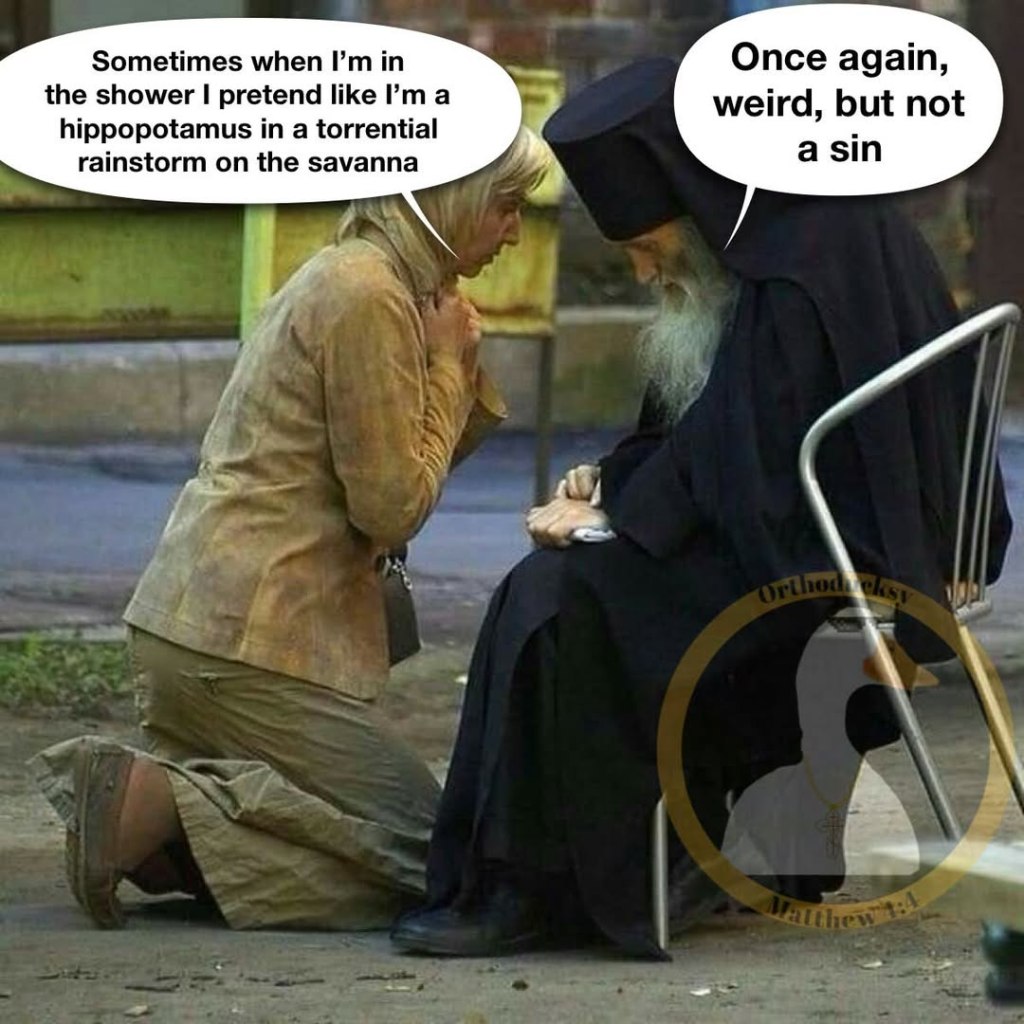
 a fool and his prayer book