absurdism

Absurdism is the philosophy that there is no true meaning of life, so humanity’s attempts to find one are, essentially, absurd.

What is aburdism?

Simple yet a good start. Life does not owe me meaning. Why does life need meaning? Why does my life need a purpose? Do I need to know the outcome before I start?

Kierkegaard speaks about it in Fear and Trembling. The single individual’s job is not to conform to the universal or the moral.

MBTI?

I thought I would do an MBTI. In the past, I have ranged between INTJ and INFJ. For the first time, I tested as an INFP, which is the same as Kierkegaard.

This is one of the descriptions offered:

You’re not like everyone else – and neither are we. We aren’t satisfied with surface-level material. We only deliver deep, meaningful insights – the kind that can lead to real impactful change in your life. For example, did you know that among people of your personality type:

  • 96% say they often feel misunderstood.
  • 94% say they often feel like they don’t belong.
  • 91% say they feel in need of transformation in their lives.

That may sound kind of bleak. But 98% also say they experience rich inner lives with much daydreaming and fantasizing about different ideas or scenarios. Never forget your magic spark, Mediator.

It is what it is. (Sorry for the meaningless tautology!) The answers are influenced by current circumstances. But I have had some insights reflecting on the above this afternoon.

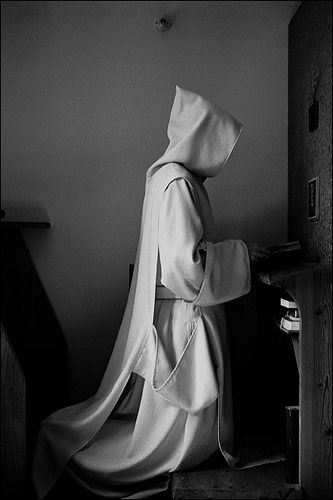
SK on monasticism

The monastic movement itself was a colossal abstraction, monastic life itself a continued abstraction, a life spent in prayer and hymn-singing – instead of playing cards at the club – if there is nothing against caricaturing the one, one must surely be allowed to present the other as it has caricatured itself.

Concluding Unscientific Postscript

SK had lots of positive things to say about monasticism! Just saying.

productivity?

People often ask, “So what do you do?”. And the answer is, “Well, not a lot!”.

I have been thinking about the idea of being “productive”. It has become a virtue. Like “conforming”, the other modern virtue, it concerns objectivity. My value as an individual is measured by what I can objectively produce.

But this “producing” has little to do with life. Productivity is not about subsistence but surplus. Objectification makes me an object that can be defined and valued. Productivity makes me a means to an end for someone else.

So maybe the solitary life is about not being an object and not being productive. It is about a relationship with the Other that cannot be measured and is not judged by what it does. It is about a life that says, “I love you and expect nothing in return” – I love you for Love’s sake.

Anyway …

community?

I have not posted anything for a long long time! So I am going to post some quotes from SK for your upbuilding.

I am preaching this Sunday and watching shows on “cults” – a dangerous mix.

Christianly, struggling is always done by single individuals, because spirit is precisely this, that everyone is an individual before God, that “fellowship” is a lower category than “the single individual,” which everyone can and should be. And even if the individuals were in the thousands and as such struggled jointly, Christianly understood each individual is struggling, besides jointly with the others, also within himself, and must as a single individual give an accounting on judgment day, when his life as an individual will be examined.

Practice in Christianity, 223

… the abstraction of leveling is a principle that forms no personal, intimate relation to any particular individual, but only the relation of abstraction, which is the same for all.

Two Ages, 88

SK lol moment

I have been reading Two Ages. I read the following this morning and it gave me a laugh-out-loud moment:

I once witnessed a fight in which three men shamefully mistreated a fourth. The crowd watched with indignation; their hostile muttering began to spur them to action: some of the crowd converged on one of the assailants and threw him down, etc. The avengers thereby exemplified the same law as the assailants. If I may be permitted to interject my own incidental person, I will finish the story. I approached one of the avengers and attempted to explain dialectically the inconsistency of their behavior, but apparently it was quite impossible for him to engage in anything like that, and he merely repeated: “He had it coming. Such a scoundrel deserves three against one.” This borders on the comic, especially for the person who did not witness the beginning and then heard one man say of the other that he (the lone man) was three against one, and heard it the very moment when the opposite was the case—when there were three against him. In the first situation there was the comedy of contradiction in the same sense as “when the watchman said to a solitary person: Please break it up! Disperse!” The second situation had the comedy of self-contradiction. I gathered, however, that it was probably best for me to surrender all hope of ending this scepticism lest it be continued against me.

Kierkegaard, Søren. Kierkegaard’s Writings, XIV, Volume 14, 86-87

baptism and religious

The Religious life is way of living the Christian life. It is a particular way of living out the call to be a Christian and for a person to live out their baptismal promises. It is not therefore something exotic. At root this life is a call to prayer and service. God has called many people through the centuries to the life of a ‘Religious’. To those who hear such a call, it is demanding yet joyful, a way to find God and relate to the challenges of our 21st-century society.

What is a vocation?