Morning Prayer

I said Morning Prayer outside today. It was extremely windy so I had to stop my Prayer Book from being blown away. I used to be very fanatic about saying Mattins and Evensong – same time, same place, with full ceremonial – making my prayer life ever more and more complicated and involved. I wonder if I was trying to impress God or convince myself.

The simple form for every day in APBA is great – simple and not too involved. I use a very simple calendar and only keep a few festivals apart from the major ones. I read only the New Testament reading. The liturgical purest that was me would be horrified.

I like that the rhyme of prayer shapes my life. Morning and Evening Prayer are part of my Rule of Life. I try to say Prayer at the End of the Day (Compline) but often I forget or I am too tired. I have used Evening Prayer as a time to pray for people – people who have asked for my prayers and the people in my life. I also use the time to sit in silence and just “be”.

Life has taught me that it is not about the “how” of prayer (Prayer Books etc) but rather the “why” – my desire for intimacy with Jesus. My daily routine of praying sets the foundation for my life and also reminds me of Who is important. Using APBA is an act of obedience – I use what our parish uses – and also frees me up. It gives me the freedom for time with Jesus rather than maintaining some arbitrary tradition.

What do you use for your daily time with Jesus?

Going beyond

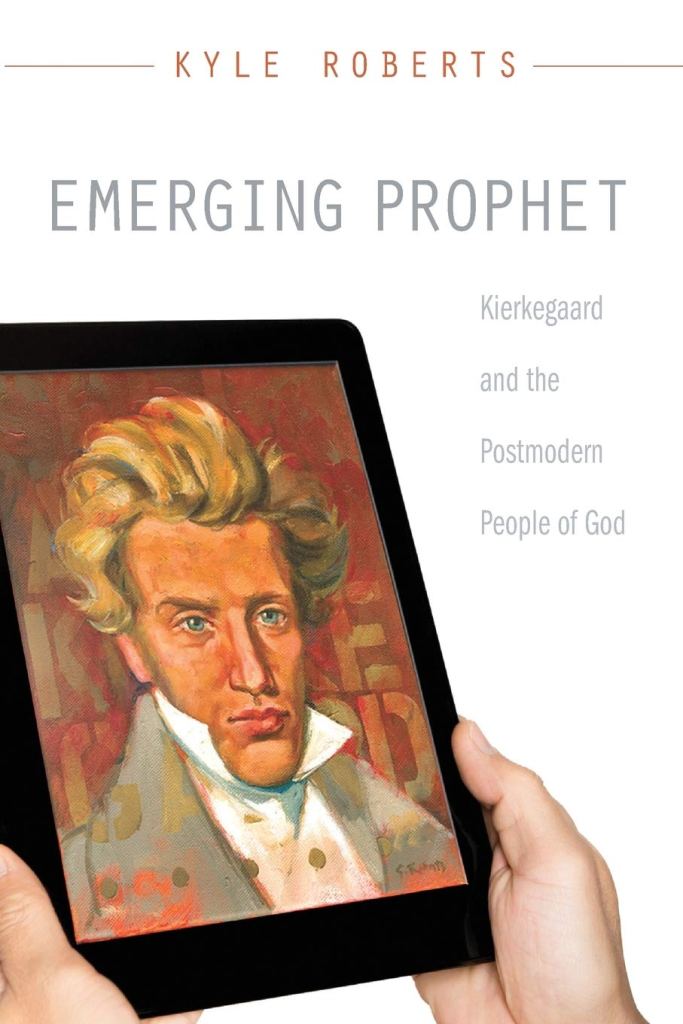
If he were alive today I am pretty sure that Kierkegaard would have a blog and a podcast. And he would create different profiles to talk to each other – to comment on posts – and create a whole “blogoverse” of his own.

I am going to take this writing thing a little more seriously. The blog and the podcast have been great while I have worked with my depression and anxiety (and continues to be great for me). Yet I think I have more to offer than personal reflections. So I am going to write a little more seriously and in the process challenge myself to move beyond.

I am open to suggestions on topics! I will try to add to the mix with honesty. Not to give an answer (always without authority) but rather to add another voice from the experience of a particular person at a particular time in a particular place.

So, if you have not already, “Like” the Facebook page. Ask anything in the comments (which are moderated so say if you do not want them public) or contact me via the blog.

solitude of heart

I have been reading about the idea of the locus of control. In brief, it is “the degree to which people believe that they, as opposed to external forces (beyond their influence), have control over the outcome of events in their lives“. I find that a challenging idea as it appears to not include any room for the Divine – that there is a Person outside of me that is in control of everything.

I think in his Journals Kierkegaard says that an all-powerful being is not all-powerful if that being cannot choose to not use all of their powers. And we Christians call that choice “love”. For me to love God, to choose Him, I must be free and God allows that freedom so that I can love Him. I know people theologically disagree – and I was raised in a tradition that does not agree with that idea of freedom. But I find that a comforting and challenging idea – I am free to love people and to love God without limit.

So back to the locus of control. Rather than not allowing for the Divine, it calls on me to “own” my choices. As I have worked with my counselor I have been encouraged to move beyond a “victim mentality”. And that movement has really helped me face my depression and my anxiety. These are not choices but how I react to them and how I live with them are my choices. In the past, I have made the wrong choices and those choices have hurt people.

So this morning I stumbled across this quote from Thomas Merton:

Today I seemed to be very much assured that solitude is in­ deed His will for me and that it is truly God Who is calling me into the desert. But this desert is not necessarily a geographical one. It is a solitude of heart in which created joys are consumed and reborn in God.

Sign of Jonas, 52

I think as Christians we can find our locus of control outside of ourselves. Christians have swallowed the scientific world view and elevated the “objective” to the role of the Divine. Simply to surrender to an idea, to a community, to a tradition, and to simply conform. Faith becomes an intellectual movement of non-questioning and just “doing”. Faith becomes an impersonal act. Of course, it is human nature to create that outside according to my experience and expectations. And, maybe even worse, it is human nature to expect that my “conforming” pleases God.

Maybe the Christian way of speaking about the locus of control is to speak about the “solitude of heart”? There is a place inside of me into which I can withdraw that I truly meet Jesus. And in this place, I surrender to Jesus. In this solitude, I listen to Jesus and have intimacy with Him. This place is not external to me but is the very nature of my being. My relationship is not only intellectual but personal and instinctive. Faith is personal and subjective. I experience Jesus in my “solitude of heart”.

christian heroism?

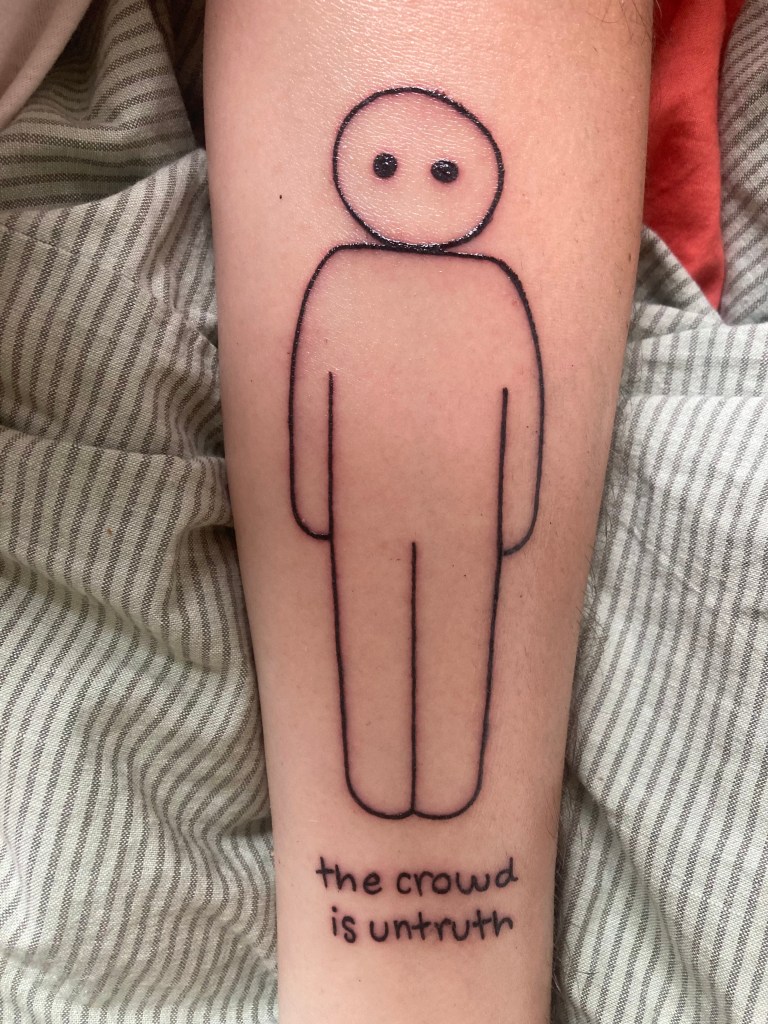
It is Christian heroism – a rarity, to be sure – to venture wholly to become oneself, an individual human being, this specific individual human being, alone before God, alone in this prodigious strenuousness and this prodigious responsibility; but it is not Christian heroism to be taken in by the idea of man in the abstract or to play the wonder game with world history.

Sickness unto Death, Hong 5

“I am the good shepherd” (John 10:11-18)

I am back to teaching online this week. I really enjoy the interaction with people. And I love seeing the change in people. But most of all I know that the process of reflecting on the gospels has changed me. I teach not from an academic point of view but from my journey with Jesus.

So here is this week’s text:

[Jesus said]
“I am the good shepherd. The good shepherd lays down his life for the sheep. The hired hand, who is not the shepherd and does not own the sheep, sees the wolf coming and leaves the sheep and runs away—and the wolf snatches them and scatters them. The hired hand runs away because a hired hand does not care for the sheep. I am the good shepherd. I know my own and my own know me, just as the Father knows me and I know the Father. And I lay down my life for the sheep. I have other sheep that do not belong to this fold. I must bring them also, and they will listen to my voice. So there will be one flock, one shepherd. For this reason the Father loves me, because I lay down my life in order to take it up again. No one takes it from me, but I lay it down of my own accord. I have power to lay it down, and I have power to take it up again. I have received this command from my Father.”

John 10:11-18

Just one point on the text: the good shepherd’s relationship with his flock is intimate and sacrificial. Jesus reveals His very nature and in the process reveals the very nature of God. I-am’s relationship with me is intimate and sacrificial. Jesus knows me and freely lays down His life for me. And my job is simply to listen – to hear with my heart.

Anyway …

I know but I do not feel it yet

I have been listening to the previous song. So I thought I would share the lyrics:

You’ve owned your fear and all your self-loathing
You’ve owned the voices inside of your head
You’ve owned the shame and reproach of your failure
It’s time to own your belovedness

You’ve owned your past and how it’s defined you
You’ve owned everything everybody else says
It’s time to hear what your father has spoken
It’s time to own your belovedness

He says, “You’re mine, I smiled when I made you
I find you beautiful in every way
My love for you is fierce and unending
I’ll come to find you, whatever it takes
My beloved”

You’ve owned the mess you see in the mirror
You’ve owned the lies that you’re just not enough
You’ve been so blinded by all you’re comparing
It’s time to own your belovedness

He says, “You’re mine, I smiled when I made you
I find you…

Belovedness by Sarah Kroger

This song does sum up my life. I like how it goes from past tense (owned) to the present (He says). That is life in Jesus – always now. But leaving the past behind is very hard. I struggle everyday with the guilt and shame of my past – “You’ve been so blinded by all you’re comparing”. And I want to take responsibility for everything even those parts which are not me.

Part of my life is owning the voices in my head – the negative self-talk that is my constant companion. And ignoring the negative voices that have tried to define me for a long time – the voices that are saying that I am simply “not enough”. I want to “own the mess”.

I know that only time will heal and in the right time God will give me some clarity. And I know that I am loved right now in Jesus. But the constant struggle between my head and my heart is the very root of my depression. Owning it and writing about it is part of the healing process for me.

I know all of that but I do not feel it yet.

not yet fully alive

Someone send me the above song.

I was thinking this afternoon that I am in the middle of things – between the old which is dead and the new which is not yet fully alive. There is a restlessness about it all: an old I cannot return to but a new which is not yet fully visible. I am settling into this new version and seeing the outline. Yet it all feels a little like a half baked cake!

off to the hermitage

I am helping again at church today. It feels really good to be useful and to be able to help. I like that I can do it without too much fuss – I just do my job. I am also glad that the online study returns this week – another way that I can serve the community.

During the night I was thinking about my desire to return to the painful past. I think there is a certainty there that I feel I lack now. But in reality there is none. The past, even the painful past, is no longer a reality – people have changed and I have changed. In the past I have surrendered this certainty for being “me” – wearing a mask that suits what I believe I should “be”, allowing other people to define me and to dictate what I do.

The point of conclusion I reached in the night is that I have no real desire to return to that past. The past is no longer a reality and people have moved on. There is always escapism in me. But I am very happy with my present. I am happy with the person I am becoming through these painful months. I like the freedom to be “me” – whatever that may look like. Maybe I can even learn how to really connect with people?!

So Morning Prayer and then off to the hermitage I go!