From The Moment

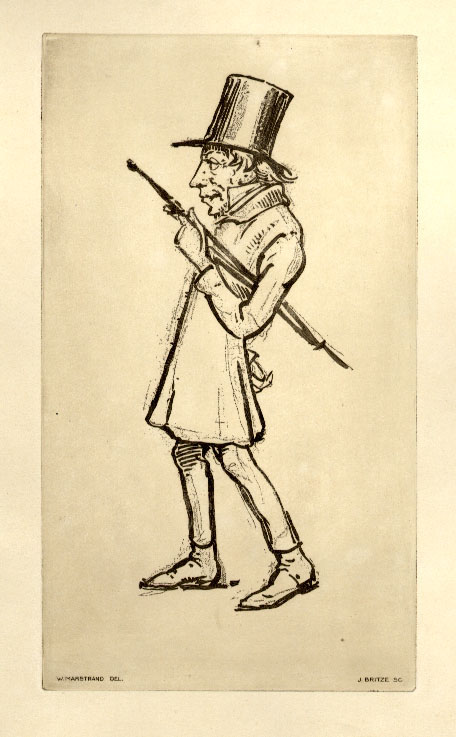
It is a tradesman. His principle is: Everyone is a thief in his trade. “It is impossible,” he says, “to be able to get through this world if one is not just like the other tradesmen, all of whom hold to the principle: Everyone is a thief in his trade.”

As far as religion is concerned-well, his religion is actually this: Everyone is a thief in his trade. He also has a religion in other respects, and in his opinion every tradesman ought to have one. “A tradesman,” says he, “should, even if he has no religion, never allow it to be noticed, because this can easily become harmful by possibly throwing suspicion on his honesty; and a tradesman should preferably have the prevailing religion in the land.” As for the latter, he accounts for that by the fact that the Jews always have a reputation for cheating more than the Christians, which he claims is by no means the case. He claims that the Christians cheat just as much as the Jews, but what harms the Jews is that they do not have the religion that prevails in the land. As for the former, the advantage that having a religion provides with regard to favoring one in cheating, he refers to what one learns from the clergy. He claims that what helps the clergy to be able to cheat more than any other social class is simply that they are so close to religion; if such a thing could be done, he would gladly pay a handsome sum to obtain ordination, because it would pay for itself splendidly.

Two or four times a year this man dresses up in his best clothes and goes to Communion. There a pastor makes his appearance, a pastor who (like those figures that jump out of a snuflbox when the spring is touched) jumps as soon as he sees “a blue banknote.” And then the holy ceremony is celebrated, from which the tradesman, or rather both of the tradesmen (both the pastor and the citizen) return home to their ordinary way of life, except that one of them (the pastor) cannot be said to return home to his ordinary way of life – after all, he had not left it, has been much more engaged as a tradesman!

And one dares to offer this to God in the name of the Sacrament of the Altar, the Communion of Christ’s body and blood! The Sacrament of the Altar! It was at the Communion table that Christ, himself consecrated from eternity to be the sacrifice, for the last time before his death was together with his disciples and consecrated them also to death, or to the possibility of death if they truly followed him. Therefore, in all its solemnity, what is said about his body and blood is so dreadfully true, this blood-covenant that has united the sacrifice with his few faithful blood- witnesses, which they surely would become.

And now the solemnity is this: to live before and after in a completely worldly way – and then a ceremony. Yet to instruct people about what the New Testament understands by the Lord’s Supper and its commitment – for good reasons the pastors guard against that. That others have been sacrificed, to live on this is the basis of their whole livelihood; their Christianity is to receive the sacrifice. To suggest to them that they themselves be sacrificed would be regarded by them as eine sonderbare und hochst unchristliche Zumuthung [a strange and highly unchristian presumption], totally in conflict with the New Testament’s sound doctrine, which they presumably would demonstrate with such colossal learning that no individual’s lifetime would suffice to study this thoroughly.

The Moment No 7, Hong 231

barnyard geese

A certain flock of geese lived together in a barnyard with high walls around it. Because the corn was good and the barnyard was secure, these geese would never take a risk. One day a philosopher goose came among them. He was a very good philosopher and every week they listened quietly and attentively to his learned discourses. ‘My fellow travellers on the way of life,’ he would say, ‘can you seriously imagine that this barnyard, with great high walls around it, is all there is to existence?

I tell you, there is another and a greater world outside, a world of which we are only dimly aware. Our forefathers knew of this outside world. For did they not stretch their wings and fly across the trackless wastes of desert and ocean, of green valley and wooded hill? But alas, here we remain in this barnyard, our wings folded and tucked into our sides, as we are content to puddle in the mud, never lifting our eyes to the heavens which should be our home.

The geese thought this was very fine lecturing. ‘How poetical,’ they thought. ‘How profoundly existential. What a flawless summary of the mystery of existence.’ Often the philosopher spoke of the advantages of flight, calling on the geese to be what they were. After all, they had wings, he pointed out. What were wings for, but to fly with? Often he reflected on the beauty and the wonder of life outside the barnyard, and the freedom of the skies.

And every week the geese were uplifted, inspired, moved by the philosopher’s message. They hung on his every word. They devoted hours, weeks, months to a thoroughgoing analysis and critical evaluation of his doctrines. They produced learned treatises on the ethical and spiritual implications of flight. All this they did. But one thing they never did. They did not fly! For the corn was good, and the barnyard was secure!

Kierkegaard as quoted by Athol Gill, The Fringes Of Freedom: Following Jesus, Living Together, Working For Justice.

so far away from me

There is, namely, an infinite chasmic difference between God and man.

Practice in Christianity, Hong 63

I have been thinking about transcendence a lot in the last couple of days. I think I have moved to opposite poles on the discussion between knowing God in imminence and God’s complete “otherness”. I was in the “you can know God by reason” camp for a long time. So the task of theology (and apologetics) was to give a reasoned argument for God (like such a thing is possible) and people would see the error of their ways and do what God wants. Or, the other side of the same argument, if we have beautiful churches and divine liturgy, people would be converted.

Experience has taught me that neither of those two positions are valid or viable. The most well argued piece of logic will not create faith. Reason is not beyond faith. And beautiful churches in themselves do not draw people but only the beauty of Him who is present. (The Absolute Paradox is part of my movement away from imminence.)

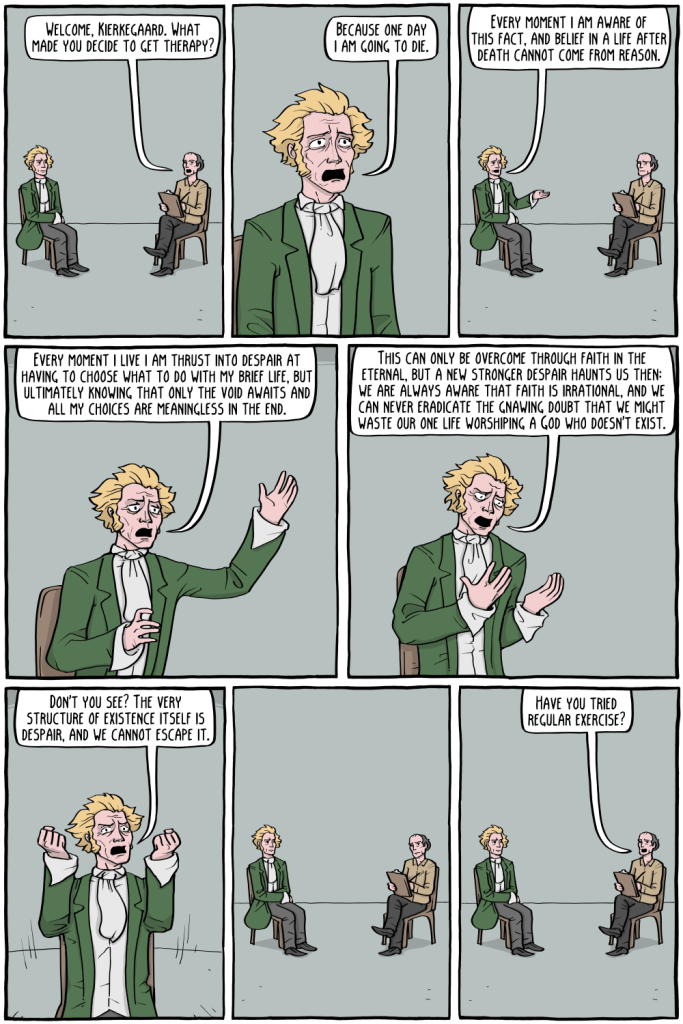
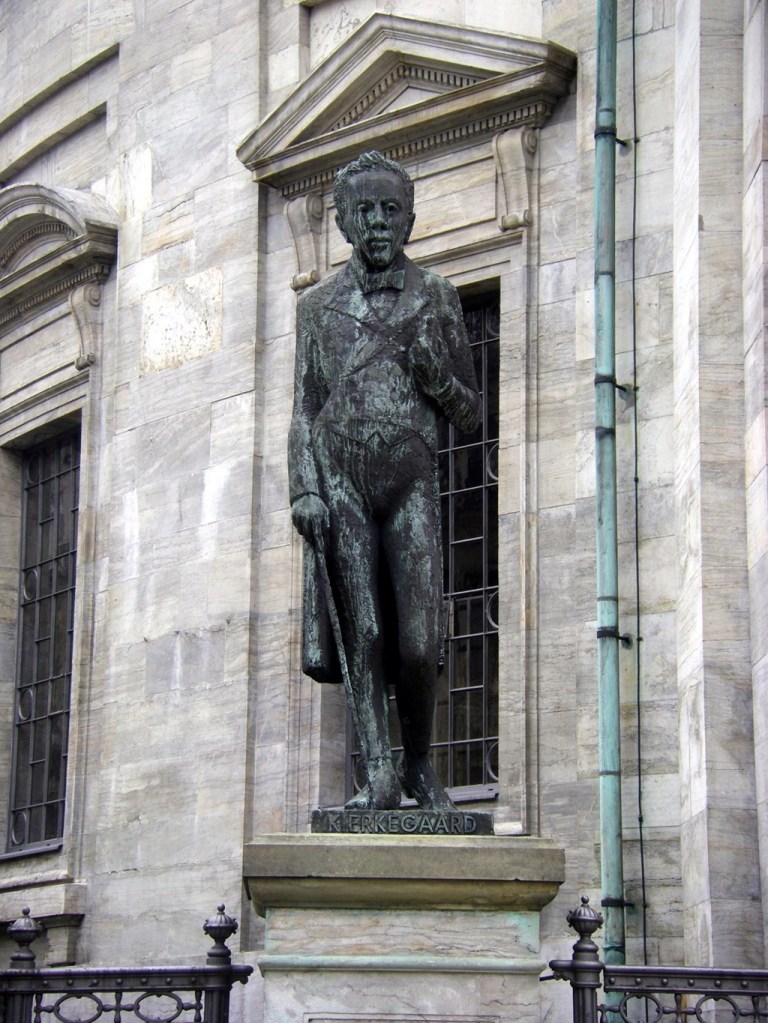
I know I have been influenced in that move by reading Kierkegaard. Not so much his theological or philosophical works. But rather his discourses, his “sermons”. I find these full of grace and love – allowing God to be God. And I will write about them in a future post.

But today a quote from Practice in Christianity. I like how Kierkegaard says it: “infinite chasmic difference”. God’s love is what “motivates” Him to move close to us. And even my desire to know Him is God reaching out – He has placed the longing for Him in my heart.

I find it a very comforting thought that God has reached out (and reaches out everyday) to me personally. It is only in God’s free choice to come near to me, in love and the Absolute Paradox, that I can know Him and have a relationship with Him. So God by nature is completely other but in love is close to me.