risk?

Life in Religion is the ultimate wager on the existence of God. The church should always be engaged in doing things that make no sense if God does not exist.

Most Revd Justin Welby, Archbishop of Canterbury

The above is from the Foreword to the Anglican Religious Life Year Book, 2016-17. I suspect I have quoted it before.

I have been thinking about risk and paradox. Maybe we live in a world that tries to remove both? But both are required for faith. Unless we make faith simply a way of knowing without evidence, a religious epistemology that places knowledge above faith, faith needs risk and paradox.

new monasticism?

I have been reading a book that had moved me. Okay, that is not usual! It has made me glad and sad in equal measure.

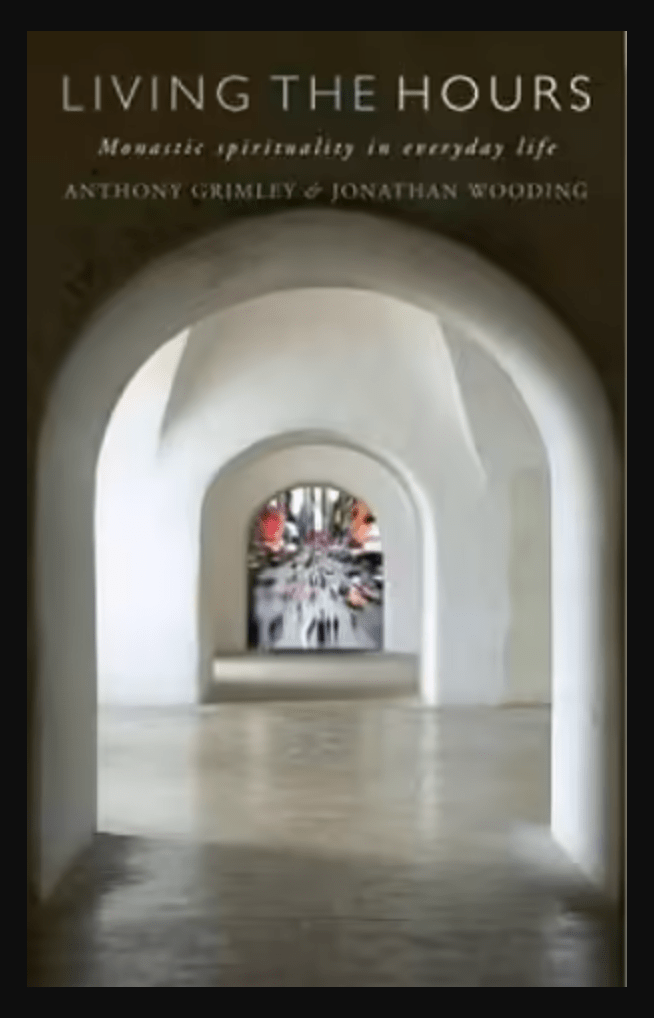
The book is Living the Hours: Monastic Spirituality in Everyday Life. The authors are, I think, involved with Monos which is the UK organisation for “new monasticism”.

So here are a couple of takeaway points from my reading so far:

  • New Monasticism – vocation verses vacation?
  • Four Pillars: Prayer, silence, balance, and study
  • Living a rule
  • Monasticism as the context for being human

It is an interesting read.

rule of life?

I have been thinking of reworking my rule of life. I think it needs to be more describtive rather than prescriptive. I think it needs to be less like rules of old and more like something I can live today.

I have also been reading an article by David Law on Kierkegaard’s view on monasticism. It still amazes me that as a Lutheran in Denmark, who would have had little exposure to monasticism, Kierkegaard spends a lot of time writing about it in his Journals and in other writings. I think it shows that monasticism does offer a challenge and, as the Archbishop of Canterbury has said, is the ultimate wager on God.

Anyway, I was reading the ACARLA (Advisory Council for Anglican Religious Life in Australia) website yesterday before our prayer group. And I read this:

Another form of consecrated life is that of living as a consecrated single person. This is essentially a “hidden life” – without any distinct dress or title.

And I thought of this quote from Kierkegaard:

[the individual] is incognito, but [their] incognito consists precisely in looking just like everyone else.

Kierkegaard writes that within the context of his discussion of monasticism in Concluding Unscientific Postscript. (I have written about it before.) Maybe he is onto something?!

Anyway, I might rework my rule of life today.

experience?

To be honest I only know very little about a very small circle. One of the people I have heard about but never read is Karl Barth. The book I have been reading looks at Barth’s thoughts on monasticism. I will admit that reading it makes me glad to be an Anglican! But I was struck by this:

In Barth’s understanding, Tersteegen’s faith grew “not from confession to experience, but from experience to confession,” which is “the way of self-denial”.

Gerhard Terteegen was a pietist who influenced both Barth and Kierkegaard. So the above quote speaks even more to me.

Maybe a more Kierkegaardian way of putting that is to speak about “resolution preceding conclusions”. Theology is a systematic way of looking at the experience of faith – in Scripture and Tradition – and trying to see themes. But it is the experience that establishes the relationship.

All of that made me wonder: can a heretic be saved? Can a Christian who has experienced the love of God in Jesus be a heretic? Or, to put it a completely different way, can “doctrine save”?

So the answer to the question, that was not asked, is I need to read more!

Regina or the cell?

So perhaps truth could be found by withdrawing from the world. Kierkegaard thought about seeking the silence of the monastery; Copenhagen’s Franciscan friary was dissolved by reformers in 1530, but he could at least try to renounce the idle chatter of the university, which seemed to him just another strain of gossip from the marketplace, only more deluded in its lofty aspirations.

Carlisle, Clare. Philosopher of the Heart

I read the above as I was waiting for my tattoo. I have never heard any suggestion that Kierkegaard wanted to enter religious life. I have often wondered, however, how a 19th century Lutheran had so much information on monasticism and felt the need to write about it.

I like the way Kierkegaard writes! I like what he writes about! I like his conclusions! And, I think, I really like him as a person. His struggles are human. In some ways, I feel the same about Merton’s “love affair”. Rather than making him look like an apostate monk, it affirms him as a human being.

So being human is about living in the paradox of choice. The choice for Kierkegaard – the paradox of choice – was either a life with Regina or withdrawing into the silence of religion. He choose the middle ground – the single life in the world dedicated wholly to Jesus. But he remains in love with Regina. Maybe what Kierkegaard did was “create” a new form of monasticism? One in which Jesus is the only reason and only motivation? A secret monasticism, without show or display, an undercover monk, by simply being completely human.

writing life

I have been thinking about life in general. Not a particular path but just life.

Someone at work (who has been especially kind, helpful, and supportive) has encouraged me to think about what I really want to do. So seeing my job as bringing me some income but not much meaning. Something I do outside of work to bring meaning. More than a hobby – what is my vocation (to use Christian terminology). Not in the sense of the religious life (which I do think I am called to) but what is my vocation beyond that. I do feel called to some form of religious life whether in a community with vows or individually without vows. Yet a life that is centred on a relationship with Jesus with time for contemplation.

Let me put it another way: Thomas Aquinas says that the natural end of contemplation is to communicate. What he means (methinks) is that the contemplative needs to carry their union with God into relationships with others. The contemplative has a divine call to draw others into the union with Jesus that is the aim of their life. So the two vocations are inseparably united: contemplation and sharing the insights.

So, this will maybe be a surprise to you, but I have always felt a deep calling to sing! Oops, that should be writing. Taking some of the things that I have “learned” (sorry, that is not the best word) and putting them down on “paper” for others to engage with. My model is Kierkegaard who lived life and put his experiences and insights into various types of writings – stories, discourses (sermons), letters. Kierkegaard did not always use the direct approach – he does not tell you what to think but his writings engage your heart and “enflame your desire for Jesus”.

In the past, I had motivation from the outside. I have to find motivation from inside now. I have to overcome my fear of being judged or misunderstood. And, yes, my fear of being laughed at and ridiculed. In other words, I have to write for myself rather than others – I have to not write to be read.

So that is where I am at!

no story without me

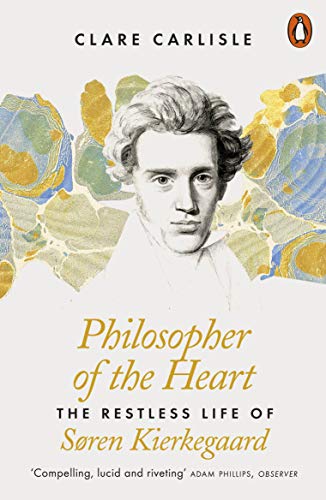
So I have been reading some very different books. On the one side, I have been reading about the Sisters and Brothers of the Common Life and Thomas a Kempis. On the other, I have started Philosopher of the Heart: The Restless Life of Søren Kierkegaard by Clare Carlisle.

I have been struck by how, in the 1300s and 1400s, there was a movement of laypeople reading (for the first time) scripture and spiritual writings in their own language and “converting” fully to Jesus. Often these laypeople were women. Theology and spirituality had been “Latin” rather than vernacular – the domain of clerics, academics, and religious. People simply “did” – they followed the prescribed ritual and laws of the Church. Because that is what they were told. Yet in the midst of this culture, there is a group of faithful who not only read in the vernacular but who also write in their own language about spiritual things. Yes, the church saw these are “suspect” and even as heretical. Yet this group focuses on “inwardness”, on a real connection with Jesus, and on living this to the fullest as a layperson.

Carlise’s book on Kierkegaard is a great read. It shows that the “me” is part of the story that is told. Kierkegaard’s “oddness” is part of his writing and trying to understand his writing apart from his story is impossible. Every book, every story, has the author as a character. Our scientific world tries to proclaim “objectivity” as possible – a “truth” that is independent of context and people. Maybe that is possible? I can read about a mathematical formula (which I would not) and have no personal engagement in the formula. I would, however, be wondering why I was reading about the formula if I had no engagement in it? But when it comes to Jesus? Jesus is never independent of a response by me. We like to elevate “logic” or reason as the deciding fact. But reasonable logical individuals come to different conclusions on the same question. Personal engagement, personal story, is always a part of the logic and the reason. Ignoring the storyteller means we do not understand the story!

What does all of that mean? I am not sure! But understanding that the people whom I read all have an agenda means I read differently. Yes, a priest thinks the best way to serve Jesus is to be a priest; a monk to be religious. Just because a person is not “clerical” does not mean they are not proclaiming Jesus. A hierarchical church does not mean all truth resides with the clerical class, nor only with the learned. People throughout the ages have known this! People of faith – lay and clerical – have proclaimed “inwardness”, subjectivity, when it comes to our relationship with Jesus. Yes, that needs to be a lived engagement. But following the rules does not mean a relationship.

So maybe a quote from Aelred of Rievaulx (writing to an anchorite) about gossip, which could equally be applied to reading, to finish:

… their purpose no longer being to arouse desire but to gratify it.
Silent night?

So Christmas has been and is now gone.

This year I have been struck by the people who received the message of the birth of Jesus – the shepherd. Alone, in the silence, in the wilderness, they receive the message of the angel that the Saviour is born. Away from everyday business, in the darkness, they are confronted by the reality that God’s love is embodied in the Baby.

We sing about it! But until this year I never really thought about the context. The shepherds, in the desert, are a precursor for the contemplative. In the silence of the wilderness of “me”, the contemplative meets a person – the embodied love of God! Like Jacob, the contemplative does not wrestle with God until they are alone with God.

So I have been thinking about various things in my life. I would like to create a context for contemplation. A context for Jesus alone. I struggle with an imperative to share the fruits of that contemplation – is it real? I have also been reading a book about the Brethren of the Common Life and a different book on Thomas à Kempis. Is there an imperative for inwardness that I have been called to within an “unusual framework”?

Anyway, I pray you have had a blessed Nativity of Our Lord.

solitude

… their purpose is no longer being to arouse desire but to gratify it.
Alred of Rievaulx, Rule of Life for a Recluse

I remembered the above quote as I was reading today. I think Alred is thinking in terms of speech – especially for those who have chosen to live a life as an anchorite – but I think it equally applies to reading.

When people say that they like to read I often wonder what they mean?! I think there is a strong desire for escapism in reading. It can take you to faraway places and to situations very different from the one you find yourself. Reading can also be used to pass time, to see what the rich and famous are doing, or to catch up on the latest gossip. I wonder what the “end” of such reading is?

I think when I think of reading I am thinking of something very different. Reading is about “arousing desire” for Jesus. It is not always the Bible or the Prayer Book that arouses that desire. Traditional literature on spirituality, or modern, can move the heart as well as the head. I often read only a few words of a good book and allow them to float around my head. (Yes, plenty of space for floating!)

The religious life can be very self-indulgent. Solitude is not the absence of people – a religious form of misanthropy – but being alone with God. Solitude is a desire to be alone with Jesus. Solitude is a luxury to enjoy the presence of Jesus, to live in the Son, to sit and listen to Jesus.

religious life?

I have been returning to an older theme: religious life. And I have been thinking about two quotes in particular that, I think, say the same thing.

Life in Religion is the ultimate wager on the existence of God. The Church should always be engaged in doing things that make no sense if God does not exist. This is the reason why I hold the Religious life in the highest esteem … the monastic life models for all Christians what it means to live fully and abundantly, with and for Christ.

The Most Rev’d Justin Welby, Archbishop of Canterbury
Foreword to: Anglican Religious Life 2016-17

Of this there is no doubt, our age and Protestantism in general may need the monastery again, or wish it were there. The “monastery” is an essential dialectical element in Christianity. We therefore need it out there like a navigation buoy at sea in order to see where we are, even though I myself would not enter it. But if there really is true Christianity in every generation, there must also be individuals who have this need.

Kierkegaard, Nov 1847

I am always amazed that Kierkegaard, living in 1800s Lutheran Denmark, writes at length about “the monastery” in his journals. What experience would he have had of religious life? What books would he have read? And, in some ways, his very life is an example of what he said above – even if he does not want to enter a monastery.

To put it another way: people need to take the “single individual” to the extreme to show other people what it means to be the “single individual” – “dare to desire Jesus alone”. I am seeing that reality more and more. Like yeast in the dough, individuals need to place all their eggs in the one basket (sorry!) and say, “what if all of this stuff about God is true?”. And much more: let’s take Jesus seriously and actually follow Him alone, pick up our cross and live a life of love.

I think both of these quotes call us to “new monasticism” (to introduce yet another person’s quote). Not looking to the past alone but using the past to live today for Jesus alone. Yes, the church as a community and especially individuals within the Church need to do things that make no sense if God does not exist. Individuals need to take Jesus seriously.