
What are you good at?
The philosophical answer is a question: what is good? (Also a spiritual question, methinks.)
In reality (sic), I am pretty sure I am good at absolutely nothing. Not fishing but just being truthful and real.
What are you good at?
The philosophical answer is a question: what is good? (Also a spiritual question, methinks.)
In reality (sic), I am pretty sure I am good at absolutely nothing. Not fishing but just being truthful and real.

Now if what has been advanced here is true, if there is nothing incommensurable in a human life except the incommensurability that is there only by accident, from which nothing follows insofar as existence is considered ideally, then Hegel is right. But he is not right in speaking about faith or in allowing Abraham to be regarded as its father, for by the latter he has passed sentence both on Abraham and on faith. In Hegelian philosophy the outer (the externalization) is higher than the inner. This is often illustrated by an example. The child is the inner, the man the outer; hence the child is determined precisely by the outer, and conversely the man as the outer by the inner. Faith, on the contrary, is this paradox, that inwardness is higher than outwardness, or to recall a previous expression, that the odd number is higher than the even.
Evans, C. Stephen; Walsh, Sylvia. Kierkegaard: Fear and Trembling (Cambridge Texts in the History of Philosophy), 60.
Even though many of the elders were priests or monks, or both, being an elder was not a church office, but rather an informal ministry. Individual supplicants engaged with spiritual elders sometimes with, or sometimes without, the sanction of the institutional church. The reputation of an elder was established “from below” by ordinary believers and an elder’s disciples. Hence, within the Orthodox Church, eldership may be regarded as a more democratic, nonhierarchical form of religious authority, which, until now, has not received sufficient analysis. ….
Many of them had an uneasy relationship with the institutional church.
Spiritual Elders: Chrisma and Tradition in Russian Orthodoxy, 4-5
What does “having it all” mean to you? Is it attainable?
Real solitude! Not who is absent (that is isolation) but who is present (solitude). Absolutely within reach.
In essence, the monastic tonsure is a second Baptism. We have all been baptized and have given an oath that we will belong to God. We have said, “I do renounce Satan” and “I do unite myself to Christ,” and we have dedicated ourselves to God through the cutting of our hair, but we have forgotten all of this. In fact, by our Baptism, we have bound ourselves to the obligation of belonging to God. With the words “I do renounce,” which we then pronounced (if we were baptized as infants, then through the mouth of our godparent), we drove satan out of our lives, and we even spat upon him three times, losing all connection with him. With the words, “I do unite” we signed, in the presence of angels and men, a sacred contract that now we fully belong to God. With If anyone desires to come after me (Lk. 9:23) the Lord called to the unbaptized. It behooves us, the baptized, to pronounce: Speak Lord, for Thy servant heareth (1 Kg. [1 Sam.] 3:10). It is a big deal, my brothers, that we were baptized and became Christians. How terrible that we forget our baptismal vows, and from this we now lose the grace of holy Baptism.
Monastic Tonsure: Second Baptism, or the Marriage of the Soul to Christ
Who would you like to talk to soon?
Maybe not talk only but connect. Encounter rather than experience.
And I have absolutely no idea until it actually happens.
The Lesson from the Holy Gospel according to John
AT that time: Jesus said unto his disciples: If ye love me, keep my commandments. And so on, and that which followeth.A Homily by St. Gregory
IT would be well, dearly beloved brethren, to make our comments brief as may be, so that we may di at greater length on the meaning whereon suddenly there came a t this great festival. For this is the d from heaven, and the Holy descended upon the disciples thereby changed the carnal mind men, filling them with love for hi self. Thus, whilst there appeared outwardly cloven tongues like as of fire, inwardly their hearts began to burn. At the same time that they perceived God in this fiery manifestation, they were all set on fire of love in its sweetness. The Holy Ghost himself is love. Whence it is than John saith: God is love. Whosoever then, desireth God with all his soul, the same hath already entered in possession of him whom he loveth. And except he possess him that he loveth, he cannot love God.BUT here consider this. It we to ask anyone of you whether he loveth God, he might perchance answer with all boldness and quietness of spirit: I do love him. But in this day’s Lesson, ye have heard what the Truth saith: If a man love me, he will keep my words. proof of love, therefore, is its manifestation in practice. Hence the same John hath said in his Epistle: The man that saith, I love God, and keepeth not his commandments, the same is a liar. For we do truly love God, and keep his commandments, if we deny ourselves the gratification of our appetites. Whoever abandoneth himself unlawfully desires, such an one plainly loveth not God, for thereby he setteth himself against God’s good pleasure.
NOTE the words: And my Father will love him, and we will come unto him, and make our abode with him. Think, dearly beloved brethren, what a dignity it is, to have God abiding as a guest in our hearts. Surely if some rich man, or some powerful friend, were to come into our house, we would hasten to have the whole house cleaned, lest perchance when he came in, he should see aught to displease his eye. So let him that would make ready his soul as an abode for God, cleanse it from all the filth of evil works. But consider once more what the Truth saith: We will come unto him, and make our abode with him. There a some hearts whereunto God cometh, but maketh not his abode therein. This is because they feel reverence for God when their conscience doth prick them; but in time a temptation they forget their conscience, and turn again to their sins, as though they bad never repented.
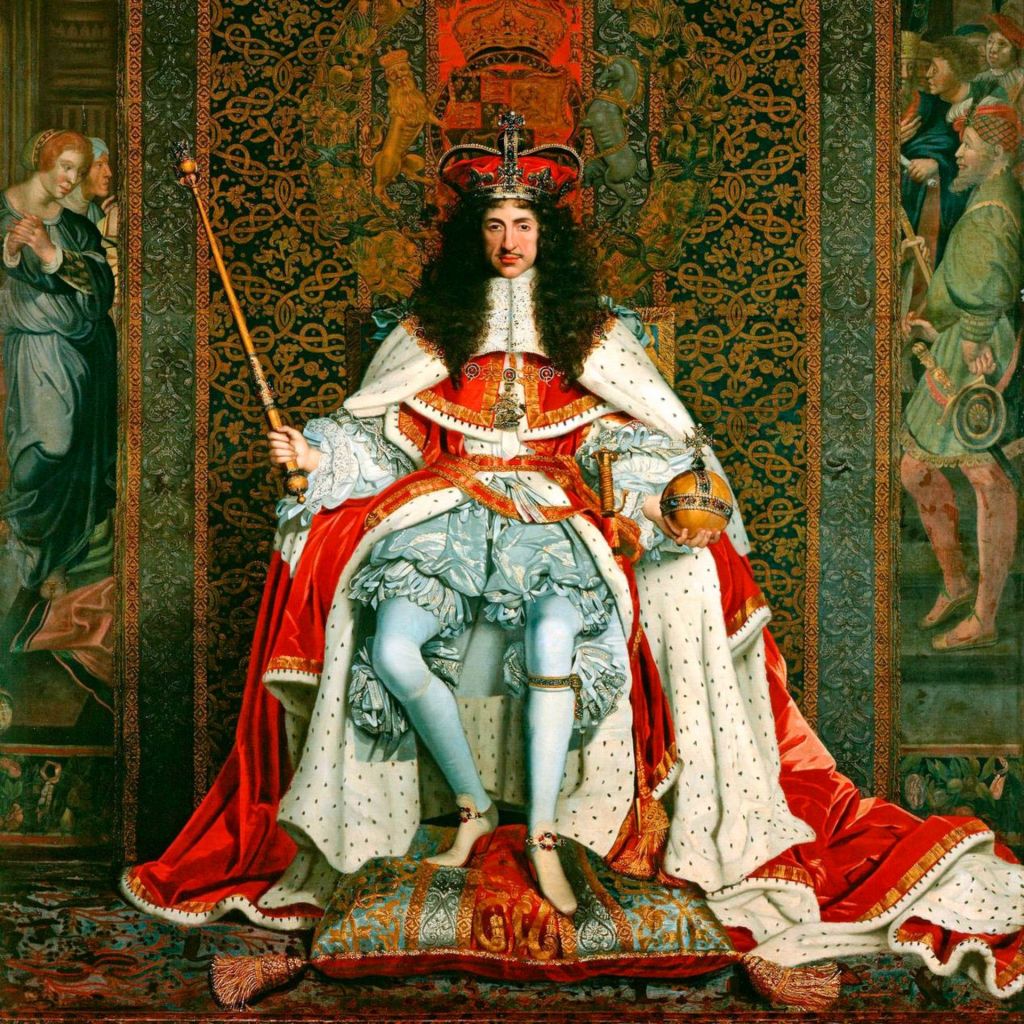
Almighty God, who art a strong tower of defence unto thy servants against the face of their enemies; We yield thee praise and thanksgiving for the wonderful deliverance of these Kingdoms from The Great Rebellion, and all the miseries and oppressions consequent thereupon, under which they had so long groaned. We acknowledge it thy goodness that we were not delivered over as a prey unto them; beseeching thee still to continue such thy mercies towards us, that all the world may know that thou art our Saviour and mighty Deliverer; through Jesus Christ our Lord. Amen.
O LORD God of our salvation, who hath been exceedingly gracious unto this land, and by thy miraculous providence hath delivered us out of our late miserable conditions, by restoring to us our dread Sovereign Lord, thy servant, King CHARLES; We are now here before thee with all due thankfulness to acknowledge thine unspeakable goodness this day shewed unto us, and to offer up our sacrifice of praise unto thy glorious Name; humbly beseeching thee to accept this our unfeigned though unworthy oblation of our selves; vowing all holy obedience in thought, word, and work unto thy divine Majesty; and promising in thee and for thee all loyal and dutiful allegience to thine Annointed servant, and to his heirs after him: whom we beseech thee to bless with all encrease of grace, honor, and happiness in this world, and to crown with immortality and glory in the world to come; for Jesus Christ his sake, our only Lord and Savior. Amen.
 a fool and his prayer book