
What sacrifices have you made in life?
What is a sacrifice? A good surrendered for a greater good. Yes, I think I have made choices that fall into that definition. But my good may not be your good!?
What sacrifices have you made in life?
What is a sacrifice? A good surrendered for a greater good. Yes, I think I have made choices that fall into that definition. But my good may not be your good!?
But Christendom has abolished Christianity – on the other hand, it would like to inherit Him and His great name, to gain advantage from the immense consequences of his life, coming pretty close to appropriating these consequences as its own meritorious achievement and making us believe that Christendom is Christ. Every generation has to begin all over again with Christ and thus to present His life as the paradigm; but instead of this, Christendom has taken the liberty of interpreting the whole relationship simply historically, beginning by letting Him be dead – and then it triumphs! Since that time Christendom has been increasing in numbers year by year – and what wonder; for people are only too eager to take part when there is nothing whatever to do but to triumph and to join the parade. And therefore to be a Christian in Christendom is as different from being a Christian in the situation of contemporaneousness as paganism is from Christianity.
Training in Christianity, 109
TBH, I am not sure that anything gives me joy. But I enjoy a good book and a nice coffee. And, maybe some music. Again, I am not sure that is simple.
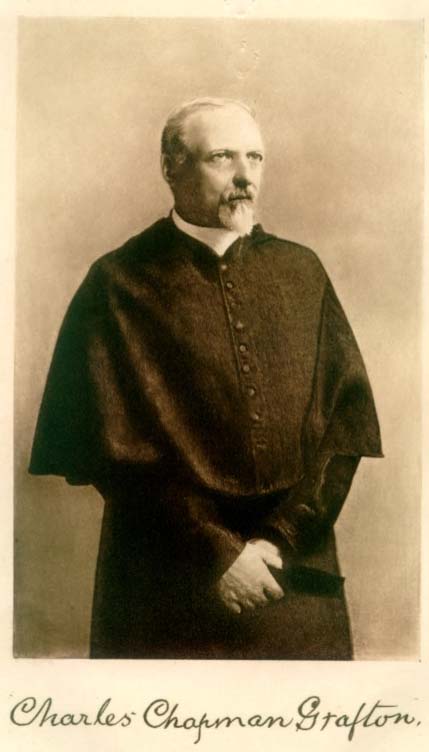
However, the general tone was of praise and support for Religious Life. The contribution which stands out, however, as one reads the debate a century later, came from Charles Grafton, Bishop of Fond du Lac in the USA, the only bishop present who had been a member of a community. He made three important points.
Petà Dunstan, Bishops and Religious 1897-1914
- First, he believed Religious Life was a vocation and should be treated as such.
- Second, it did not belong, as priesthood did, to the corporate life of the Church, but instead belonged ‘to the economy of the Holy Ghost’. Obedience to a Religious superior was a voluntary action of love, not the result of the legislative action of the Church. Unlike ‘the fixity of ministerial orders’ then, he believed the work of the Holy Ghost in the call of Religious Life manifested itself in a variety of different forms. Bishops had to trust this call to have a corrective power in itself.
- Third, he reminded the Conference that in Religious, bishops were dealing with ‘special devotional temperaments’ that could be ‘personally emotional’ about small matters of worship. A high-handed approach would not therefore be advisable. He went on to echo the arguments put forward in Father Puller’s paper, and concluded by suggesting bishops should regulate communities only in relation to property, financial donations and in insisting on communities ‘having sound government.

The Dude, The Big Lebowski. So funny and absurd. And an absolute style icon.
The nihilists!!!
The Collect
O God the King of glory, who hast exalted thine only Son Jesus Christ with great triumph unto thy kingdom in heaven: We beseech thee, leave us not comfortless; but send to us thine Holy Ghost to comfort us, and exalt us unto the same place whither our Saviour Christ is gone before, who liveth and reigneth with thee and the Holy Ghost, one God, world without end. Amen.The Epistle: 1 St. Peter 4.7-11
The end of all things is at hand; be ye therefore sober, and watch unto prayer. And above all things have fervent charity among yourselves: for charity shall cover the multitude of sins. Use hospitality one to another without grudging. As every man hath received the gift, even so minister the same one to another, as good stewards of the manifold grace of God. If any man speak, let him speak as the oracles of God: if any man minister, let him do it as of the ability which God giveth; that God in all things may be glorified through Jesus Christ, to whom be praise and dominion for ever and ever. Amen.The Gospel: St. John 15.26-16.4
When the Comforter is come, whom I will send unto you from the Father, even the Spirit of truth, which proceedeth from the Father, he shall testify of me: and ye also shall bear witness, because ye have been with me from the beginning. These things have I spoken unto you, that ye should not be offended. They shall put you out of the synagogues: yea, the time cometh, that whosoever killeth you will think that he doeth God service. And these things will they do unto you, because they have not known the Father, nor me. But these things have I told you, that, when the time shall come, ye may remember that I told you of them.
You come from far away
With pictures in your eyes
Of coffeeshops and morning streets
In the blue and silent sunrise
But night is the cathedral
Where we recognized the sign
We strangers know each other now
As part of the whole designOh, hold me like a baby
That will not fall asleep
Curl me up inside you
And let me hear you through the heat
Oh, oh, oh, oh, oh, oh, oh, oh, oh
You’re the jester of this courtyard
With a smile like a girl’s
Distracted by the women
With the dimples and the curls
By the pretty and the mischievous
By the timid and the blessed
By the blowing skirts of ladies
Who promise to gather you to their breastOh, hold me like a baby
That will not fall asleep
Curl me up inside you
And let me hear you through the heat
Oh, oh, oh, oh, oh, oh, oh, oh, ohYou have hands of raining water
And that earring in your ear
The wisdom on your face denies the number of your years
With the fingers of the potter
And the laughing tale of the fool
The arranger of disorder
With your strange and simple rules
Yeah, now I’ve met me another spinner
Of strange and gauzy threads
With a long and slender body
And a bump upon the headOh, hold me like a baby
That will not fall asleep
Curl me up inside you
And let me hear you through the heat
Oh, oh, oh, oh, oh, oh, oh, oh, ohWith a long and slender body
And the sweetest softest hands
And we’ll blow away forever soon
And go on to different lands
And please do not ever look for me
But with me you will stay
And you will hear yourself in song
Blowing by one dayBut, now, hold me like a baby
Source: Musixmatch
That will not fall asleep
Curl me up inside you
And let me hear you through the heat
Oh, oh, oh, oh, oh, oh, oh, oh, oh
Oh, oh, oh, oh, oh, oh, oh, oh
Songwriters: Suzanne Vega
Gypsy lyrics © Wb Music Corp., Waifersongs Ltd., Xi An Shi Gao Xin Qu Xiao Di Zhen Wen Hua Yi
or why order matters.
Faith is the highest passion in a human being. There are perhaps many in every generation who do not even come to it, but nobody goes further. Whether there are also many in our age who do not discover it, I do not decide; I dare only refer to myself, who does not conceal that it may not happen for a long time to come for him, yet without his therefore wishing to deceive himself or the great by making it into a trifling matter, into a childhood malady one must wish to get over as soon as possible. But life has tasks enough also for the one who does not one day come to faith, and if he honestly loves them, then his life will not be wasted, even if it never becomes like those who were sensible of and grasped the highest. But the one who has come to faith (whether he is extraordinarily gifted or simple-minded does not matter) does not come to a standstill in faith. Indeed, he would be shocked if someone said this to him, just as the lover would feel indignant if one said he had come to a standstill in love, for he would answer, “I am not standing still at all since I have my life in it.” Yet he gets no further, nor to something else, for if he discovers the latter, then he has another explanation.
Kierkegaard: Fear and Trembling (Cambridge Texts in the History of Philosophy), 108-109
What’s the oldest things you’re wearing today?
I am wearing a red oodie that I got years ago. It makes me look a little like Father Christmas. Someone has described it as “very medieval”. Not sure about either.
Jesus therefore, knowing all things that should come upon him, went forth, and said unto them, Whom seek ye? They answered him, Jesus of Nazareth. Jesus saith unto them, I am he. And Judas also, which betrayed him, stood with them. As soon then as he had said unto them, I am he, they went backward, and fell to the ground.
John 18:4-6 KJV
Further to Truth and Jesus …
Thought 3: The reaction (fell to the ground) is unexpected. Why? When Jesus says “I am”, He connects Himself to revelation of the Divine Name (Exodus 3:15). He is the Divine Truth revealed to Moses in the burning bush. He is Truth Incarnate.
Thought 4:
Ascetical theology makes the bold and exciting assumption that every truth flowing from the Incarnation, from the entrance of God into the human world as man, must have its practical lesson. If theology is incarnational, then it must be pastoral.
English Spirituality, 21
 a fool and his prayer book