I’ll be with you
Day 635 – “abstraction”
One of my favourite Kierkegaard quotes relates to levelling and the power of abstraction:
… leveling is an abstract power and is abstraction’s victory over individuals.
Two Ages: The Age of Revolution and the Present Age A Literary Review, 84
The parish is in a period of transition – moving to welcoming a new vicar. I struggle with change so it is a time of anxiety. And my brain likes to play the “what if” game.
In that context, I was thinking about how I would explain my life. I tried, with little success, to write a rule in the form of a letter like the anchorite guidance literature. Also, I tried to collect Scripture verses to illustrate various precedents. One issue surrounding the solitary life is its very nature: an individual living an individual life. Yes, there is a historical precedent. But, like Lessing, there is an “ugly ditch” between the precedent and the lived experience.
So the first lesson is that maybe I simply need to live. My greatest battle is to surrender the desire (the motivation for my actions) to be accepted and loved. If I live for Jesus alone, I should seek all good things from Him alone! And then, restored and refreshed, I can love my neighbour without seeking something in return. (I am some distance away.)
Is any attempt to define, to abstract this life, really a desire to be admired as a spiritual hero?
Second lesson: my lived experience is beyond abstraction. Perhaps the whole point of the solitary life is a life dedicated to Jesus without further abstraction? Maybe real life is lived in the space beyond definition? A personal relationship is as individual as the persons involved. While there may be common elements, these do not define the relationship.
Just some random thoughts! Anyway …
Day 633 – tears
I am a stickler for references. No reference (which I can check), no quote. But I am breaking my own rules and sharing this quote from Augustine:

This quote summarises “anchorite spirituality”. Affective piety that reflects on the Passion of Jesus.
(So if someone could please give me the reference, I will be eternally thankful.)
Measure and create


Let me preface this by saying I am no philosopher, theologian, or sociologist.
I think “modern society” lives with the belief that “if I can measure it, I can create it”. The problem is that it is somewhat true. Yes, physical things can certainly be measured and then created. But what about things like beauty, community, fellowship, or love? Can I measure these and then create them?
The church is not immune. Sometimes people preach a gospel of “let’s do it”. All of that is fine without any thought to sin. God creates community and fellowship by His presence, as He does beauty, not by our agreeing with each other or being “nice”.
So what would I change: the certainty that it is within human reach to create everything.
Anyway …
A Prayer for Vocations to the Religious Life
Lord Jesus Christ,
A Prayer for Vocations to the Religious Life
in your great love you draw all people to yourself:
and in your wisdom you call us to your service.
We pray at this time,
you will kindle in the hearts of men and women
the desire to follow you in the Religious life.
Give to those whom you call,
grace to accept their vocation readily and thankfully,
to make the whole-hearted surrender which you ask of them,
and for love of you, to persevere to the end.
This we ask in your name. Amen.
sleep?


I have not answered one of these for some time.
I normally wake at 5ish. Yes, I am a morning person. I have not used an alarm clock in a long time, and I do not use my phone. I simply wake naturally at about the same time. At the moment it is still dark and very cold. Heater on and make a cup of tea.
I either listen to the news or just pray. Sometimes I try to plan my day but it never works out. I try to be ready for my day by 6. I stay in my “bedroom”, which is also my main room, to pray and enjoy a cup of tea. I love watching the sun rise over the water. There is a “no rush” attitude for my mornings.
When do I go to bed? When the sun goes down it is time for bed, as my grandmother used to say. I try to stay in a natural rhythm with the sun. I try to pray a little and then sleep.
Day 627 – reform
Ordericus Vitalis on the Cistercian life.
All go without trousers and lambskins. They abstain from the eating of fat and meat… They have a care for silence all the time and wear no dyed clothing. They work with their own hands to provide food and clothing for themselves. They fast from 13 September until Easter, except on Sundays. They bar their entrances and allow no access to the interior [of the monastery]… By their own work they have founded monasteries in deserts and wooded places.
“Go without trousers”? So glad there was a habit for them to wear.
Day 624 – prayer

It follows, therefore, since the Office flows from the Eucharist, that there will be great variability as to how the Office is recited or offered. I know of one solitary who recites out loud, verse by verse, the whole Office by day and by night with all the appropriate bodily actions as in Choir. For another the Office may gradually become more interiorised so that the words of Scripture and psalmody are embodied by the Jesus Prayer or some other form of rhythmic prayer.
Allchin, A.M; Louf OCSO, Dom André; Ware, Metropolitan Kallistos; Walls, Fr Roland; Ward SLG, Sr Benedicta; Clare SLG, Mother Mary. Solitude and Communion: Papers on the Hermit Life (Fairacres Publications) . SLG Press.
Day 623 – affective
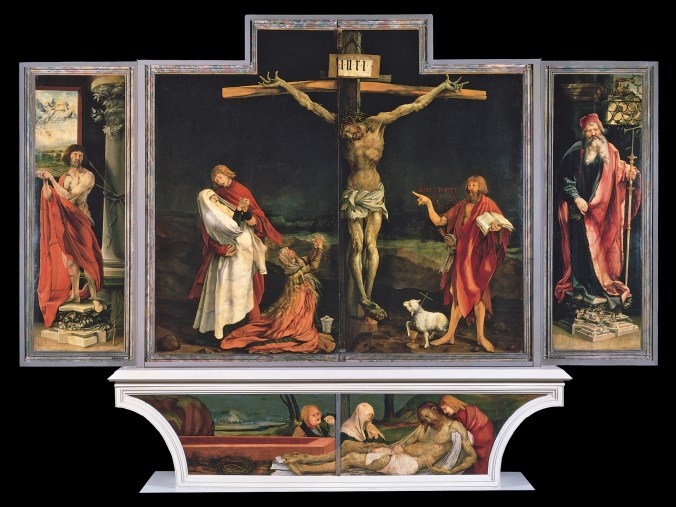
Affective piety is most commonly described as a style of highly emotional devotion to the humanity of Jesus, particularly in his infancy and his death, and to the joys and sorrows of the Virgin Mary. It was a major influence on many varieties of devotional literature in late-medieval Europe, both in Latin and in the vernacular. … Affective piety can be described as a type of highly emotional devotion, focused on the humanity of Jesus, which developed during the High Middle Ages. Anselm of Canterbury, Bernard of Clairvaux, and Francis of Assisi each played a key role in the development of this approach to spirituality. Traces of an affective sensitivity can be found in Late Antiquity, when clergymen preached sermons with vivid descriptions of the Passion.
Affective Piety
The spirituality of Ancrene Wisse is affective … Incarnational spirituality, expressed in devotion to the Passion of Christ and in eucharistic piety centring on the presence of Christ in the consecrated Host, is at the heart of Ancrene Wisse. The spirituality of Ancrene Wisse is essentially incarnational: within the anchorhold the anchoresses could share the suffering of their lover, Christ.
Ancrene Wisse: From Pastoral Literature to Vernacular Spirituality, Cate Gunn
 a fool and his prayer book