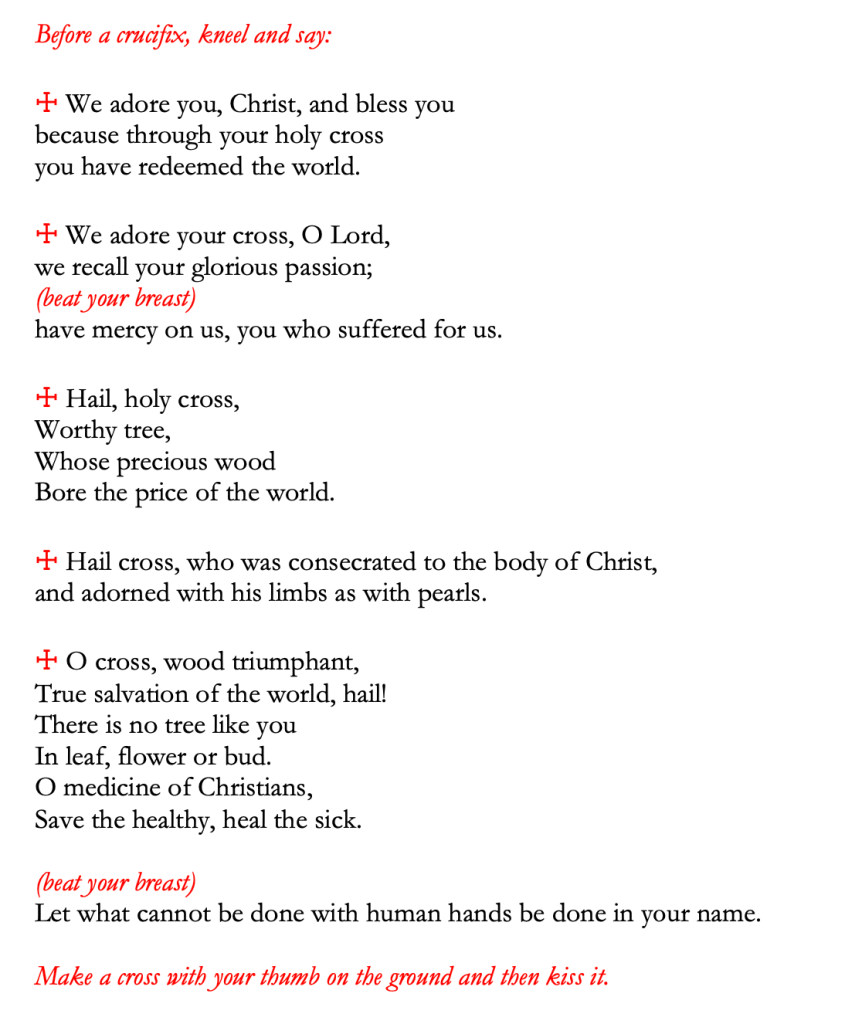
Phil 2

Let the same mind be in you that was in Christ Jesus,

who, though he was in the form of God,
    did not regard equality with God
    as something to be exploited,
but emptied himself,
    taking the form of a slave,
    being born in human likeness.
And being found in human form,
    he humbled himself
    and became obedient to the point of death—
    even death on a cross.

Therefore God also highly exalted him
    and gave him the name
    that is above every name,
10 so that at the name of Jesus
    every knee should bend,
    in heaven and on earth and under the earth,
11 and every tongue should confess
    that Jesus Christ is Lord,
    to the glory of God the Father.
accept to expect

I have been meaning to write this for a couple of days. While having a coffee I was challenged (indirectly) by someone to move from “accept to expect”. And I have been reflecting on that for a couple of days.

I really like that! Not “I accept God will come to my help” but “I expect God to come to my help”. I think there is a sense of action in being “expectant” on God. As the shift from “choice” to “resolution” is a movement toward action, from possibility to actuality, so “accepting” to “expecting” is a movement.

I think, in a way, that is the movement that Kierkegaard expects (!!) in faith. The change from possibility to actuality. The movement from having faith in Jesus to imitating Jesus in my daily life. Maybe that is what the Brethren of the Common Life called “conversion”. From the head to the heart?!

Is that too over the top philosophical?

resolutions?

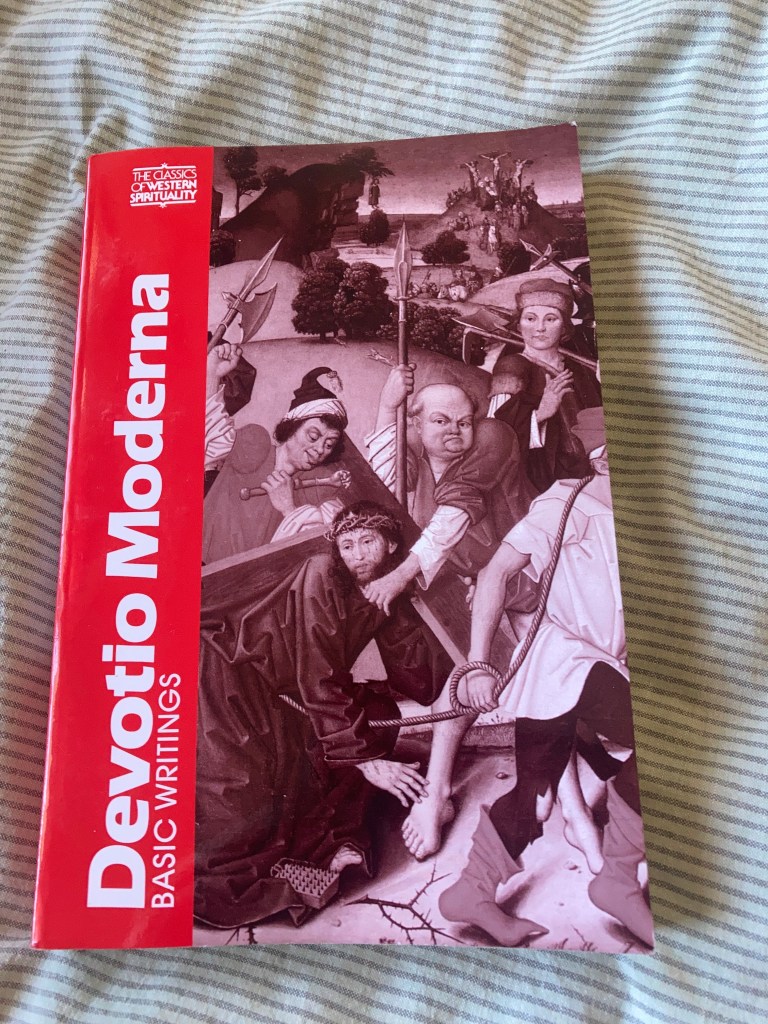
I have been reading Devotio Moderna: Basic Writings by John Van Engen. I have been waiting for it to arrive for over a month. There is a collection of “Resolutions and Intentions” by the founder of the Brethren of the Common life, Geert Groote, in the book. There is a decisive fell that this is not a set of vows or a rule of life but rather a way to live. I like the idea of religious life without vows beyond those of all the baptised. We are all called to “love God and love our neighbour as ourselves”. The religious life is not for the “spiritual elite” so why ask any more of the religious than of all the baptised?

So I thought I would follow that through a little. What does the noun “resolution” mean?

noun: resolution; plural noun: resolutions
1. a firm decision to do or not to do something.
Similar: intention, resolve, decision, intent, aim, aspiration, design, purpose, object, plan, commitment, pledge, promise, undertaking

A resolution is connected to an intention. Both are a decision to set a path and walk it. There is no certainty in the resolution – no end result. But rather it is for the moment. A resolution needs renewing every new moment – it is a way of life rather than a point in time. And there is no room for doubt – I am either going to do it or not.

So vow to love, be resolved to live for Jesus only?

sharing?

“Contemplata aliis tradere” is a Latin phrase which translates into English as “to hand down to others the fruits of contemplation.”

Contemplata aliis tradere

I am not a great advocate for St Thomas. In fact, the scholastic thing is very foreign to me. But the above has always torn at my heart. In the books about anchorite spirituality and life I have been reading, there is agreement that it is about contemplation. But what then? Just sit in the warm glow of a job well done?

Last night, while driving home, I had a long think about the above. And I came to the conclusion (or should that be resolution) that it is less important what it meant to people of the past than what it means for me today. Yes, I think I have a moral duty to share those fruits of future possible contemplation. And whether that is through a blog like this, a podcast, or some other way, there is a duty to make that available to people.

So a life set apart to pray and read, to think and contemplate, and to share. Not to have the answers but to be present with people and witness to the transforming power of Jesus. Maybe the word “witness” puts it better than share? It is not a treasure I have within me but rather a Person.

Anyway …

the eternal now

During this morning’s meditation (doesn’t that sound grandiose) I was thinking about the reason for my love. And how I can love people I cannot be in the same room with! Sometimes I love people because we have a past together. We have shared experiences. Sometimes I love people because I can see a future with that person. We are walking in the same direction. Rarely it is both, and even more rare is loving people for the here and now.

Yet God loves us in the eternal now. It is not about what we bring or what we can do, he simply loves us. No matter who I was yesterday, God loves me. And no matter who I will be tomorrow, God loves me. It is eternal because it is beyond time – it is always “now”. And that eternal now is the person of Jesus. My role is simple to get into this Now – to find it in my rush and the pressure of the past and future.

Anyway, that is what I was thinking about.

the experience of now

Every experience is a paradox in that it means to be absolute, and yet is relative; in that it somehow always goes beyond itself and yet never escapes itself.

T.S. Eliot

I could not sleep so I read The Cloud of Unknowing during the night. My mind wandered while I tried to go back to sleep and I thought about how “living in the now” and “experiencing God” are very similar.

I struggle with “living in the now”. I feel the pull of yesterday and I am extremely anxious about tomorrow. So much so that I struggle to stay in the moment for any length of time. I try!

I have always liked the quote above from T.S. Eliot. There is something paradoxical about all experiences. Like the current moment, it is absolute. There is nothing else! And when the moment has passed, the next is absolute when I am in it. Augustine speaks about time in Book 11 of The Confessions – only the present has any existence. And so only the present is absolute.

Anyway, strange night and strange day ahead. I cannot concentrate to read. All I can do it sit in the moment.