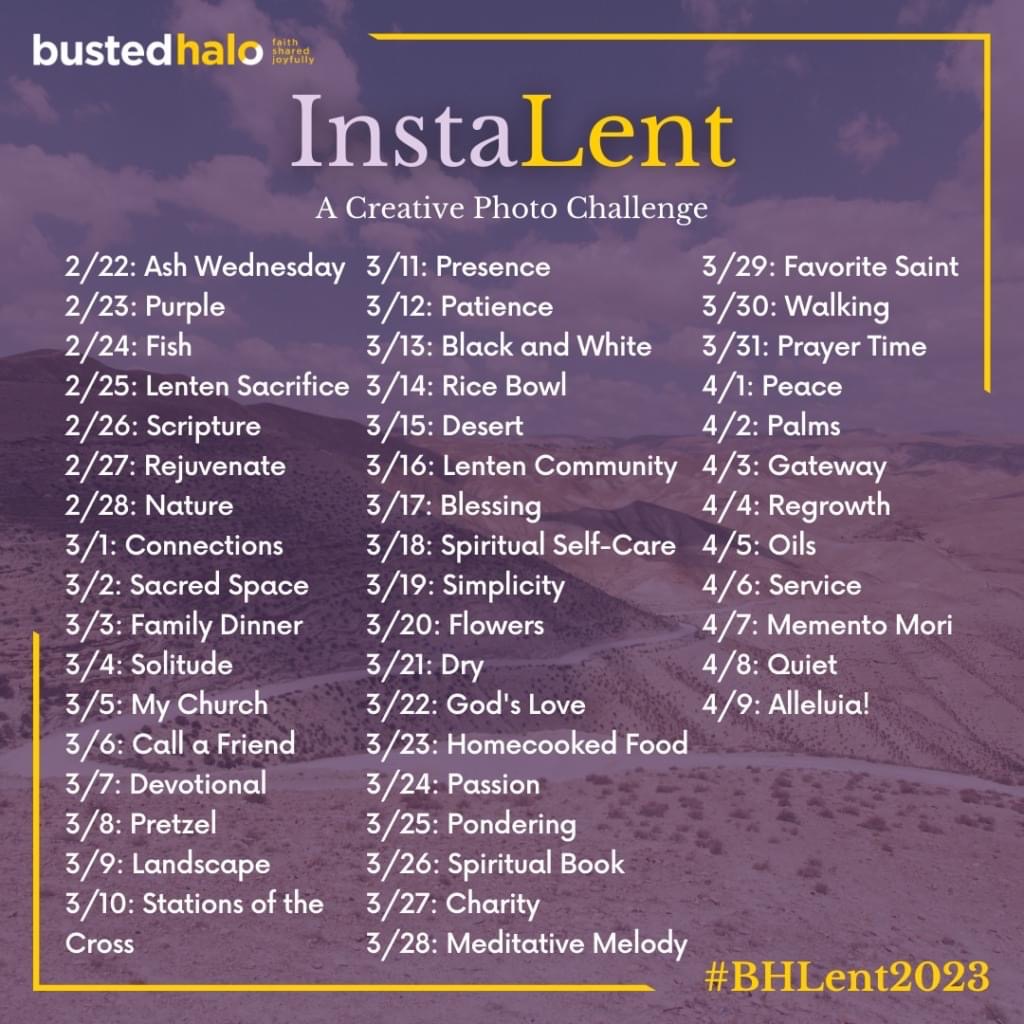
BustedHalo has an InstaLent photo starter. Great idea so I will do it on my Insta and here.
BustedHalo has an InstaLent photo starter. Great idea so I will do it on my Insta and here.
I have been thinking of how to “define” the contemplative life. And I stumbled across this:
Contemplation in this context does not mean contemplative prayer as such, but a quality of life that is contemplative: one that is lived vertically in relationship to God rather than horizontally in relationship to time and those around us.
SLG, Sisters of the Love of God. Monastic Vocation (p. 54). SLG Press. Kindle Edition.
The “context” is the enclosure. But the definition works well for the solitary life.
If you had the power to change one law, what would it be and why?
So a law I would change? Well, I think there is a law in cricket that needs an update: the no ball law in Test cricket. I think, since the majority of no ball calls are made by the third umpire after the delivery, the next delivery should be a free-hit. Yes, I know that is how the white ball game is played. I just think it needs to be introduced into the longer form of the game.
Write about your dream home.
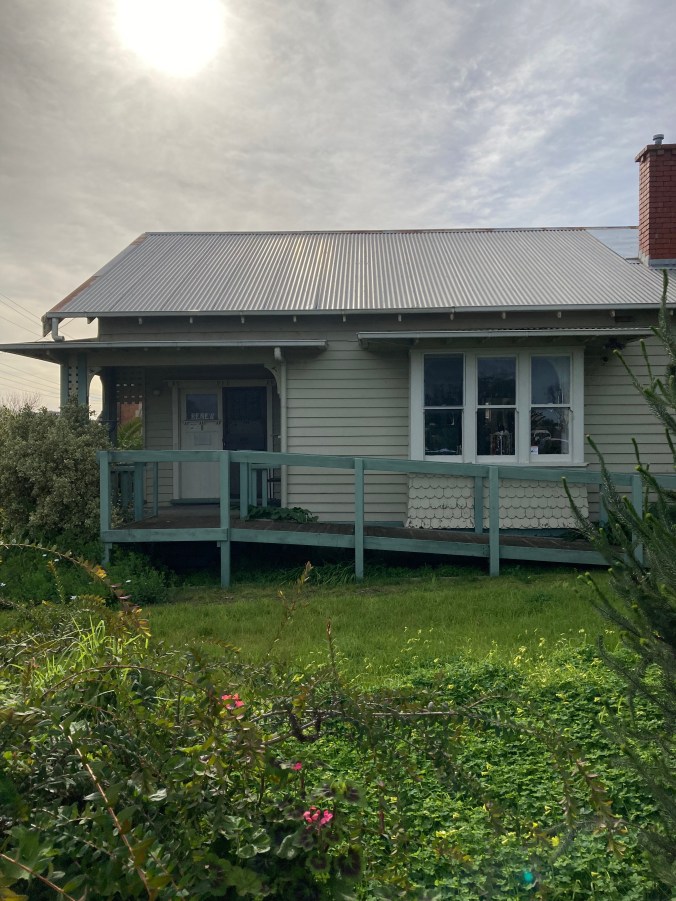
The house I live in right now! I know that is a little boring but it is actually true. And it is not about the physical side of the house. It has a place to pray, a useful kitchen, and a place to sleep. It also has room for my books. What makes it a home is the connection to the community of faith – past, present, and future – that it proclaims to me and to the community that walks past the front door.
While I do not see or interact with a lot of people, I know I am part of a community. And that is what moves it from a physical house to a home. Yes, the community stresses me (“me” as a particular individual with their own problems) but it also protects me and helps me to truly find myself.
I am truly in love with this place. It is also a house that is set aside by the faith community for prayer and solitude. It is a liminal space – in the world but not of the world. In fact, I am very much hoping to end my days living here in this community.
You get some great, amazingly fantastic news. What’s the first thing you do?
For the outside world, I would say that I would thank God. And I would pray and try to be thankful in my heart. I know (intellectually) that all good has its origin in God. I would make a real effort to move from my heart to my head.
Why? Because my head is going into overdrive and asking, “So what is the catch?”. My heart knows it is from God but my head is wondering if people are just having pity on me. My head would wonder if I was being “sold a dummy”, if this is a joke or a conspiracy.
So I sit in the middle of the conversation between my heart and my head and just do NOTHING!
Is there anything you feel too old to do anymore?
Ok, I’ll bite – what am I too old to do anymore? People! Not that people are “wrong” or I am a misanthropist. I like people. But only in small amounts.
I find an “encounter” with a person very draining. That is a real interaction which is not transactional. To put it another way, to see a person as an end in themselves and not a means to an end for me. Not what I can get out of the interaction but what I can give to the other person as a person and not an object. Yes, I can transact business with people – I can go to the shops or get a coffee and not freak out. But I do not want to transact with people, I want to encounter people. And that means I can only take so much!
That sounds like a backhanded compliment to myself!? It has taken me a long time to work all of that out. Aloness, for me, is not about the evil of people but rather about being ready for the goodness of people.
Sorry if that makes no sense.
The true knight of faith is a witness, never a teacher, and therein lies the deep humanity that is worth more than this frivolous concern for the welfare of other people that is extolled under the name of sympathy but is really nothing more than vanity.
Fear and Trembling
A believer was bestowed the title of red martyr due to either torture or violent death by religious persecution. The term “white martyrdom” was used by the Church Father Jerome, “for those such as desert hermits who aspired to the condition of martyrdom through strict asceticism”. Blue (or green) martyrdom “involves the denial of desires, as through fasting and penitent labors without necessarily implying a journey or complete withdrawal from life”.
Christian martyr

While exploring a vocation to the solitary life, I am not alone. I have a house guest: Fred the Rabbit. Anchorites had cats, and I have a rabbit.
While he does not like to be touched, he does follow me round most of the time. He sleeps under my bed and sits under the kneeler when I pray. He has his own room and is “house-trained”. He runs to the door when I come home.
So say hello to Fred!
The world values Religious Communities for their work: Christ values them for their love.
Henry Power Bull SSJE
Describe your most ideal day from begining to end.
I check these prompts every morning. Most days I simply pass – I have no desire to write about death or such. Yet today I thought I would answer. My perfect day is the day I am living right now. It is early in the morning so I will describe yesterday with the same structure as today:
I got up early (before 5am) and meditated and prayed. Well, actually I made my bed and a pot of tea and then Morning Prayer and some personal prayer. I had to pay some bills online, which I did. Then had a coffee at my favourite coffee shop. I always take a book – a theme that will reappear – and I sat for about half an hour, read and enjoyed my almond latte.
[Yesterday, on the way home, I rang my mother. My dad has been sick so I just wanted to get an update. I also went into the office to do something on the parish computer. I was by myself so it was pleasant enough. And the office is next door!]
When I came home I did some domestic stuff – vacuumed then the dishes which had been pilling up in the sink. After that I settled at my desk and read an article that I have been working through on the early history of SSJE and the mission movement in the late 1900s. Super article! The postie delivered a new book, Merrily on High, that I instantly sat down and started reading. It made me laugh!
I worked a little on this blog. I created a page for all the Anglican Solitaries about which I have read. More for me than anyone else.
I had half a salad before Midday Prayer. I usually use Midday Prayer to meditate a little more and to intercede for people. Then a rest! I normally have complete silence from Midday Prayer to Evening Prayer but I listened to an audiobook on the Waco siege that was recommended to me. But I fell asleep and missed a chapter or two.
I was woken by a phone call. Rather than being intrusive, which I often feel these are, it was pleasant and non-confrontational and required no action from me.
Then more reading – the same book as at the coffee shop. I sat outside on the little porch for a little while as I read. Evening Prayer is relatively early – 3pm – but it works for me. After Evening Prayer I just sat for a little and watched Fred the Rabbit run around the day room.
I had a visit from a friend who called earlier. He listened to me complain and encouraged me to keep going.
Then the second half of the salad, a shower, read a little more, and then Compline and bed. I watched a little TV in bed – an indulgence to my weaker self and I am hooked on Chicago PD – but fell asleep pretty quickly.
I have settled into that routine and it really suits me. Prayer, meditation, and reading. I like being alone and having the space to be “me”, I like the silence of the early morning and watching the sunrise. So my perfect day!
 a fool and his prayer book