SK and Oz

While this article, Kierkegaard and Australia’s sense of historical despair, is a little on the old side, it is an interesting read. Maybe one observation:

Kierkegaard’s idea of what it means to be an Australian would surely have matched his idea of what it meant to be a Christian—an idea that was far removed from what he saw around him, especially within the institution of the Danish State church.

Being a Christian is about a relationship with God in Jesus. That is hardly comparable to being an Australian? I think this illustrates one of the points about Kierkegaard that frustrates me most: he is above all a Christian, writing about being a Christian, alone before God. Some of his more philosophical work prepares the way for his Christian work which prepares the way for his “upbuilding work”.

Anyway, read the above.

things are changing …

I have decided to re-work the blog and podcast. So, in short, I am shelving the old podcast (I may use the feed occasionally) and starting a new podcast that will be more “discipleship focused”.

The podcast will be called “Let’s Talk About Jesus”. There is an Instagram and a Facebook page. And I have created a YouTube channel as well. I am hoping to include some interviews in the podcast. But simply to explore what it means to be a follower of Jesus today.

More information to come!

the problem with authority

From the very beginning, I have stressed and repeated unchanged that I was ‘without authority.’ I regard myself rather as a reader of the books, not as the author. ‘Before God,’ religiously, I call my whole work as an author (when I speak with myself) my own upbringing and development, but not in the sense as if I were now complete or completely finished with respect to needing upbringing and development.

On My Work as an Author (1851)

The problem with authority is that you always are speaking on someone else’e behalf. I think SK understood that in the religious sense. I have come to appreciate that I am completely without authority.

the problem with sermons

Once in a while a pastor causes a little hubbub from the pulpit, about their being something wrong somewhere with all these numerous Christians – but all those to whom he is speaking are Christians, and those he speaks about are not present.

The Point Of View For My Work As An Author (1848)

Sermons are sometimes more about validating the audience than challenging their unbelief.

being utter nothingness

I have been reading Julian of Norwich: Revelations of Divine Love. Just a couple quotes:

BEING A NOBODY in a society obsessed with prestige and prosperity is a challenging position; and yet embracing a state of utter nothingness, renouncing the clutter of worldly possessions and the preoccupation with social status, can, in fact, be a totally liberating experience. 

Yes, being utter nothingness is very countercultural. There is a sense that being nothing is about being a person – a “no thing”. But in a world of objects that can be measured and valued, being a person is often being nothing.

For if I look at myself, I am really nothing; but as one of mankind in general, I am in oneness of love with all my fellow Christians; for upon this oneness of love depends the life of all who shall be saved; for God is all that is good, and God has made all that is made, and God loves all that he has made.

Yes, being nothing is about oneness with everyone else who is nothing. And about oneness with God who is above all a “no thing”.

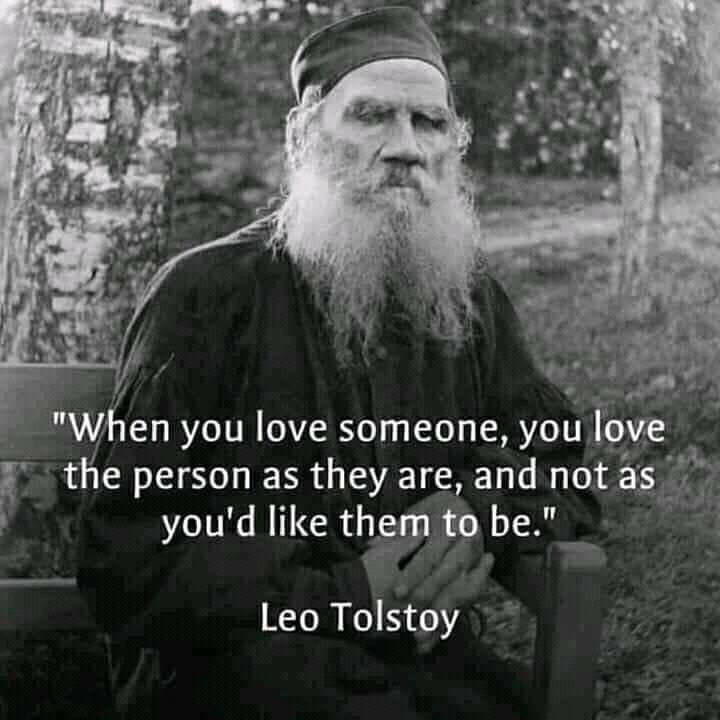
beards?!

I have been reading about beards on the Catholic Encyclopedia. There is some very interesting information from a western point of view. Just some quotes:

Thus an ordinance of the Council of Toulouse, in 1119, threatened with excommunication the clerics who “like a layman allowed hair and beard to grow”, and Pope Alexander III ordained that clerics who nourished their hair and beard were to be shorn by their archdeacon, by force if necessary.

So laypeople beards, clergy no beard. And if the clerics do not like it – shave by force! The last part really made me laugh.

… the clergy “should not seem to be aping the fashions of military folk” or wearing flowing beards like goats (hircorum et caprarum more), or allowing the hair on their upper lip to impede their drinking of the chalice.

Beards like goats? Interesting terminology. But at least this suggests a practical reason behind the common practice of clean-shaven.

… in Eastern lands a smooth face carries with it the suggestion of effeminacy.

Hence the Orthodox clergy and monks with long beards.

Anyway, I might keep my beard. Not for religious reasons but because I am too lazy to shave.