Regina or the cell?

So perhaps truth could be found by withdrawing from the world. Kierkegaard thought about seeking the silence of the monastery; Copenhagen’s Franciscan friary was dissolved by reformers in 1530, but he could at least try to renounce the idle chatter of the university, which seemed to him just another strain of gossip from the marketplace, only more deluded in its lofty aspirations.

Carlisle, Clare. Philosopher of the Heart

I read the above as I was waiting for my tattoo. I have never heard any suggestion that Kierkegaard wanted to enter religious life. I have often wondered, however, how a 19th century Lutheran had so much information on monasticism and felt the need to write about it.

I like the way Kierkegaard writes! I like what he writes about! I like his conclusions! And, I think, I really like him as a person. His struggles are human. In some ways, I feel the same about Merton’s “love affair”. Rather than making him look like an apostate monk, it affirms him as a human being.

So being human is about living in the paradox of choice. The choice for Kierkegaard – the paradox of choice – was either a life with Regina or withdrawing into the silence of religion. He choose the middle ground – the single life in the world dedicated wholly to Jesus. But he remains in love with Regina. Maybe what Kierkegaard did was “create” a new form of monasticism? One in which Jesus is the only reason and only motivation? A secret monasticism, without show or display, an undercover monk, by simply being completely human.

asceticism

In the Medieval German rites for enclosure of an anchorite, the anchorite is given a crucifix with the words:

Take this image of the Crucified, whose suffering and death you shall always keep in your heart.

I was reading today about some of the ascetics of medieval anchorites – not eating, not sleeping, one even threw herself into fires. Also some of the desert parents! All of these sound really weird to us. But have we gone too far the other way and completely ignored asceticism. We are physical beings and we proclaim our faith using physical means.

And then I remembered the above from the German enclosure rites. We follow the one who sacrificed Himself on the cross. Julian of Norwich has a vision of Jesus on the cross. In a Carthusian cell there hangs only a crucifix.

So … let’s not throw out the baby with the bathwater (asceticism) and let’s remember whom we follow and let’s meditate on His cross.

my cell

I have used this verse from the Song of Songs (2:5) as my tagline on this blog for a couple of months:

He brought me to the banqueting house,
    and his intention toward me was love.

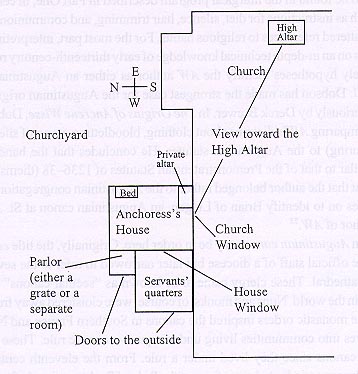
Today, I was reflecting on the monastic cell – the place where a religious “lives”. It is the place where God leads the individual and the intent of God is only love. And the intent of the religious is on God alone – their naked intent is for Jesus.

I find that thought really comforting – there is a place where I am alone with God and where God is all about love. A place God himself has “brought me”. A place of rest! A place of no hiding from God or myself.

risking it all

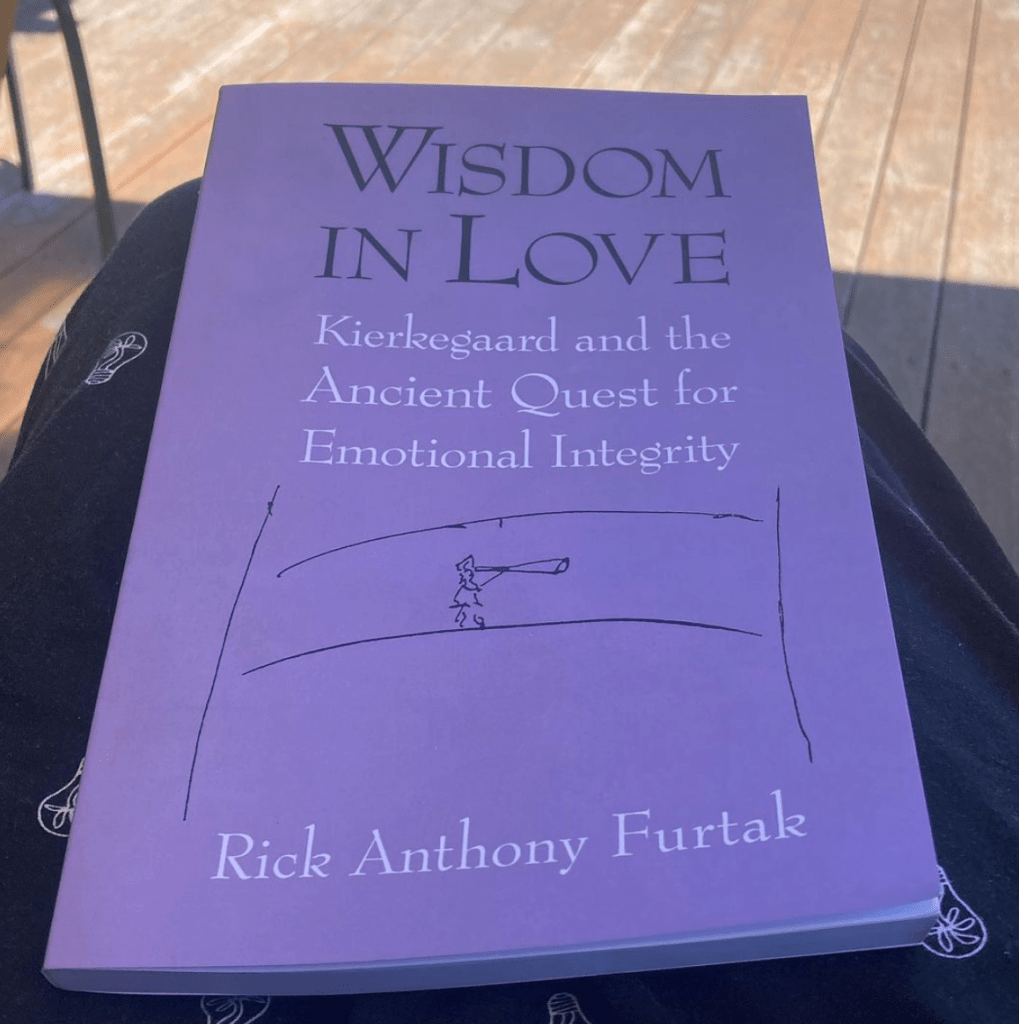
I have been reading Wisdom in Love: Kierkegaard and the Ancient Quest for Emotional Integrity by Rick Anthony Furtak. It has been on my list for a while and it was on special so I thought I might as well. I have been thinking about emotions a lot and this book really hits the spot on that topic.

So here is a quote from the Introduction:

One uncomfortable truth which emerges from this inquiry is that we cannot sustain the emotions that hold us together without accepting the risk of suffering the emotions that tear us apart.

All life involves risk! Maybe that is the fundamental problem with people today?! (Sorry, that is really judgemental and generalised.) Maybe that is the fundamental problem with me!? Life always involves risk because it always involves faith.

I did a quick google (as you do!) and found this article: Kierkegaard on the Psychology of a Risk Averse Society. It is worth a read.

So my point? I think we have become a society that likes to watch because we like to play it safe. It is much more fun watching someone else do the risky thing. More fun watching the “love story” or the “adventure movie” than loving or acting ourselves. But can we really grow (spiritually or emotionally) if we never risk? With the risk of being wrong can we ever really be right? Without the risk of hate can there ever really be love?