In Hegelian philosophy the outer (the externalization) is higher than the inner.
Kierkegaard: Fear and Trembling (Cambridge Texts in the History of Philosophy), 60.
Category: Kierkegaard
detached?
The difference remains, however, and is between being, or at least striving to be, what one admires—and being personally detached. Let us now completely forget this danger connected with confessing Christ and think rather of the danger of actuality that is inescapably bound up with being Christian. Does not Christian teaching about ethics and obligation, Christianity’s requirement to die to the world, to surrender the earthly, its requirement of self-denial, does this not contain enough requirements—if they were to be obeyed—to produce the danger of actuality that makes manifest the difference between an admirer and an imitator, makes it manifest precisely in this way, that the imitator has his life in these dangers and the admirer personally remains detached although they both are nevertheless united in acknowledging in words the truth of Christianity? Thus the difference still remains. The admirer will make no sacrifices, renounce nothing, give up nothing earthly, will not transform his life, will not be what is admired, will not let his life express it—but in words, phrases, assurances he is inexhaustible about how highly he prizes Christianity.
Practice in Christianity
… through a choice
So, then, what truly can be said to draw to itself must be something in itself or something that is in itself. So it is when truth draws to itself, for truth is in itself, is in and for itself—and Christ is the truth. It must be the higher that draws the lower to itself—just as when Christ, the infinitely highest one, true God and true man, from on high will draw all to himself. But the human being of whom this discourse speaks is in himself a self. Therefore Christ also first and foremost wants to help every human being to become a self, requires this of him [XII 150] first and foremost, requires that he, by repenting, become a self, in order then to draw him to himself. He wants to draw the human being to himself, but in order truly to draw him to himself he wants to draw him only as a free being to himself, that is, through a choice.
Practice in Christianity
real people
231. There also exists a constant tension between ideas and realities. Realities simply are, whereas ideas are worked out. There has to be continuous dialogue between the two, lest ideas become detached from realities. It is dangerous to dwell in the realm of words alone, of images and rhetoric. So a third principle comes into play: realities are greater than ideas. This calls for rejecting the various means of masking reality: angelic forms of purity, dictatorships of relativism, empty rhetoric, objectives more ideal than real, brands of ahistorical fundamentalism, ethical systems bereft of kindness, intellectual discourse bereft of wisdom.
Pope Francis
Kierkegaard would (maybe?!) say that the single individual is more important than the abstraction. When it is flipped over, you have leveling. One step further would be to suggest that ideals (abstractions) can create reality – “if we can measure it, we can create it”.
So Francis is just a closet Kierkegaardian!
Day 656 – “transubstantiation”
One of the earliest pieces has this to say about reading:
It is, namely, the transubstantiation of experience; it is an unshakable certainty in oneself won from all experience, whether this has oriented itself only in all worldly relationships (a purely human standpoint, Stoicism, for example), by which means it keeps itself from contact with a deeper experience — or whether in its heavenward direction (the religious) it has found therein the centre as much for its heavenly as its earthly existence, has won the true Christian conviction “that neither death, nor life, nor angels, nor principalities, nor powers, nor the present, nor the future, nor height, nor depth, nor any other creation will be able to separate us from the love of God in Christ Jesus our Lord.”
Kierkegaard
Reading is much more than information but an experience that changes me. It is not something to do while I am bored but a choice for change.
Anyway …
Day 654 – “to be chosen”
God is present in the moment of choice, not in order to watch but in order to be chosen. Therefore, each person must choose. Terrible is the battle, in a person’s innermost being, between God and the world. The crowning risk involved lies in the possession of choice.
Kierkegaard
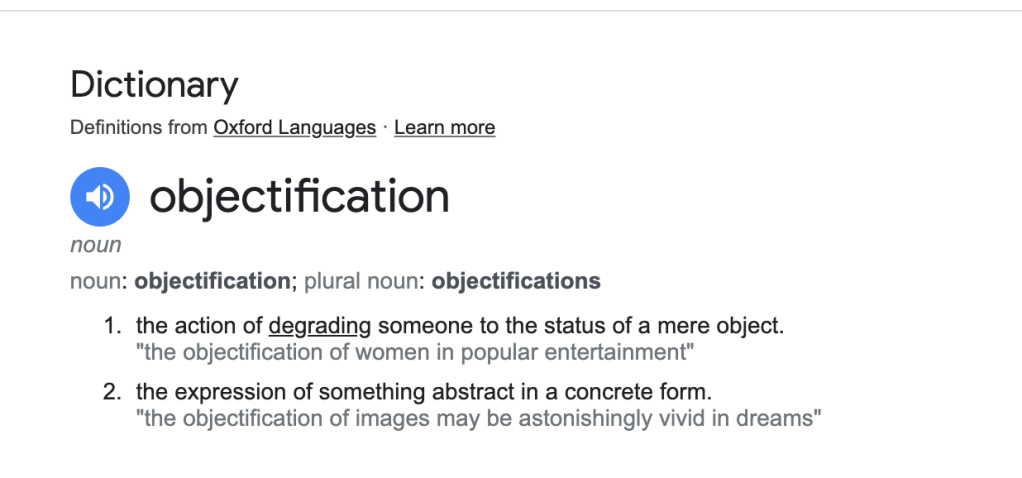
objectification?
… leveling is an abstract power and is abstraction’s victory over individuals.
Two Ages
SK lol moment

I have been reading Two Ages. I read the following this morning and it gave me a laugh-out-loud moment:
I once witnessed a fight in which three men shamefully mistreated a fourth. The crowd watched with indignation; their hostile muttering began to spur them to action: some of the crowd converged on one of the assailants and threw him down, etc. The avengers thereby exemplified the same law as the assailants. If I may be permitted to interject my own incidental person, I will finish the story. I approached one of the avengers and attempted to explain dialectically the inconsistency of their behavior, but apparently it was quite impossible for him to engage in anything like that, and he merely repeated: “He had it coming. Such a scoundrel deserves three against one.” This borders on the comic, especially for the person who did not witness the beginning and then heard one man say of the other that he (the lone man) was three against one, and heard it the very moment when the opposite was the case—when there were three against him. In the first situation there was the comedy of contradiction in the same sense as “when the watchman said to a solitary person: Please break it up! Disperse!” The second situation had the comedy of self-contradiction. I gathered, however, that it was probably best for me to surrender all hope of ending this scepticism lest it be continued against me.
Kierkegaard, Søren. Kierkegaard’s Writings, XIV, Volume 14, 86-87
skepticism
Skepticism arises from our desire to know without the self being transformed. Ironically skepticism is but the result of our anxious desire to secure certainty by being “at home in the world.”
Harvey. Skepticism, Relativism, and Religious Knowledge
silence
As my prayer become more attentive and inward
Kierkegaard
I had less and less to say.
I finally became completely silent.
I started to listen
– which is even further removed from speaking.
I first thought that praying entailed speaking.
I then learnt that praying is hearing,
not merely being silent.
This is how it is.
To pray does not mean to listen to oneself speaking,
Prayer involves becoming silent,
And being silent,
And waiting until God is heard.
 a fool and his prayer book