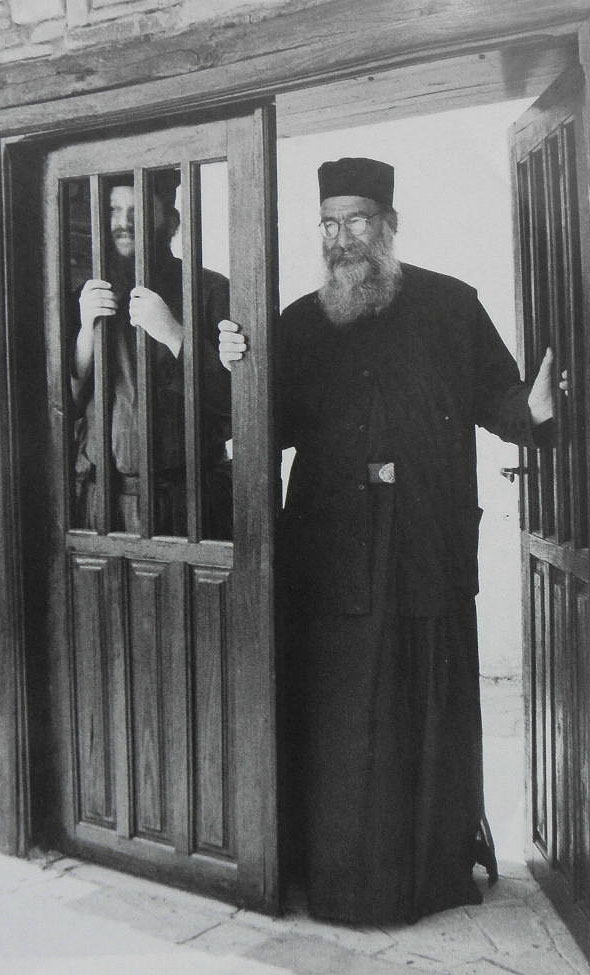
further …

… to yesterday’s post, what if, here is a section from Kierkegaard:

But as in Christendom everything has been brought to confusion, so also this; and thereby the point has been reached where Christianity has become paganism. In Christendom they preach perpetually about what happened then after Christ’s death, how He triumphed, and how His disciples made a triumphal conquest of the whole world-in short, one hears only sermons which might properly end with Hurrah I rather than with Amen. No, Christ’s life here upon earth is the paradigm; it is in likeness to it that I along with every Christian must strive to construct my life; and this is the essential object of the sermon, this is the end it should serve, to keep me alert when I would become slack, and to strengthen me when I would become disheartened. In such a sense He is the paradigm in the situation of contemporaneousness; in that situation there was no stuff and nonsense about what happened afterwards. But Christendom has abolished Christianity – on the other hand, it would like to inherit Him and His great name, to gain advantage from the immense consequences of his life, coming pretty close to appropriating these consequences as its own meritorious achievement and making us believe that Christendom is Christ. Every generation has to begin all over again with Christ and thus to present His life as the paradigm; but instead of this, Christendom has taken the liberty of interpreting the whole relationship simply historically, beginning by letting Him be dead-and then it triumphs! Since that time Christendom has been increasing in numbers year by year-and what wonder; for people are only too eager to take part when there is nothing whatever to do but to triumph and to join the parade. And therefore to be a Christian in Christendom is as different from being a Christian in the situation of contemporaneousness as paganism is from Christianity.

Training in Christianity, 109

sacrifice

I beseech you therefore, brethren, by the mercies of God, that ye present your bodies a living sacrifice, holy, acceptable unto God, which is your reasonable service. And be not conformed to this world: but be ye transformed by the renewing of your mind, that ye may prove what is that good, and acceptable, and perfect, will of God.

Romans 12:1-2 (KJV)

The above is from Second Evensong for Candlemas. It reminded me of one of the post-communion prayers In the Second Order in APBA:

Father,
we offer ourselves to you
as a living sacrifice
through Jesus Christ our Lord.
Send us out in the power of your Spirit
to live and work to your praise and glory.

What does “sacrifice” mean in these two texts? Not death. Perhaps we could define it as the surrender of a good (body in Romans) for a greater good (life in Jesus).

BTW: Augustine makes the opposite his definition of sin:

On account of all these, and such as these, is sin committed; while through an inordinate preference for these goods of a lower kind, the better and higher are neglected — even You, our Lord God, Your truth, and Your law.

Confessions 2:5:10

So, the choice between higher and lower goods is the root of sin and sacrifice.

Anyway …

what is “all”?

I have been sick – not much sleep for the last two days. I am not sure how well my medication is working – I guess I will know when I get withdrawals. Anyway, I dreamt last night that I was walking into a church – a nondescript building which I somehow knew was a church. King of strange as I have not been to church for six weeks. There was no person in the church but a hymn was playing:

All to Jesus I surrender,
All to him I freely give;
I will ever love and trust him,
In his presence daily live.

Chorus:
I surrender all,I surrender all,
All to thee, my blessed Savior,
I surrender all.

All to Jesus I surrender;
Make me, Savior, wholly thine;
Let me feel the Holy Spirit,
Truly know that thou art mine.

All to Jesus I surrender,
Lord, I give myself to thee,
Fill me with thy love and power,
Let thy blessing fall on me.

Sometimes I remember my dreams. (I cannot know if I ever forget a dream!) The first thing that came to mind this morning was: What does “all” mean in this hymn? “All to Jesus I surrender – Lord, I give myself to thee”.

Maybe let me put it another way!? Does “all” include:

  • the institution of the church? or any institution?
  • the desire for certainty in this world? To find absolutes in either the community or the book?
  • morality?
  • duty?
  • family?
  • other people?

Anyway …

silent rebellion

AM Allchin’s The Silent Rebellion is a book on religious life in the Church of England. I do not have a copy but I am looking for one.

It is often pointed out that the title, The Silent Rebellion, highlights the need for solitude for religious life. Yet, why “rebellion”? In what sense is it “a violent uprising“?

While I do not have an answer, this quote may help:

Their name itself, anchorite, means rule-breaker, the one who does not fulfil his public duties.

And maybe this one by Kierkegaard:

…Of this there is no doubt, our age and Protestantism in general may need the monastery again, or wish it were there. The “monastery” is an essential dialectical element in Christianity. We therefore need it out there like a navigation buoy at sea in order to see where we are, even though I myself would not enter it. But if there really is true Christianity in every generation there must also be individuals who have this need

And from Fear and Trembling:

Faith is exactly this paradox, that the single individual is higher than the universal, but in such a way, mind you, that the movement is repeated, so that after having been in the universal he now as the particular keeps to himself as higher than the universal.

The tragic hero resigns himself in order to express the universal; the knight of faith resigns the universal in order to become the single individual.

The knight of faith, the rebel, stands with Jesus alone even against institutions. There is nothing higher than the individual’s relationship with Jesus – not even religion!

Anyway …

sacrifice and blood

O Lord and heavenly Father, we thy humble servants entirely desire thy fatherly goodness mercifully to accept this our sacrifice of praise and thanksgiving; most humbly beseeching thee to grant, that by the merits and death of thy Son Jesus Christ, and through faith in his blood, we and all thy whole Church may obtain remission of our sins, and all other benefits of his passion.

And here we offer and present unto thee, O Lord, ourselves, our souls and bodies, to be a reasonable, holy, and lively sacrifice unto thee; humbly beseeching thee, that all we, who are partakers of this holy Communion, may be fulfilled with thy grace and heavenly benediction.

And although we be unworthy, through our manifold sins, to offer unto thee any sacrifice, yet we beseech thee to accept this our bounden duty and service; not weighing our merits, but pardoning our offences, through Jesus Christ our Lord; by whom, and with whom, in the unity of the Holy Ghost, all honour and glory be unto thee, O Father Almighty, world without end. Amen.

Holy Communion

I love the traditional (1662) Prayer Book. Much upon which to meditate and reflect!

Colossians 3

This is the reading for Evensong today (30 December) in the 1922 Lectionary. Prayer, mortification, and seelsorge.

If ye then be risen with Christ, seek those things which are above, where Christ sitteth on the right hand of God. Set your affection on things above, not on things on the earth. For ye are dead, and your life is hid with Christ in God. When Christ, who is our life, shall appear, then shall ye also appear with him in glory. Mortify therefore your members which are upon the earth; fornication, uncleanness, inordinate affection, evil concupiscence, and covetousness, which is idolatry: For which things’ sake the wrath of God cometh on the children of disobedience: In the which ye also walked some time, when ye lived in them. But now ye also put off all these; anger, wrath, malice, blasphemy, filthy communication out of your mouth. Lie not one to another, seeing that ye have put off the old man with his deeds; And have put on the new man, which is renewed in knowledge after the image of him that created him: Where there is neither Greek nor Jew, circumcision nor uncircumcision, Barbarian, Scythian, bond nor free: but Christ is all, and in all. Put on therefore, as the elect of God, holy and beloved, bowels of mercies, kindness, humbleness of mind, meekness, longsuffering; Forbearing one another, and forgiving one another, if any man have a quarrel against any: even as Christ forgave you, so also do ye. And above all these things put on charity, which is the bond of perfectness. And let the peace of God rule in your hearts, to the which also ye are called in one body; and be ye thankful. Let the word of Christ dwell in you richly in all wisdom; teaching and admonishing one another in psalms and hymns and spiritual songs, singing with grace in your hearts to the Lord. And whatsoever ye do in word or deed, do all in the name of the Lord Jesus, giving thanks to God and the Father by him.

Colossians 3:1-17

white martyrdom

Today the Church remembers that some who follow Jesus are called to white martyrdom. Holy anchorites, pray for us.

Merciful Lord, we beseech thee to cast thy bright beams of light upon thy Church, that it being enlightened by the doctrine of thy blessed Apostle and Evangelist Saint John may so walk in the light of thy truth, that it may at length attain to the light of everlasting life; through Jesus Christ our Lord. Amen.

Jesus said unto Peter, Follow me. Then Peter, turning about, seeth the disciple whom Jesus loved following; which also leaned on his breast at supper, and said, Lord, which is he that betrayeth thee? Peter seeing him saith to Jesus, Lord, and what shall this man do? Jesus saith unto him, If I will that he tarry till I come, what is that to thee? Follow thou me. Then went this saying abroad among the brethren, That that disciple should not die: yet Jesus said not unto him, He shall not die; but, If I will that he tarry till I come, what is that to thee? This is the disciple which testifieth of these things, and wrote these things, and we know that his testimony is true. And there are also many other things which Jesus did, the which if they should be written every one, I suppose, that even the world itself could not contain the books that should be written.

The Gospel: St. John 21.19-end

“follow me”

The day after The Nativity of Our Lord is not Boxing Day but Saint Stephen’s Day. And there is a good reason. Here are the Collect from the BCP and the gospel:

Grant, O Lord, that in all our sufferings here upon earth, for the testimony of thy truth, we may stedfastly look up to heaven, and by faith behold the glory that shall be revealed; and, being filled with the Holy Ghost, may learn to love and bless our persecutors by the example of thy first Martyr Saint Stephen, who prayed for his murderers to thee, O blessed Jesus, who standest at the right hand of God to succour all those that suffer for thee, our only Mediator and Advocate. Amen.

Behold, I send unto you prophets, and wise men, and scribes; and some of them ye shall kill and crucify; and some of them shall ye scourge in your synagogues, and persecute them from city to city; that upon you may come all the righteous blood shed upon the earth, from the blood of righteous Abel unto the blood of Zacharias, son of Barachias, whom ye slew between the temple and the altar. Verily I say unto you, All these things shall come upon this generation. O Jerusalem, Jerusalem, thou that killest the prophets, and stonest them which are sent unto thee; how often would I have gathered thy children together, even as a hen gathereth her chickens under her wings, and ye would not! Behold, your house is left unto you desolate. For I say unto you, Ye shall not see me henceforth, till ye shall say, Blessed is he that cometh in the Name of the Lord.

St. Matthew 23.34-end

Following Jesus is not all songs, candles, and food. S. Stephen reminds us that Jesus, who said, “Follow me”, went to the Cross.

old Prayer Books

What to do with your old 1662 BCP that your grandfather used? Or, that BCP that was gifted at your confirmation?

With the change in worship books among Anglicans, I am seeing more BCPs in Op Shops. That is a shame! For a past generation, these were their daily spiritual food – they were daily prayer. More, old Prayer Books are often dedicated to someone as a gift. That makes me feel sad!! Yes, maybe these people have given up on the worship of God, but the people of God have not stopped praying for them.

Well, do not throw your old Prayer Books away! Do not recycle them! Do not take them to the Op Shop to be sold for 20 cents – yes, I paid that much for one. See my new Prayer Book Project. Send me your old Prayer Books and I will pray for the person to whom it is gifted. Or I will pray for a person whom you want to be remembered. Or I will pray for you.

the community is not Christ

Christianity is no doctrine; all talk of offense with regard to it as doctrine is a misunderstanding, is an enervation of the thrust of the collision of offense, as when one speaks of offense with respect to the doctrine of the God-man, the doctrine of Atonement. No, offense is related either to Christ or to being a Christian oneself…. No, Christ’s life here on earth is the paradigm; I and every Christian are to strive to model our lives in likeness to it, and this is the primary subject of preaching, since it is to serve this—to keep me up to the mark when I want to dawdle, to fortify when one becomes disheartened. — … But Christendom has abolished Christ; yet, on the other hand, it wants—to inherit him, his great name, to make use of the enormous consequences of his life. Indeed, Christendom is not far from wanting to appropriate them as its own merits and to delude us into thinking that Christendom is Christ.

Christianly, struggling is always done by single individuals, because spirit is precisely this, that everyone is an individual before God, that “fellowship” is a lower category than “the single individual,” which everyone can and should be. And even if the individuals were in the thousands and as such struggled jointly, Christianly understood each individual is struggling, besides jointly with the others, also within himself, and must as a single individual give an accounting on judgment day, when his life as an individual will be examined.

Practice in Christianity